

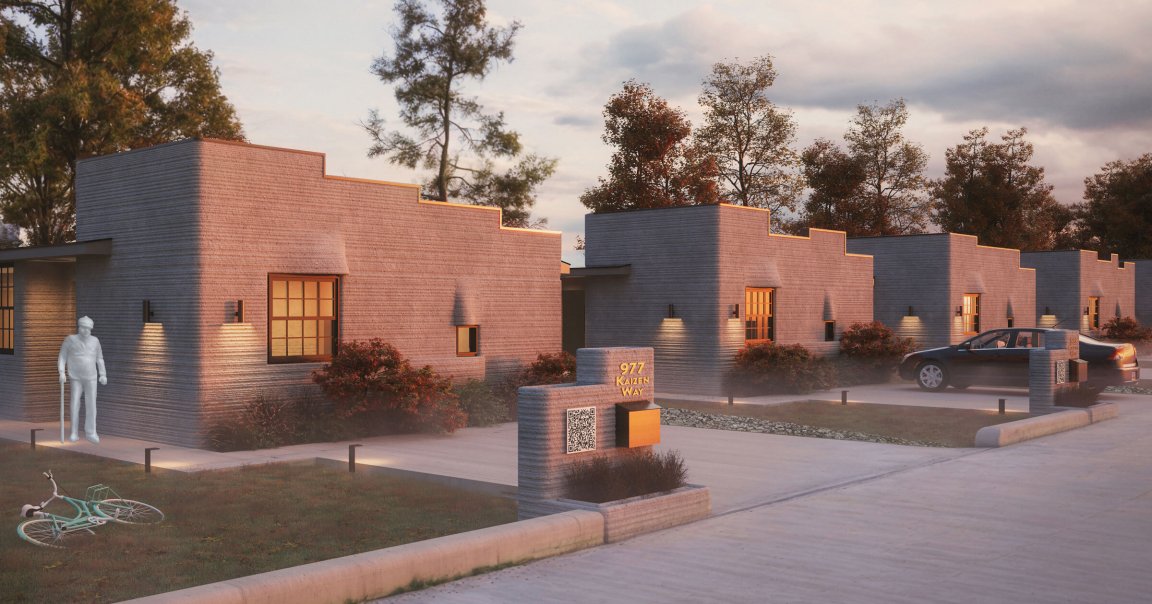
The pitch for 3D-printed housing has always been the same: robots build faster, waste less, need fewer humans — and therefore make homes cheaper for consumers. It’s a compelling pitch, but it isn’t exactly what happened in Yuba County, California, where a company called 4Dify just finished fabricating what it calls “America’s first 3D-printed neighborhood.”
According to the outlet SlashGear, the neighborhood encompasses five 1,000-square-foot houses just north of Sacramento. Each domicile is produced by a hulking concrete printer worth about $1.5 million, which took about 24 days to spit out the first house.
In the future, 4Dify expects the whole process to take about 10 days, but that isn’t what’s astonishing about the Yuba County neighborhood — it’s the price tag.
Per SlashGear, the first house went on sale last week for a price of $375,000. Given that the median price for a home in Yuba County is $450,000, that might seem like a steal.
The catch, however, is the price per square foot. At 1,000 square feet in size, the 4Dify homes come out to $375 per. Yuba County’s median price per square foot is $268, per RedFin data.
At that price tag, 4Dify’s concrete yurts are comparable in cost to a 2,500 square foot custom-built home in Chicago’s northwest suburbs — and that’s without getting into the risks of maintaining or insuring a new type of dwelling, which is likely to have unpredictable pain points for owners as it ages.
Sure, the process uses less time and labor than a typical house, and it might cut down on waste tremendously. But until companies like 4Dify can reduce their prices by building at scale, 3D printed homes remain little more than a housing experiment at best — and an expensive novelty at worse.
More on 3D printing: Japan Deploys Entire 3D-Printed Train Station