


After an outcry, Google says that showing Polymarket bets alongside legitimate news sources on Google News was an “error.”
“Google News is designed to show sources that create content about current issues, events, and important topics, and we have policies for sites to be eligible to appear,” the company told The Verge. “This site briefly appeared in Google News in error, and it is no longer surfacing in News.”
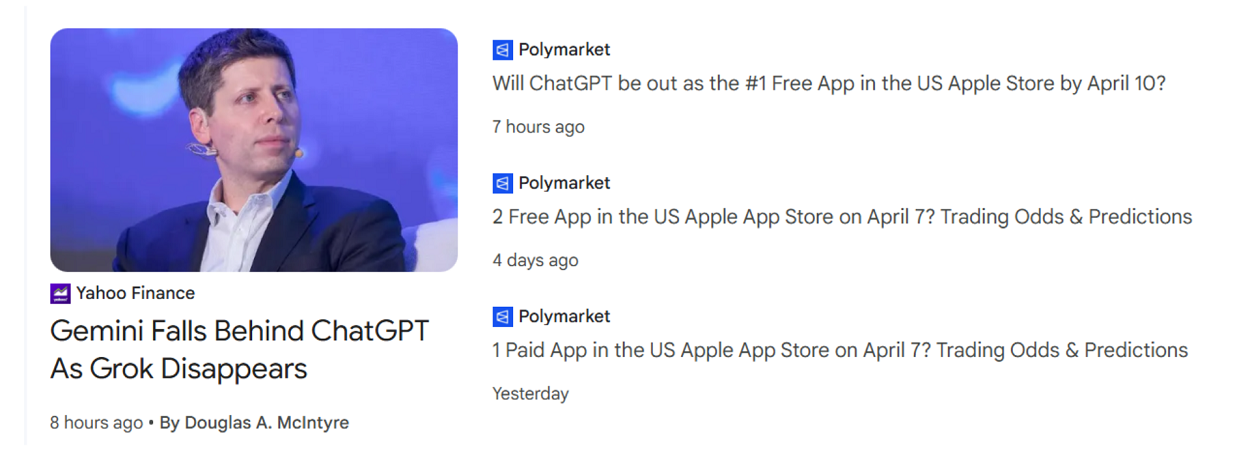
The drama started when Futurism noticed that the tech giant had started showing Polymarket bets alongside actual news articles, often appearing as large blocks that contained links to numerous gambling opportunities on the service.
The bets often appeared in the “For you” section of Google News, which is tailored to a user’s personal interests. In one instance, it was even the very top result, as with this bet on the price of Bitcoin.
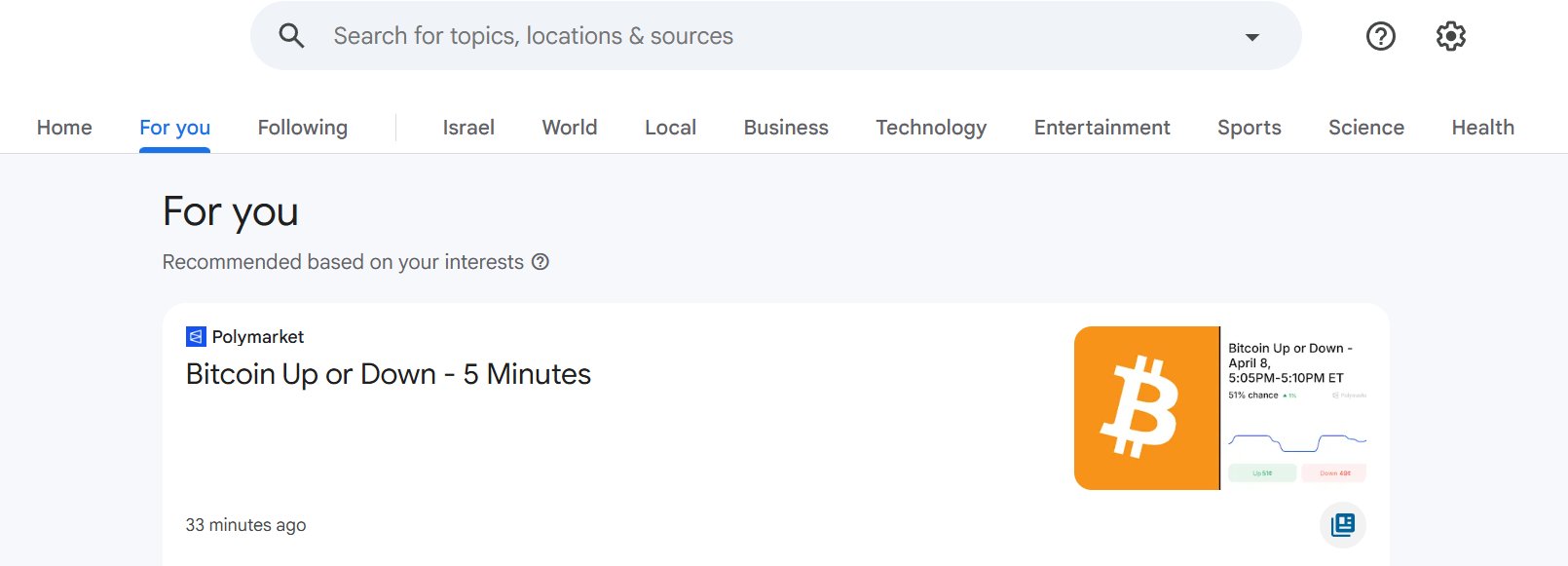
In our testing, Polymarket bets were also showing up on the Google News home page.
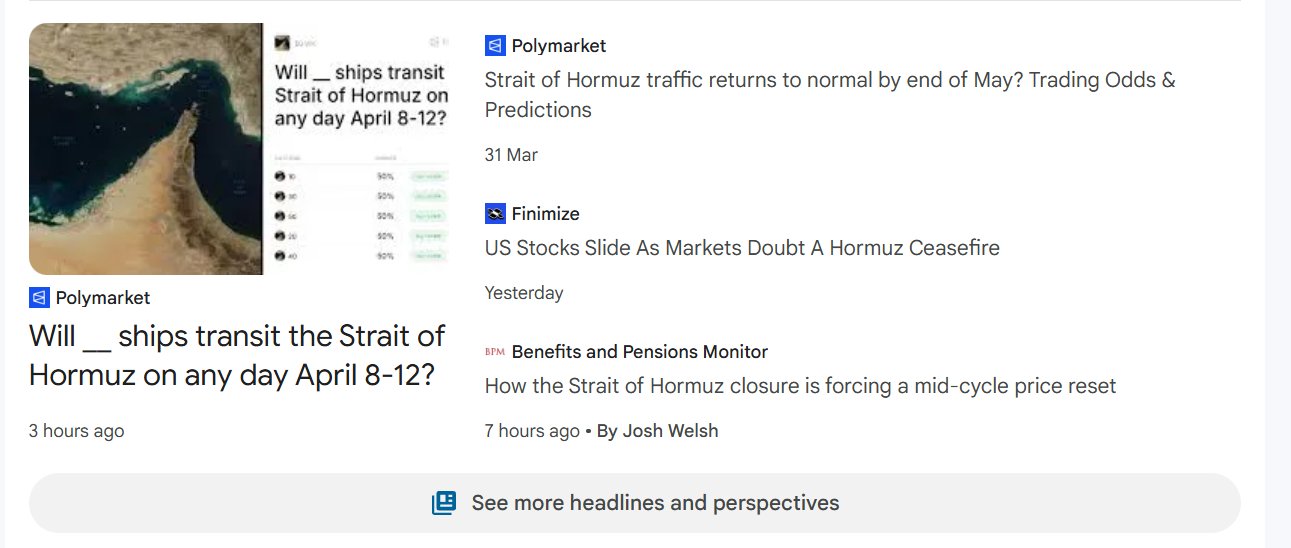
But links from the prediction market were popping up all over Google News, including in searches. In further tests, looking up “will ships transit the strait,” referring to the Strait of Hormuz, returned numerous credible sources like Financial Times, The Guardian, and Reuters. Just below them, however, was a Polymarket bet on the number of ships that would be allowed to pass through the critical oil passageway.
When searching “Polymarket” in its search bar, Google News also allowed users to choose it as a “source,” directing them to a page that aggregates other Polymarket hits. It’s not the only non-news site that was selectable as a source — looking up “Reddit” and “X” offers the option, too — but searching for “Kalshi,” another prediction market and Polymarket’s main competitor, didn’t give the option to use it as a source.
It’s unclear when Polymarket bets began crowding Google News, but it appears to be a recent development. A handful of complaints on social media go back to around the same date in late March. Polymarket bets were also appearing in the News section of a Google search, and at least one post reporting this goes back to January.
In November, the search giant announced a deal with Polymarket and Kalshi to feed their prediction data into its finance platform; it’s unclear if Polymarket’s inclusion in Google News had anything to do with that partnership.
Regardless, it’s easy to see why Polymarket would be catnip to Google’s algorithms, since it generates huge numbers of pages for bets that are constantly updated in small ways, making them seem — on a surface level — like valuable news stories. The reality, though, is that Polymarket has been criticized for dealing in the language of journalism while peddling wildly irresponsible falsehoods.
Prediction markets allow users to bet on a wide range of real world outcomes, including geopolitical developments with seismic implications. They affix a percentage likelihood to each event, which is calculated based on user bets. As such, they present themselves as offering certain analytic insights, drawing on the wisdom of the crowd to sound out the future.
But in reality and in practice, it’s glorified gambling, and numerous scandals have arisen over potential insider trading on the platforms. The issue gained national attention in January, when an anonymous Polymarket user walked away with more than $400,000 after placing a large wager that Venezuela’s president Nicolás Maduro would be ousted by the end of the month, just hours before US troops invaded the country and abducted him. The possibility that a figure in or connected to the US government had placed the bet couldn’t be ignored.
And as is the case with traditional forms of gambling, like match fixing in sports, critics say that prediction markets can themselves influence real world events. In March, Polymarket quietly took down a bet on whether a nuclear weapon would be detonated before this year, raising the specter that the site was blatantly incentivizing nuclear conflict. (An all-the-more chilling possibility after president Trump’s recent threat to Iran that a “whole civilization will die tonight” if its leaders didn’t comply with US demands.)
Conscious of their thorny public image, prediction markets have tried to launder their reputation by collaborating with news agencies. In January, Kalshi partnered with CNN to provide real time prediction data on its live news broadcasts. That same month, Polymarket announced its own partnership with Dow Jones, the publisher of The Wall Street Journal, to pipe its prediction data onto its publications.
In light of all this, Polymarket appearing in Google News felt a major victory for the prediction platform — rubber-stamping its image as an authority on developing real-world events right alongside genuine real publishers of journalism — until the search giant put the kibosh on the phenomenon.
Updated to include Google’s response.
More on prediction markets: Polymarket Has Turned Our Climate Apocalypse Into a Casino