
Earlier this year, an anonymous bettor on Polymarket perfectly predicted the US invasion of Venezuela mere hours before over 150 US aircraft rocked the country’s capital of Caracas, netting them over $400,000.
The incident reignited a heated debate over insider trading on prediction market platforms like Polymarket and Kalshi. While the act is strictly forbidden on Wall Street, prediction markets are currently operating in a regulatory vacuum, allowing those who enjoy insider status to score big — while everyone else is left to pick up the bill.
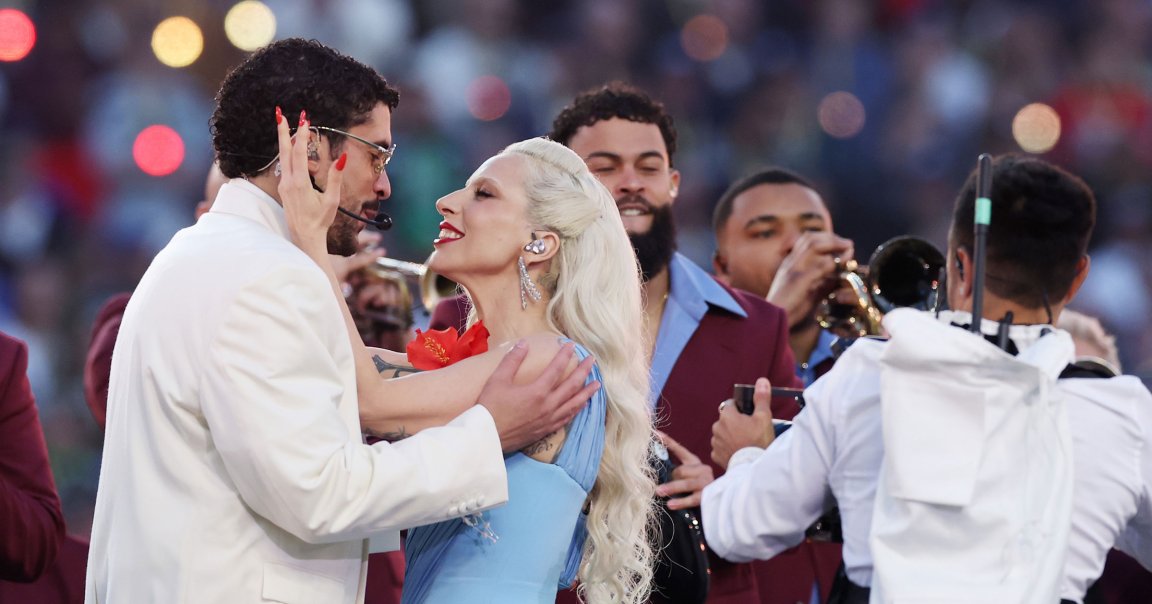
And the evidence that prediction markets are rife with insider traders continues to grow. As one eagle-eyed Reddit user noticed, an anonymous day-old Polymarket account correctly guessed 17 out of around 20 bets about Sunday’s Super Bowl half-time show.
Statistically speaking, that’s an exceedingly unlikely success rate, strongly suggesting the account had some kind of insider knowledge of what would happen during Puerto Rican superstar Bad Bunny’s performance.
The account correctly predicted that popstars Lady Gaga, Cardi B, and Ricky Martin would perform at the show. The account also correctly predicted that rappers Travis Scott and Drake, as well as singer Post Malone, would not perform.
The anonymous user placed bets starting February 6, two days before the event took place. All told, they made about $17,000 in profit.
“If you bet, you’re a rube for these people,” one Reddit user commented. “Literally spending money to give it over to insiders and cheats.”
Polymarket has yet to publicly comment on the matter and didn’t respond to the Wall Street Journal’s request for comment.
Ironically, gambling was a major focus during Sunday’s sporting event. Companies spent untold sums to air commercials for betting services like DraftKings.
Trading volumes on prediction markets hit record highs during the Super Bowl, with Kalshi reporting over half a billion dollars in trading tied to the final outcome of the game. Polymarket’s equivalent bet saw trading volumes hit over $55 million.
Given ongoing regulatory uncertainty, it remains to be seen whether the two platforms will be able to meaningfully address insider trading, a subject that demonstrably continues to be a major problem.
While a knowledgeable few, including professional gamblers, get away with major profits, plenty of other users are incurring significant losses. As Business Insider points out, for each “winner” on the platform, there’s a “loser” as well, since users are betting against each other — not against a house, like in a traditional casino.
The latter will need to remain confident that the setup isn’t rigged against them for the ruse to work.
“Those other people are going to, on average, make losses if they know less about the subject matter than the experts,” professor of economics and prediction markets expert Eric Zitzewitz told BI. “So you need them to be willing to trade despite that.”
“You need them to be overconfident about how much they know, or you need them to be participating for some other reason,” he added.
Prediction market regulations could take years before they materialize — if ever. The White House has made it clear it supports the industry, with president Donald Trump’s Trump Media and Technology Group announcing in October that it would enter the prediction markets business.
In the meantime, lawmakers are desperately warning that gambling on the platforms comes with some inherent risks.
“New Yorkers need to know the significant risks with unregulated prediction markets,” New York Attorney General Letitia James warned in a statement six days ahead of the Super Bowl. “It’s crystal clear: so-called prediction markets do not have the same consumer protections as regulated platforms. I urge all New Yorkers to be cautious of these platforms to protect their money.”
More on prediction markets: Professional Gamblers Move Into Prediction Markets to Bleed You Dry