

The International Space Station is scheduled to be retired in 2030, bringing an end to three decades of cutting-edge space research. What comes next remains to be seen, as several private companies compete for NASA funding to once again establish an outpost in our planet’s orbit — outside of China’s existing Tiangong space station, that is.
As part of Phase 2 of its Commercial Space Stations program, NASA has been seeking feedback from its industry partners. While we have yet to find out the requirements, let alone which company — or companies — the agency will choose to move onto the next phase, some firms have started making tangible progress.
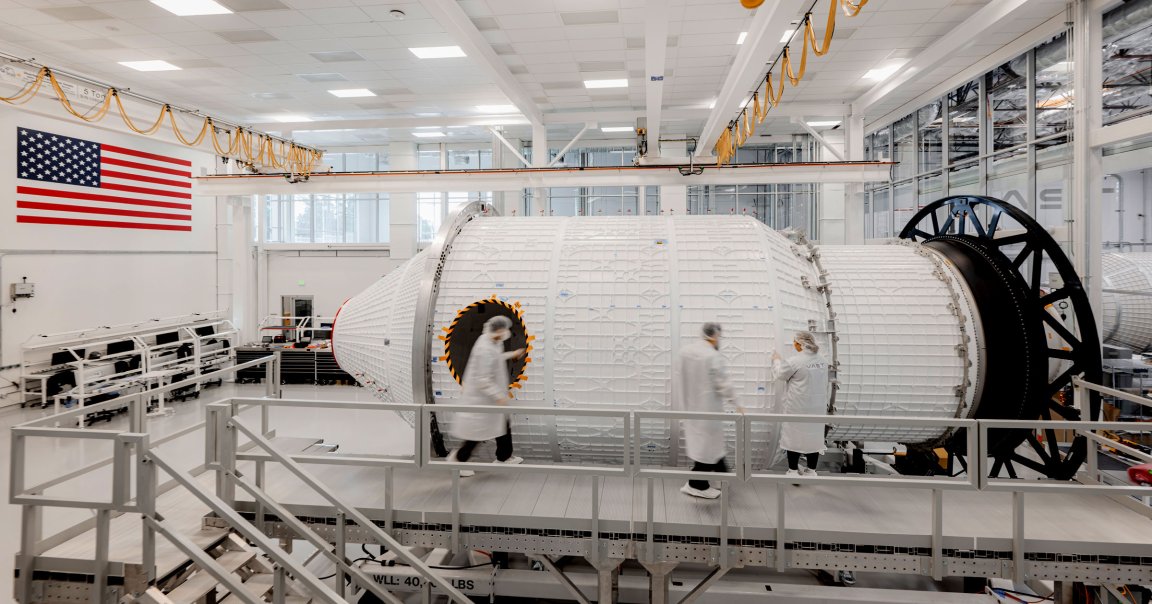
As Ars Technica reports, space startup Vast has opted to build a smaller and more feasible interim station, dubbed Haven-1, which will serve as the precursor for much larger outposts capable of continuous habitation in the more distant future.
Vast first showed off flashy renders of the capsule in October 2024, including luxuriously plush beds, enormous domed glass windows, and a minimalist interior layout. However, how much the final product will resemble these renders remains to be seen.
The company’s CEO, Max Haot, told Ars that “we reached the key milestone of fully completing the primary structure, and some of the secondary structure” last week. The company has since kicked off “clean room integration” ahead of a “full test campaign” with NASA scheduled for later this fall. The hope is to launch the capsule in early 2027.
Haven-1 will rely heavily on SpaceX’s existing hardware. The small capsule is designed to launch on a single SpaceX Falcon 9 and dock with a Crew Dragon spacecraft.
During its inaugural mission, the goal is to first check whether the capsule can stay pressurized and maintain its attitude before allowing any humans on board, Haot told Ars, a process that could take anywhere from two weeks to three years.
“The nominal plan is for a two-week mission,” he said, “and we have one fully contracted with SpaceX, as well as a second one that we have a deposit and an option on.”
The company is still waiting to hear from NASA about what its requirements will be for its commercial space station program until it decides whether to compete for funding.
Last week, lawmakers called on NASA to accelerate its plans to replace the ISS ahead of its decommissioning a mere four years from now.
“With the current budget, we don’t think more than two winners is reasonable, but it should absolutely be two in the best interest of the country,” Haot told Ars. “If there was a bigger budget, obviously, three would be great.”
There are several other companies looking to make inroads in the space. Voyager Technologies recently moved into “full-scale development” of its “Starlab” station. Jeff Bezos’ Blue Origin is still exploring its options after showing off plans for its “Orbital Reef.”
Axiom Space is also hoping to launch the “world’s first commercial space station.” The company released a detailed plan for its modular station last week, with a goal of launching as early as 2028.
But given the degree of complexity involved, plenty of questions remain about what will ultimately replace the ISS.
More on private space stations: Bonkers New Space Station Expands to Full Size From Single Capsule