

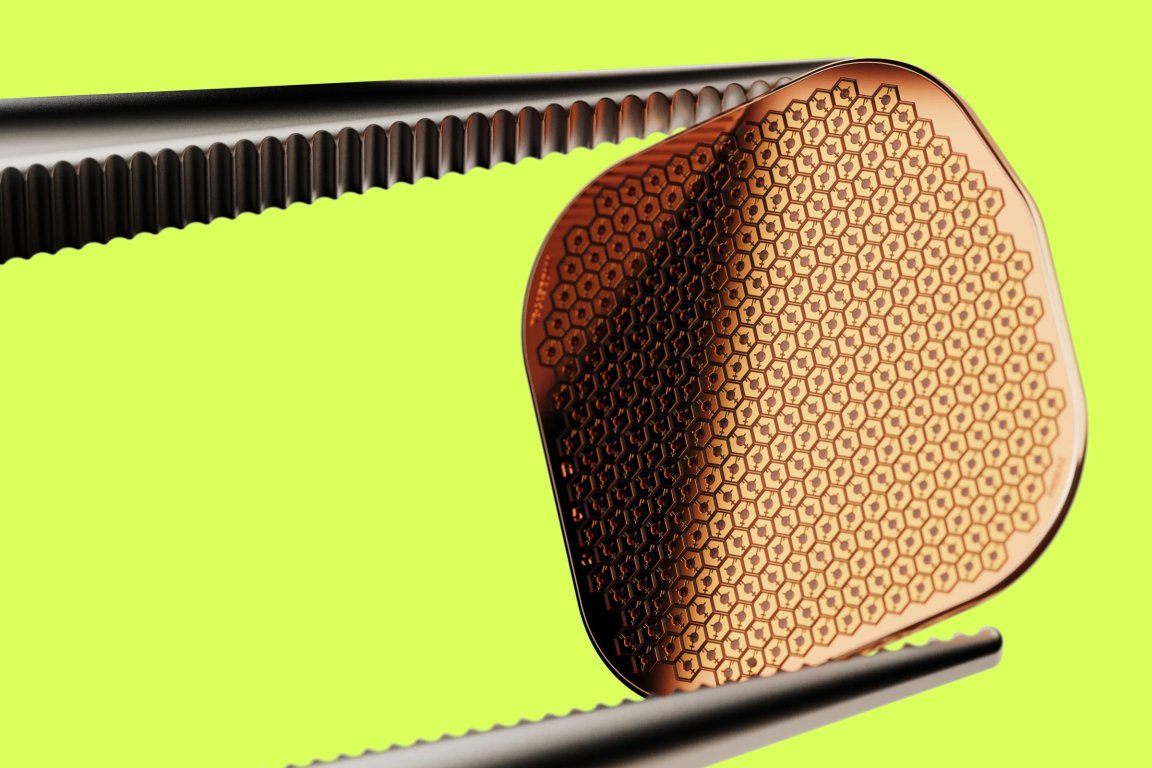
An eye implant that can help blind people see again is poised to hit the market — in Europe, at least.
On Wednesday, the US-based Science Corporation announced that it had received approval from the European Union to treat patients with its vision-restoring bionic eye device, called Prima, in a huge step towards the commercialization of the technology.
“We have a cochlear implant for vision now,” CEO Max Hodak told Stat News.
Science Corp’s device is designed to treat advanced macular degeneration, a condition in the eye which causes central vision loss. It’s the leading cause of vision loss in older adults, with severe forms of it accounting for nearly 90 percent of legal blindness in the US, according to one estimate.
To restore vision, the Prima device uses a wireless chip that’s surgically implanted under the retina. This connects with a pair of camera-equipped glasses, which transmits video in the form of near-infrared light that the chip turns into electrical signals interpreted by the brain.
Science Corp first published the results of a preliminary clinical trial in late 2024, showing that patients who used the device were able to recognize faces again, and even read books.
“One of our patients in France finished a 300-page novel a little while ago, and sent us the book,” Hodak recently told TechCrunch. “We have a sketch on the wall [that] one of our patients drew of the Sydney Opera House. There are videos of patients playing crossword puzzles and filling in Sudoku.”
But Hodak — who cofounded Neuralink with Elon Musk before leaving to start Science Corp — was candid that his tech still has a lot of room for improvement.
“This is an early version. It’s kind of like looking through a straw in the centre of their vision,” he told the Financial Times, saying it was “powerful proof” that the company was on the right track.
“We see in the future how to get to colour pretty close to native acuity,” he added.
Each Prima device is expected to cost hundreds of thousands of dollars, but Science Corp says it’s working with healthcare providers to cover some of the cost, per TechCrunch. It’s most likely to first start treating patients in Germany, where it conducted its clinical trials.
It’s not the only company making moves in this space. Neuralink is also working on a vision implant called Blindsight, but it hasn’t begun human trials yet.
More on health: Trump Is Having a Major Problem With Diarrhea