
AI chipmaker Nvidia has been at the center of the enormous AI hype wave that has gripped global markets, ascending to become the most valuable company in the world.
Yet despite its dominating presence on Wall Street, OpenAI is getting cold feet about the company’s offerings.
After announcing a blockbuster $100 billion deal in September — which escalated concerns of AI companies passing the same money around in circular dealmaking — the ChatGPT maker may have changed its mind, as the Wall Street Journal reported last week.
But sources told Reuters this week that the Sam Altman-led outfit has deemed Nvidia’s latest chips not up to snuff, especially when it comes to AI inference, the process of using a machine learning model to generate new data, which has become a major focus for OpenAI.
After months of negotiations, the deal with Nvidia was expected to close within weeks. In the meantime, OpenAI has signed major deals with competing chipmaker AMD, among others.
Then, on Tuesday, Bloomberg reported that Nvidia was nearing a deal to invest $20 billion in OpenAI instead — a mere fifth of what was originally on the table.
That the larger deal fell apart highlights ongoing tensions as US software companies continue to grapple with investors getting cold feet over the AI industry’s astronomical spending plans. Despite trillions of dollars of commitments to scale up AI infrastructure, companies aren’t expected to make any profit for many years to come.
Nvidia’s dustup with OpenAI appeared to have hit a nerve, causing the former’s stock price to continue its weeks-long plunge, dropping almost nine percent over the last five days. The company’s stock has slid over seven percent over the last month.
Both Nvidia CEO Jensen Huang and Altman have since publicly denied that there’s been any strain on the relationship between the two companies.
“We love working with NVIDIA and they make the best AI chips in the world. We hope to be a gigantic customer for a very long time,” Altman tweeted after Reuters published its story on Monday. “I don’t get where all this insanity is coming from.”
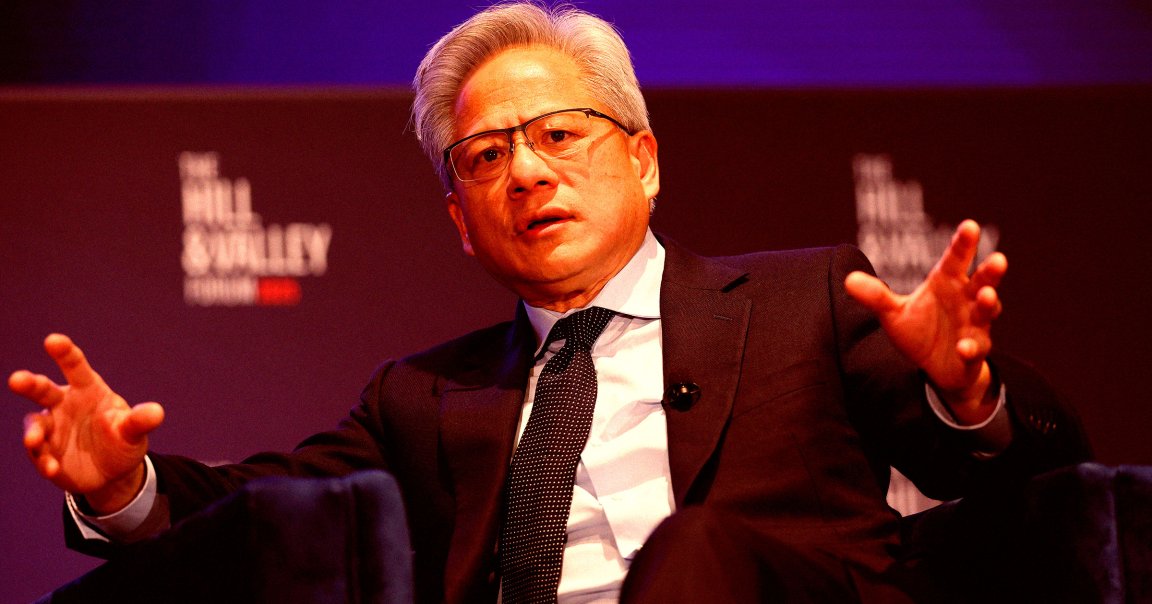
“We will definitely participate in the next round of financing because it’s such a good investment,” Huang told reporters over the weekend.
As Ars Technica points out, the original $100 billion deal for ten gigawatts of compute, something that would require the equivalent of ten nuclear reactors to sustain, was never set in stone, as it was just a letter of intent.
It’s certainly possible the original figure was simply pulled out of thin air. As Huang told reporters, the sum was “never a commitment.”
“We are going to make a huge investment in OpenAI,” he added. “Sam [Altman] is closing the round, and we will absolutely be involved.”
“We will invest a great deal of money,” he added, arguing it would be the “largest investment we’ve ever made.”
More on OpenAI: OpenAI Representatives Are Going to Critics’ Houses With Threats and Demands