
AI chipmaker Nvidia, the world’s most valuable company, demolished analyst expectations this week when it posted a massive 73 percent increase in fourth-quarter revenue.
But then something strange happened: Nvidia’s shares tanked by over five percent following the announcement, as Bloomberg reports, in its biggest one-day drop since mid-April.
It was a baffling reaction to a financial slam dunk, highlighting ongoing fears that the massive amount of money the AI industry is pouring into the construction of gigantic data centers across the country may not be sustainable. Tech leaders continue to warn that a return may still be many years out, if one ever materializes, while burning through billions of dollars each quarter.
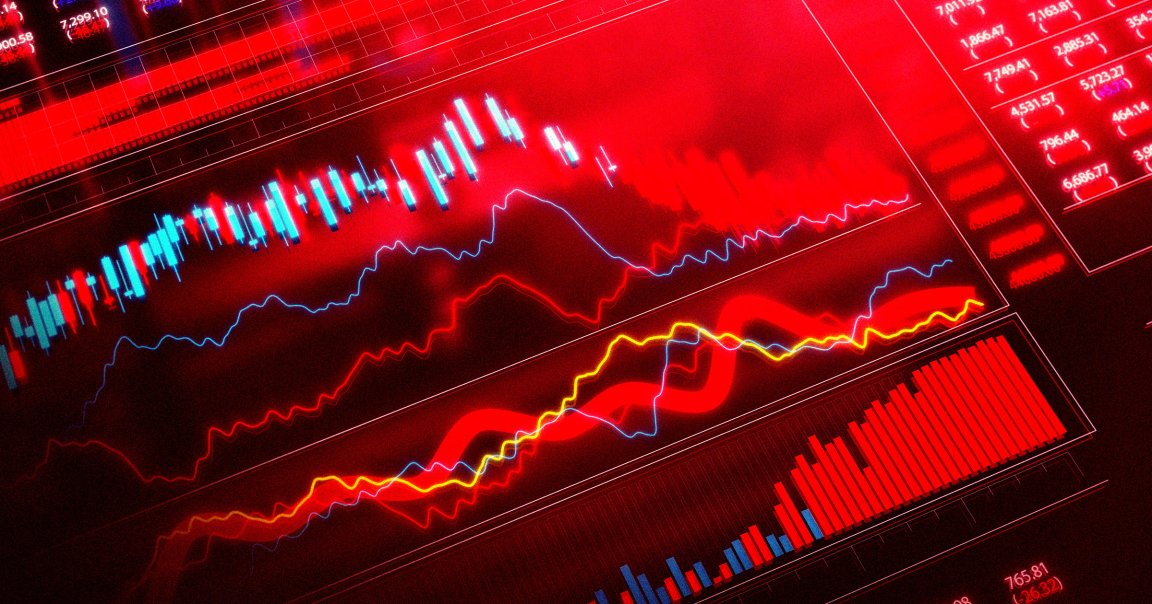
By Friday, the situation didn’t look much brighter. The Dow Jones Industrial Average, S&P 500, and Nasdaq Composite lurched down as fears about the impact of AI on the economy continued to grow. All three indices are in the red for February, indicating persistent widespread uncertainty. Overall, the S&P 500 and Nasdaq Composite are on pace to experience their worst month since March 2025.
As CNBC points out, Twitter cofounder Jack Dorsey’s fintech company, Block, announced on Thursday that it was laying off nearly half of its workforce, citing AI advances. The move was seemingly seen as a manifestation of fears that AI automation could soon send employment numbers off a cliff, which could have grave economic consequences in the long run. (While slumping Wall Street indices painted a dire picture of the broader economy, Block’s shares shot up in light of the news.)
Following its blockbuster earnings, Nvidia shares also continued to decline on Friday, highlighting skepticism of the AI industry’s all-in approach — and lingering worries over whether its growth could be sustained in the long run.
Compounding the situation is that inflation shows no sign of letting up. The producer price index, which measures the average change in selling prices for domestic producers, rose far more than expected in January, according to recently released data, undercutting president Donald Trump’s claims that inflation had been tamed.
“Inflation isn’t solved yet,” Integrated Partners chief investment officer Stephen Kolano told CNBC. “It just creates this uncertainty around which way is policy going to go in the remainder of the year.”
It remains to be seen whether we are indeed on the precipice of a collapsing AI bubble. For now, tech companies are treating the current moment as business as usual. Just earlier this week, Meta agreed to a $60 billion deal with AI chipmaker AMD, as fear continues to spread among investors.
But given OpenAI recently cutting its enormous $1.4 trillion spending plan by more than half, the cracks are starting to show as the AI race continues to rage on.
More on the AI bubble: Investors Concerned AI Bubble Is Finally Popping