

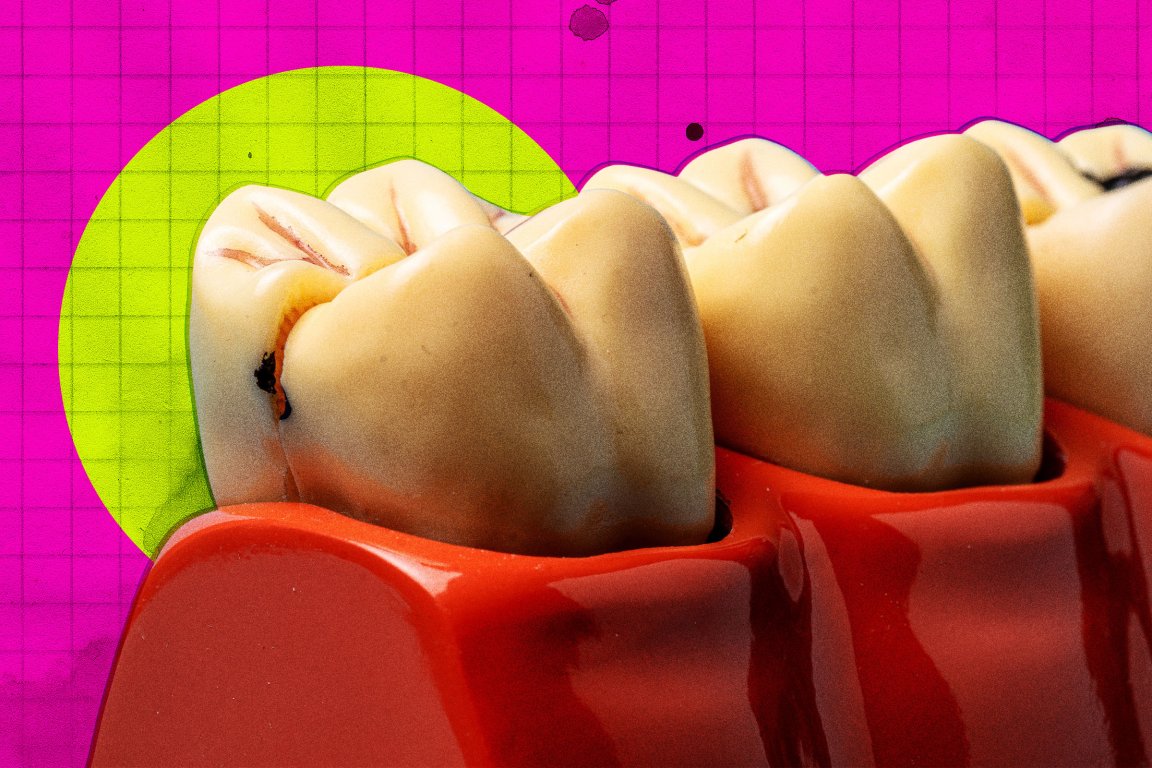
In 2023, Japanese pharmaceutical company Toregem Biopharma announced that it had found a new way to inhibit a gene responsible for suppressing tooth growth, laying the groundwork for an exciting new avenue in dentistry previously thought impossible.
The potentially revolutionary goal: growing new living teeth to replace damaged ones — a radical idea in dentistry, which typically offers limited options beyond dentures or implants.
“[Our] final goal is to offer advanced and scientifically driven clinical solution for the growth of teeth derived from their own tissues,” said Toregem president Honoka Kiso in a statement at the time.
“The idea of growing new teeth is every dentist’s dream,” co-founder and lead researcher Katsu Takahashi told Japanese newspaperThe Mainichi the same year.
Now, the company has raised roughly $5.3 million in its latest financing round, allowing it to “further accelerate the clinical development” according to a press release, including plans for a Phase 2 clinical trial involving human participants in Japan.
The release stopped short of revealing a timeline, and Toregem is still in the early stages of developing its treatment. But there are signs that warrant optimism. In a 2021 study, the company demonstrated that its neutralizing antibody can suppress a protein, dubbed USAG-1, which inhibits the growth of tooth buds. The company claimed it had successfully restored teeth in mice that were born without them due to a deficiency in Runx2, a “master switch” gene that plays a major role in skeletal and dental development.
In a 2024 study, the company argued that the same approach could work in humans. A Phase 1 clinical trial, involving adult men participants, tested the safety of the approach last year, but final results are still pending.
While Toregem wants to bring its treatment to market by 2030, experts have some lingering doubts whether the approach can actually work in humans.
For one, as University of British Columbia dean of the faculty of dentistry Mary MacDougall told New Scientist last year, the approach may only work in children, who still have plenty of dental epithelial cells, which play a foundational role in the development of teeth. Adults, who have lost teeth and lack far more of these cells, may be out of luck.
MacDougall also argued that directing the drug to work on one tooth specifically may not be possible, potentially triggering unwanted tooth growth across several teeth.
But given the sweeping implications of a treatment that would allow us to regrow teeth instead would be so considerable that even the possibility warrants a thorough investigation.
More on regrowing teeth: Japanese Company Testing Drug to Regrow Teeth in Humans