
On the same week as his 55th birthday, almost-trillionaire Elon Musk attempted to defend himself after representative Ro Khanna (D-CA) accused him of sentencing millions of children “to death” by dismantling USAID program.
A heated Musk threatened to sue Khanna for defamation, arguing he “should be in prison” — yet there’s extensive documentation of the humanitarian crisis the near-total collapse of US foreign aid has wrought. As detailed in a 2025 study, the impact of Musk’s decision to dissolve USAID has been devastating, from dwindling emergency food assistance to soaring cases of malaria and HIV/AIDS.
“I said the cuts DOGE made to USAID are potentially a death sentence for an estimated 4.5 million children around the world,” Khanna wrote in a Substack post. “It comes straight from the first comprehensive analysis of its kind into what American foreign aid actually does,” he added, referring to the 2025 study.
Musk did not take kindly to the missive, arguing that “they cannot cite a single name of someone who died out of the ‘millions’ they falsely claim have died” in a Sunday tweet. “Not a single name!”
But his wish was Pulitzer Prize-winning journalist and New York Times columnist Nicholas Kristof’s command.
In response to Musk’s attempt to downplay his primary role in the burgeoning humanitarian crisis, Kristof listed off numerous people, including young children, who have perished as a result of severed foreign aid.
Musk “says that no one can name a person who died from his aid cuts,” he wrote. “In fact, I’ve met the kids who are dying, and I’ve talked to the families who lost children. In my columns, I’ve cited many, many names of people who have died because of Musk’s aid cuts.”
Kristof cited a “23-year-old woman who died in childbirth” and a one-year-old who died of malaria in Liberia, as well as an eight-year-old, named Achol Deng died in South Sudan after “Musk cut funding for the health care worker who provided her medicines” for HIV/AIDS.
“I could go on and on,” the journalist wrote. “In almost every village you go to in South Sudan, Uganda, Liberia, Sierra Leone or other countries I reported in, you find people dying because of aid cuts.”
Musk gutted USAID last year with the help of his so-called Department of Government Efficiency (DOGE). Musk has called the agency a “criminal organization” and “evil,” while arguing without evidence that it was constructing a “Truman Show”-esque false reality.
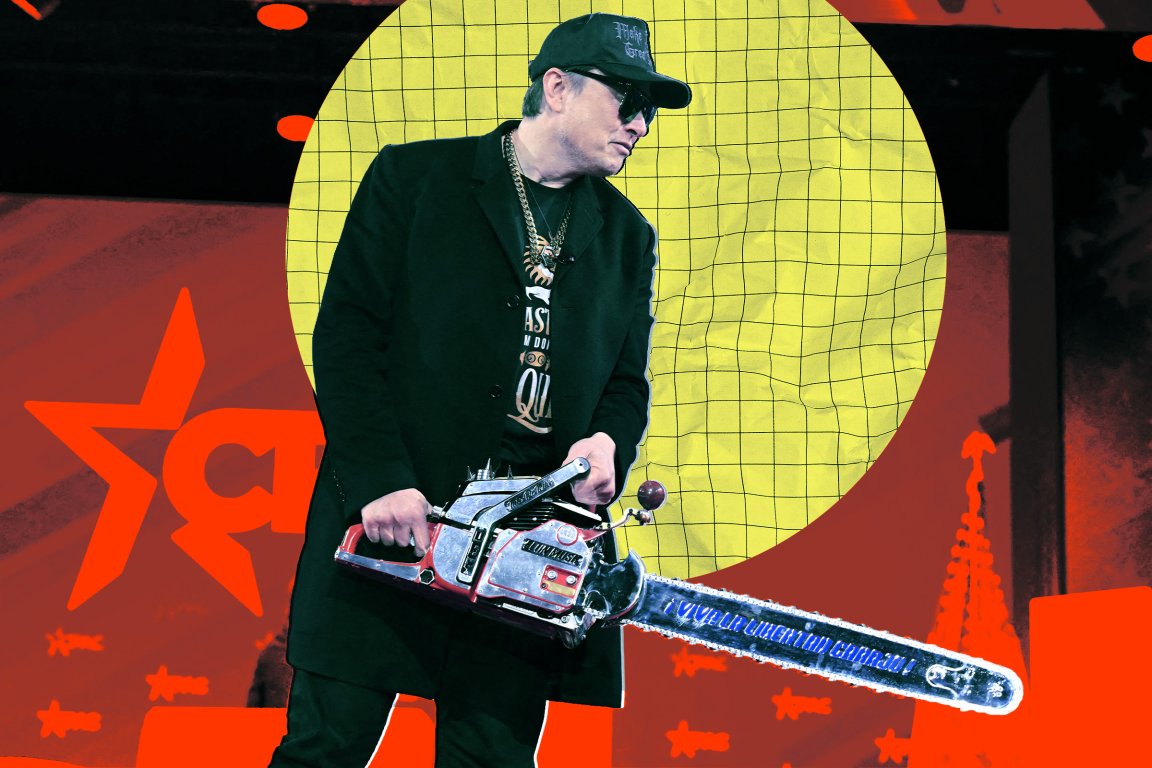
At the time, the billionaire gloated that he had fed USAID “into the wood chipper.”
As shocked officials quickly discovered, the unprompted move proved devastating for much of the developing world, leaving lifesaving support programs in shambles. As ProPublica reported in November, USAID cuts resulted in a “man-made hunger crisis” as Trump-appointed officials, who forced USAID’s top experts out of the agency, completed exit interviews in foreign countries only to fly back to the US, presumably never to return again.
Kristof was open to personally showing Musk what his actions have wrought.
“I challenge Musk: Come with me on a reporting trip, and we’ll talk to these moms and dads, and you’ll see the dying children themselves,” Kristof wrote. “I think if you see the kids whose lives are at stake, maybe you’ll change your mind.”
Update: Musk has responded to Kristof — with fury.
More on Musk: Elon Musk’s Mother Posts Happy Birthday Image for Him That, on Closer Inspection, Is Devastatingly Sad