
In the weeks following the second inauguration of Donald Trump, billionaire Elon Musk — appointed to a powerful position in the government after supporting Trump’s run —began laying waste to a number of government agencies with the help of his so-called Department of Government Efficiency (DOGE).
One major target in his crosshairs was USAID, an international development agency that has historically distributed billions of dollars inaid across the world. In a matter of days, DOGE dealt the department a series of existential blows, raising the alarm bells among humanitarian groups.
One anonymous USAID official told Politico at the time that the shutting of USAID could result in the death of “thousands, if not hundreds of thousands” of people. That’s not to mention an astronomical loss of global influence and goodwill.
Now, as ProPublica reports, it turns out those fears were entirely warranted. After cutting off the rest of the world, the World Food Program’s operations in Kenya were left in shambles. The United States was the program’s largest donor by a significant margin, contributing $4.45 billion last year. Funding cuts have been devastating for the WFP’s lifesaving programs ever since.
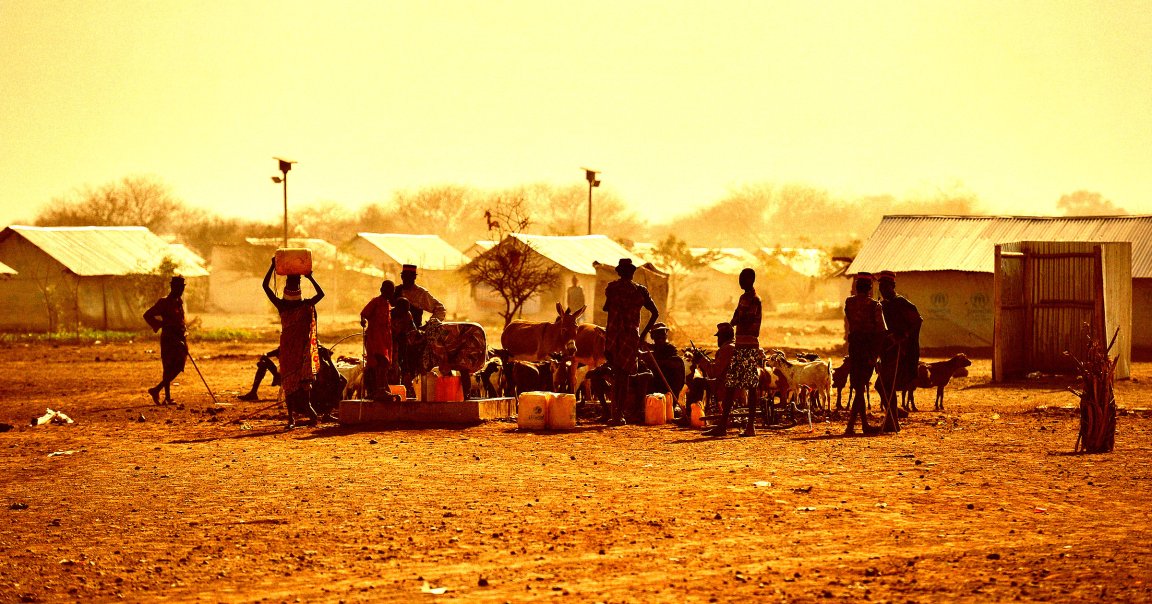
Around 720,000 refugees in Kenya relied on the organization to survive. But without foreign aid from the US, the WFP was forced to cut rations dramatically, trapping over 300,000 people in the Kakuma refugee camp in northern Kenya — one of the largest in the world — with almost nothing to eat.
Many of them, including children, died of malnourishment, according to ProPublica, in what it called a “man-made hunger crisis.”
The impact has been so devastating that the Gates Foundation warned earlier this month that child deaths under five could be on the rise for the first time in decades, noting that if funding cuts persist, 12 million more children could die by 2045.
Adding insult to injury, secretary of state Marco Rubio never made good on his February 4 promise of excluding humanitarian food and medicine programs.
To the contrary, the goal was to seemingly punish humanitarian programs and the people they serve.
In March, Rubio boasted that “we are officially cancelling 83 percent of the programs at USAID,” claiming that 5,200 contracts did not “serve the core national interests of the United States.” The remaining programs have since been folded into the State Department.
As ProPublica notes, US officials tasked to lead what remained of USAID programs included a former Border Patrol agent, a former oil executive, and a communications manager for the city of Fort Worth, Texas. None of them appeared to express any interest in reversing the Trump administration’s devastating cuts, even after WFP officials pressed them on the urgency of the situation.
By many accounts, few Trump administration officials appeared to be informed enough of the situation to understand the catastrophic consequences of having Musk shut USAID overnight, going as far as to lock staffers out of their offices.
White House chief of staff Susan Wiles told Vanity Fair this week that she “didn’t know a lot about the extent of [USAID’s] grant making,” adding that not even the president knew “the details of these smallish agencies.”
Nonetheless, she recalled being “initially aghast” when Musk took aim at USAID. “Because I think anybody that pays attention to government and has ever paid attention to USAID believed, as I did, that they do very good work,” she told the magazine.
It’s a horrifying situation: the wealthiest nation in the world cutting off lifesaving humanitarian efforts and watching innocent people die of starvation as a result. The WFP continues to reel from the US pulling the rug out from underneath them.
“There was zero plan, except causing pain,” one UN official told ProPublica. “And that is not forgivable.”
More on USAID: Elon Musk Reportedly Has a Huge Conflict of Interest Motivating Him to Gut USAID