

Since at least the early 2000s, Elon Musk has been obsessed with the idea of colonizing Mars, a hostile and arid planet tens of millions of miles away.
In its earliest iteration, his plan was to refurbish an intercontinental ballistic missile to land on the Red Planet and unfurl a “Mars Oasis” — a small greenhouse that would grow plants and inspire humankind.
The greenhouse never materialized, but Musk’s ambitions steadily grew. Once he founded SpaceX, he dedicated the company to developing space travel tech to establish a self-sustaining colony on the planet. In 2017, he promised that the first Mars-bound mission would launch in 2022, with the first crewed spacecraft following two years later.
He’s clearly been personally obsessed with the idea, showing up at public events while wearing an “Occupy Mars” T-shirt. He’s also heavily criticized NASA for prioritizing the Moon, calling it a “distraction.”
But over the weekend, the mercurial CEO appeared to have had a major change of heart, announcing the company’s plans to colonize Mars were officially being put on ice for at least half a decade.
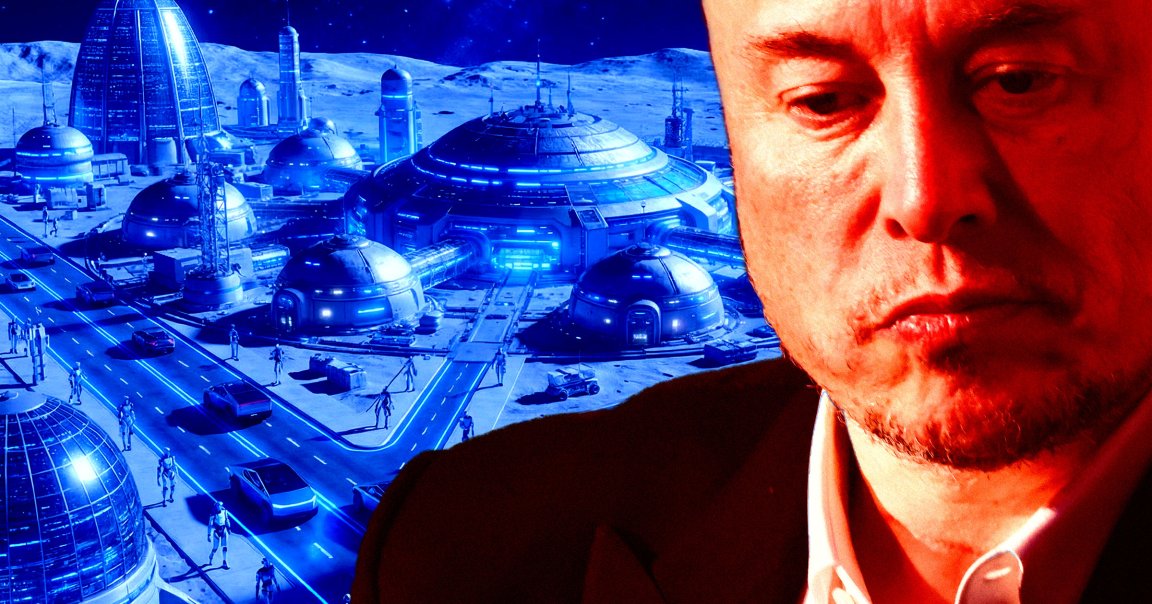
“For those unaware, SpaceX has already shifted focus to building a self-growing city on the Moon, as we can potentially achieve that in less than ten years, whereas Mars would take 20+ years,” he tweeted.
It’s a flabbergasting reversal, and one that Musk seems to be working through publicly on his X feed. In one opaque tweet that appeared to be missing at least one important word, Musk reflected on his current emotional state.
“Life cannot just be about one sad thing after another,” he wrote while responding to his own tweet about SpaceX building a “system that allows anyone to travel to Moon.”
“There must also be things that make us super excited and inspired about the future,” he added. “This is one of [sic] things. Bigtime.”
It remains unclear whether he was talking about his excitement for building a city on the Moon or whether he was consoling himself over suddenly deprioritizing his decades-long dream.
Netizens on his social media network were caught off guard by the unusually glum missive.
“U ok?” reads one response, in the form of a meme.
The vast majority of the other most-liked replies pointed out that humanity was already dealing with enough problems back on Earth.
“Most people can’t afford to pay their bills, let alone even look towards the Moon,” one user wrote.
Musk, who has a long track record of imbibing in drugs like ketamine, appears to be going through it these days.
“Whoever said ‘money can’t buy happiness’ really knew what they were talking about,” he tweeted last week, a comment that drew little pity considering he is the richest man in the world.
Along with a slew of anti-immigrant posts, Musk has also been retweeting optimistic visualizations of what a Moon city might look like.
Rumors suggest SpaceX is planning to go public at a record-breaking valuation of $1.25 trillion, which could bring plenty of renewed scrutiny to Musk’s space colonization ambitions.
Perhaps he was simply trying to save face with his turn to the Moon. By massively shifting the goalposts, he could also have a better shot at attracting government contracts, which have kept SpaceX from bankruptcy since its earliest days.
For now, Mars is still technically on the table.
“That said, SpaceX will also strive to build a Mars city and begin doing so in about five to seven years, but the overriding priority is securing the future of civilization and the Moon is faster,” Musk wrote in his announcement on Sunday.
However, SpaceX’s website currently still states that the company is “planning to launch the first Starships to Mars in 2026” — an enormously ambitious goal, considering the spacecraft has yet to successfully launch to space and stick the landing, let alone make it to anywhere past the immediate vicinity of Earth.
More on Musk: Elon Musk Announces Huge Change: Self-Growing City on Moon Now Top Priority at SpaceX