

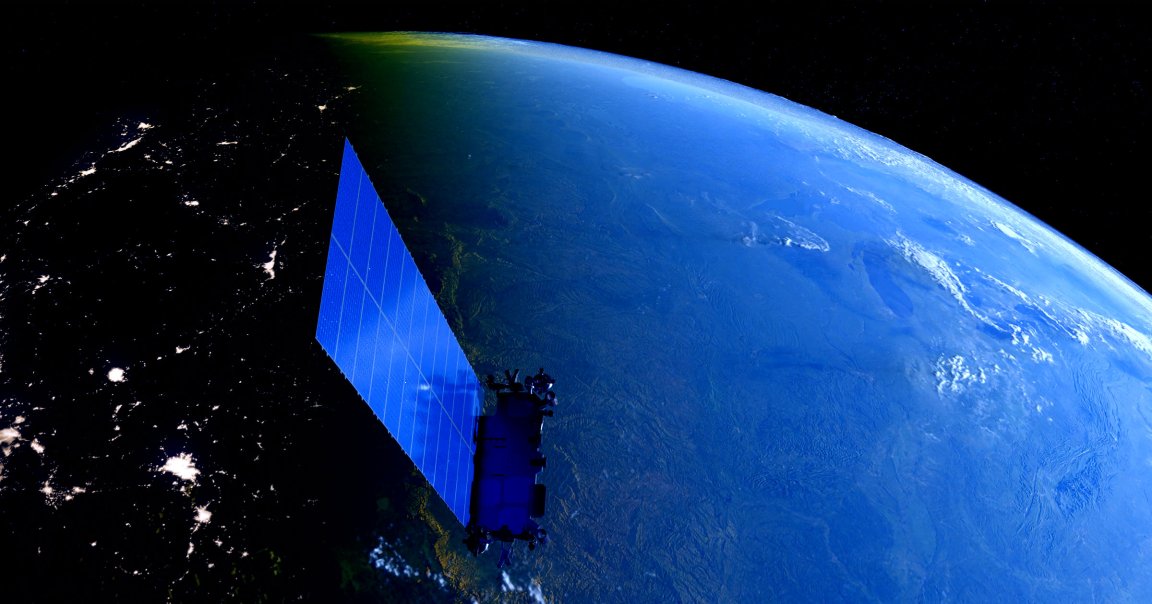
In December, SpaceX revealed that it had lost control of one of its Starlink satellites after suffering an “anomaly.”
The Elon Musk-led firm said its broadband-beaming asset vented its propulsion tank and saw its orbit decay rapidly, releasing a “small number of trackable low relative velocity objects” — seemingly a convoluted description of a satellite explosion.
Now, three months later, SpaceX admitted that yet another satellite had “experienced an anomaly” at an altitude of roughly 350 miles on Sunday.
According to space tracking company Leo Labs, the offending satellite, dubbed Starlink 34343, appears to have broken up into “tens of objects” that were detected in its vicinity following the event.
“We’ve characterized this event as likely caused by an internal energetic source rather than a collision with space debris or another object,” Leo Labs tweeted, in another euphemistic description of an orbital blast. “Due to the low altitude of the event, fragments from this anomaly will likely de-orbit within a few weeks.”
SpaceX claims the incident poses “no risk to the International Space Station, its crew, or to the upcoming launch of NASA’s Artemis 2 mission,” referring to the space agency’s first crewed trip to the Moon, which is slated to launch on Wednesday. “The SpaceX and Starlink teams are actively working to determine root cause and will rapidly implement any necessary corrective actions.”
The pair of mishaps highlight how space debris in our planet’s orbit continues to be a contentious issue. Pieces of rocketry and retired spacecraft are cluttering the space SpaceX is looking to fill with thousands of more Starlink satellites — in addition to up to a million enormous space-based orbital data centers, if CEO Elon Musk is to be believed.
Even if all retired or dysfunctional Starlink satellites fall back to Earth and burn up in our planet’s atmosphere, as designed, scientists warn that the environmental consequences of the continuous release of ozone-depleting chemicals in the stratosphere could be devastating.
According to recent estimates, one to two Starlink satellites are falling back to Earth every single day, a number that could continue to climb as SpaceX continues to build out its megaconstellation.
In short, a massive debris field of its own making that greatly increases the risk of future collisions is the last thing it needs.
Following the first reported Starlink anomaly in December, the aerospace manufacturer appeared to be aware of this reality.
“As the world’s largest satellite constellation operator, we are deeply committed to space safety,” SpaceX tweeted at the time. “We take these events seriously. Our engineers are rapidly working to root cause and mitigate the source of the anomaly and are already in the process of deploying software to our vehicles that increases protections against this type of event.”
Beyond obliterated satellites, other constellations orbiting the Earth could make things even more complicated.
Case in point, a Starlink and a Chinese satellite narrowly avoided a collision a mere week before SpaceX’s December “anomaly.”
The near miss was the result of a lack of communication.
“As far as we know, no coordination or deconfliction with existing satellites operating in space was performed, resulting in a [656 feet] close approach between one of the deployed satellites and STARLINK-6079 (56120) at [350 miles] altitude,” Starlink engineering VP Michael Nicolls tweeted at the time.
More on Starlink: SpaceX’s One Million Orbital Data Centers Would Be Debilitating for Astronomy Research, Scientists Say