

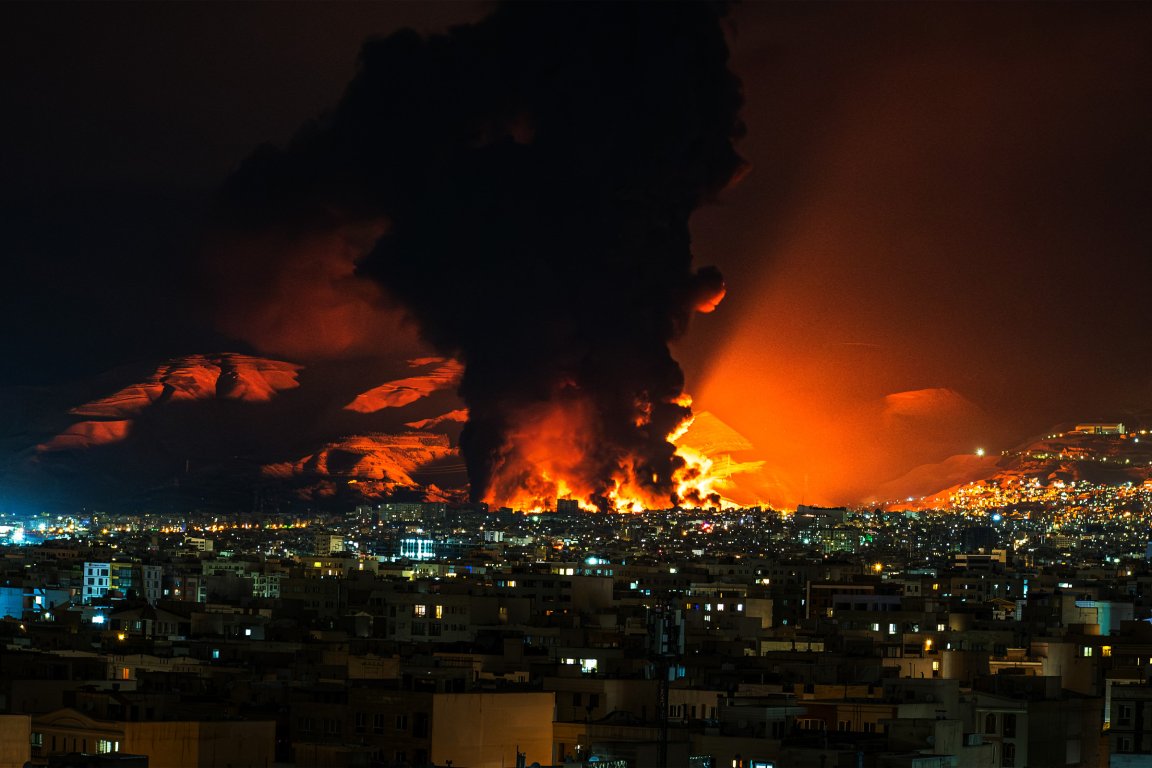
The conditions in Tehran are becoming downright biblical. On top of devastating air strikes, blistering dust storms, and a hellish six-year drought, the country is now being splattered by toxic sludge raining from the skies.
Over the weekend, reports of an acidic “black rain” falling over the Iranian capital city of Tehran began flooding the internet. According to Time, the noxious deluge came as a result of Israel bombing nearby oil storage facilities, which unleashed hellish plumes of fire and black smoke into the skies.
As the exhaust filled the air for miles, Iranians reported difficulty breathing, headaches, skin damage, as well as eye and throat irritation, Time reported.
“Something like a black monster has swallowed the sky over Tehran,” a Tehran resident named Leila told the magazine. “It’s as if all the cars and the street pavement have been coated in black paint.”
As the acrid sludge filled the skies, raindrops began falling over the surrounding region, full of dark chemical discharge. The Iranian arm of the Red Crescent Society warned residents in the area that the rain would likely be “highly dangerous and acidic,” and could cause “chemical burns of the skin and serious damage to the lungs.”
A video shared by Fred Pleitgen, CNN‘s senior international correspondent in Tehran, showed the aftermath of the oil refinery discharge.
“You can see that the rain water is actually black, also saturated, it appears, with oil,” Pleitgen explained, wiping the ground with his shoe to show the accumulation. “That’s what’s coming down this morning, this sort of oil-filled rain.”
The Red Crescent Society further warned that precipitation of this kind could register pH levels as low as 4.0, per AirQualityNews, which is about the acidity of apple cider. That’s below the lethal level for most species of fish, an acidity which carries long-term consequences for plant biomass. Given the source of the pollutants, that outlet notes the acid rain is likely also full of toxins like hydrocarbons, carcinogenic polycyclic aromatic hydrocarbons, sulfur dioxide, and nitrogen oxides.
The hellish precipitation comes after four oil depots and a gasoline logistics site were destroyed by Israeli missile attacks, killing six. The air strikes ignited massive fires which sent plumes of smoke miles into the air, a situation which one Iranian journalist described as “apocalyptic.”
“Even masks are becoming difficult to find,” the anonymous journalist told the Guardian. “I ask those who have the ability, especially foreign media, to reflect on this situation. What are people supposed to do under these conditions? This is truly a crime against humanity.”
More on Iran: Iran Is Bombing Data Centers in Retaliation