
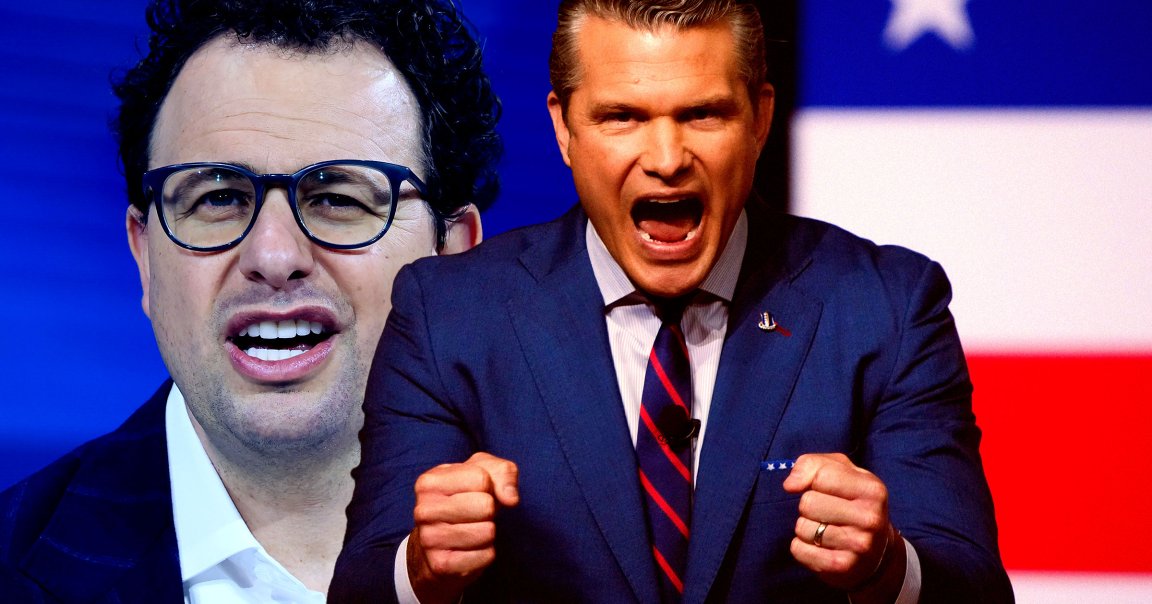
Anthropic CEO Dario Amodei picked a major fight with the Department of Defense last month, asserting that his company’s AI models couldn’t be used for mass surveillance of Americans or direct autonomous weapons systems.
Defense secretary Pete Hegseth and president Donald Trump lambasted Amodei for dictating what they could or couldn’t do with the company’s tech. They quickly announced that the company would be labeled a supply chain risk “effective immediately,” in sanctions conventionally reserved for companies from adversary countries.
It was an unprecedented move that sent shockwaves across Silicon Valley, with a coalition of tech industry groups signing a public letter condemning the decision. Even Amodei’s top rival, OpenAI CEO Sam Altman, argued that the Trump administration had overstepped by labelling Anthropic’s tech non grata. Anthropic risks losing hundreds of millions of dollars’ worth of US government contracts.
While Amodei has since issued an apology for pushing back against Trump in a note to staffers that was leaked to The Information, Anthropic is now ready to challenge the White House’s latest designation in court. As Wired reports, Anthropic filed a federal lawsuit against the Pentagon on Monday, challenging its move to label it a “supply chain risk.”
As Amodei noted in his blog post, “we do not believe this action is legally sound, and we see no choice but to challenge it in court.”
In the company’s lawsuit, filed in a California court, it argues that White House officials acted unconstitutionally and out of retaliation.
“The Constitution does not allow the government to wield its enormous power to punish a company for its protected speech,” the lawsuit reads. “Anthropic turns to the judiciary as a last resort to vindicate its rights and halt the Executive’s unlawful campaign of retaliation.”
But experts believe Anthropic may have a very difficult road ahead.
For one, “it’s 100 percent in the government’s prerogative to set the parameters of a contract,” Snell & Winter partner Brett Johnson told Wired, effectively meaning there may be very little chance of an appeal.
Johnson argued it’s in Anthropic’s best interest to argue in court that it was singled out among the US government’s other AI contractors.
While the Pentagon has officially ratified its decision to name Anthropic a supply chain risk, the company’s Claude chatbot continues to be widely used in the US war on Iran, meaning the Department of Defense is now using compromised tech by its own admission.
Government agencies outside of the military have revealed they would immediately follow the direction of the president and stop using Claude. A Microsoft spokesperson also told Wired that it will continue to offer the chatbot to all other agencies, except for the Defense Department.
The lawsuit may greatly complicate efforts to bury the hatchet.
“Anthropic has much more in common with the Department of War than we have differences,” Amodei wrote in his apology. “We both are committed to advancing US national security and defending the American people, and agree on the urgency of applying AI across the government.”
But the lawsuit itself takes a dramatically different tone. The Trump administration’s actions “are as unlawful as they are unprecedented,” the document reads, calling out Hegseth specifically for sidestepping Congress.
“The Challenged Actions inflict immediate and irreparable harm on Anthropic,” the lawsuit reads. “On others whose speech will be chilled; on those benefiting from the economic value the company can continue to create; and on a global public that deserves robust dialogue and debate on what AI means forwarfare and surveillance.”
More on the fight: Dario Amodei Issues Groveling Apology for Daring to Criticize Trump