

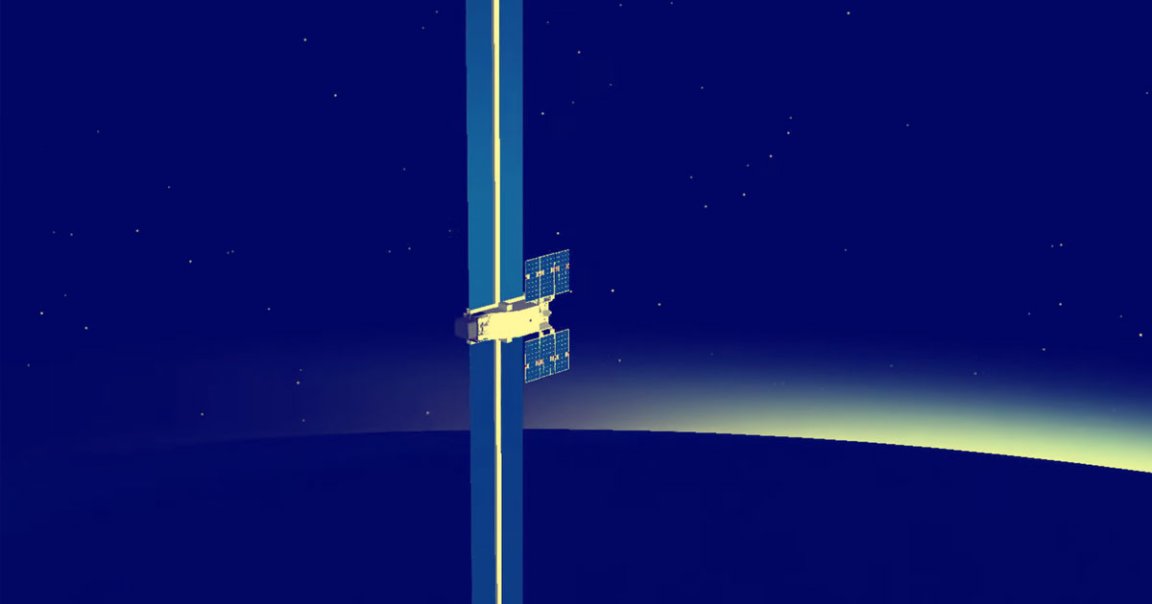
Made in Space
Launching large man-made structures into orbit poses extraordinary challenges. But cutting-edge 3D-printing technology could make space manufacturing far more practical — by moving the manufacturing process into the near-zero gravity environment of outer space.
NASA just awarded Made In Space a $73.3 million contract to demonstrate 3D-printing spacecraft parts while in orbit using a small spacecraft called Archinaut One. The craft will attempt to print two 32-foot beams that will eventually be used to hold solar arrays to both sides of itself.

Archinaut One
Archinaut One is scheduled to launch on a Rocket Lab Electron rocket from New Zealand “no earlier than 2022” according to NASA.
“In-space robotic manufacturing and assembly are unquestionable game-changers and fundamental capabilities for future space exploration,” said Jim Reuter, associate administrator of NASA’s Space Technology Mission Directorate in a statement.
Today’s news is actually the start of the second phase of NASA’s partnership with Made in Space. Made in Space has already successfully 3D-printed a structural beam in a NASA facility that mimics the conditions of space in 2017.
But actual orbit will undoubtedly pose its own set of challenges.
READ MORE: NASA backs demo that will 3D-print spacecraft parts in orbit [Engadget]
More on manufacturing in space: Billionaires Are Dead Serious About Moving Factories to Space