

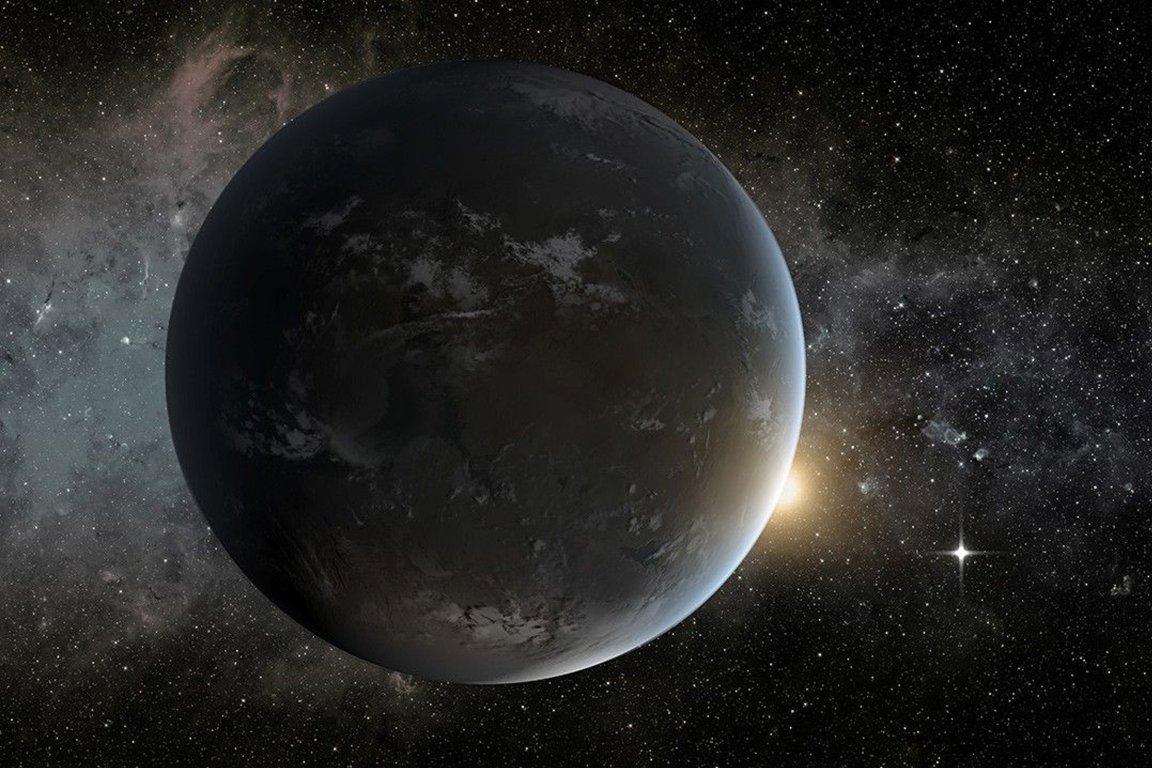
A recently discovered exoplanet only 25 light years away resembles our own planet a lot more than once thought.
The distant world, dubbed GJ 3378b, orbits inside the habitable zone of a red dwarf star — a type of star that is much smaller and cooler than our Sun — where temperatures are just right for liquid water to form on the surface.
But initially, its case for potentially supporting life beyond that looked grim. Astronomers suspected it was a rocky world, but its mass was at least five times more than Earth — or what astronomers called a “super-Earth.” Along with its incredible surface gravity, such a heavy world would possess a crushing atmosphere that would smother any chance of hosting life.
That no longer appears to be the case, however. In a new study published in The Astrophysical Journal, researchers from the University of California, Irvine, took a second look at the exoplanet, finding that it’s a much more manageable twice the mass of Earth. Combined with its proximity to our solar system, it’s one of the most tantalizing nearby candidates for potentially supporting life yet.
“This one’s exciting,” lead author Paul Robertson, a UC Irvine associate professor of astronomy, said in a statement about the work. “It’s one of our closest cosmic neighbors. 25 light-years sounds like a long way, but the Milky Way is about 100,000 light-years across, so in that respect it’s our next-door neighbor.”
There’s more detective work that needs to be done before we know how hospitable to life GJ 3378b is. The biggest question mark is its atmosphere. Does it have one, and is it robust enough to protect against the radiation of its star? And how much pressure does it exert?
It’s a delicate balance. “If you scale the Earth down to the size of an apple,” Robertson explained, “its atmosphere would be about as thick as the skin of the apple.” This is just the right amount to support liquid water and have breathable air, while still providing protection against space radiation, he added.
There’s also a raging debate in astronomy over whether red dwarf systems are habitable at all. These stars are believed to be highly volatile, regularly unleashing powerful solar flares. Because their habitable zones are smaller, that puts a potential life-supporting realm much closer to these outbursts, which could strip them of their atmosphere and sterilize any burgeoning life. Being so close to the star also means that any such planets are likely to be tidally locked, in which the star’s gravity prevents them from rotating so that one side is facing the star at all times.
More on space: Saturn’s Icy Moon Is the Perfect Place to Settle, NASA Scientist Argues