

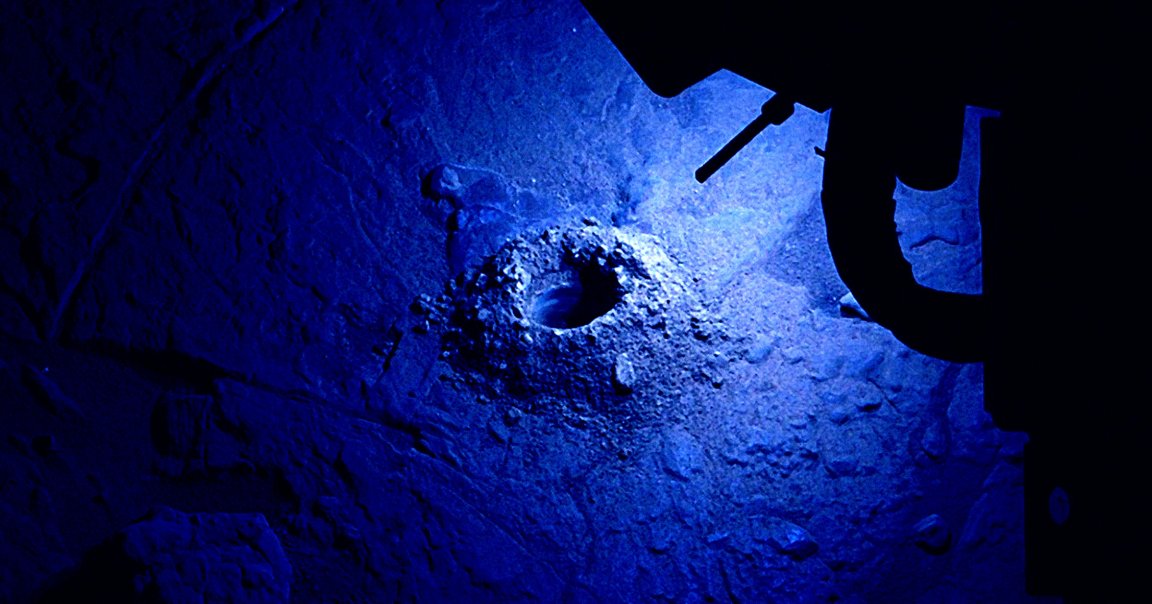
The length of a night on Mars isn’t too different from here on Earth, lasting just over 12 hours on average. Thanks to its similar axial tilt, it also experiences longer nights in winter and shorter nights during summer — but the gloom is eerie, with temperatures plummeting to as low as -100 degrees Fahrenheit near its equator. And thanks to the complete lack of artificial light, the night sky will shimmer with the usual star constellations we’ve come to know back on Earth.
Technically, though, it’s not a complete blackout on the Red Planet’s surface at night. NASA’s Curiosity Mars rover, which has been wandering the planet’s deserted landscapes for almost 14 years, is outfitted with LED lights at the end of its robotic arm, allowing it to light up the seemingly endless darkness.
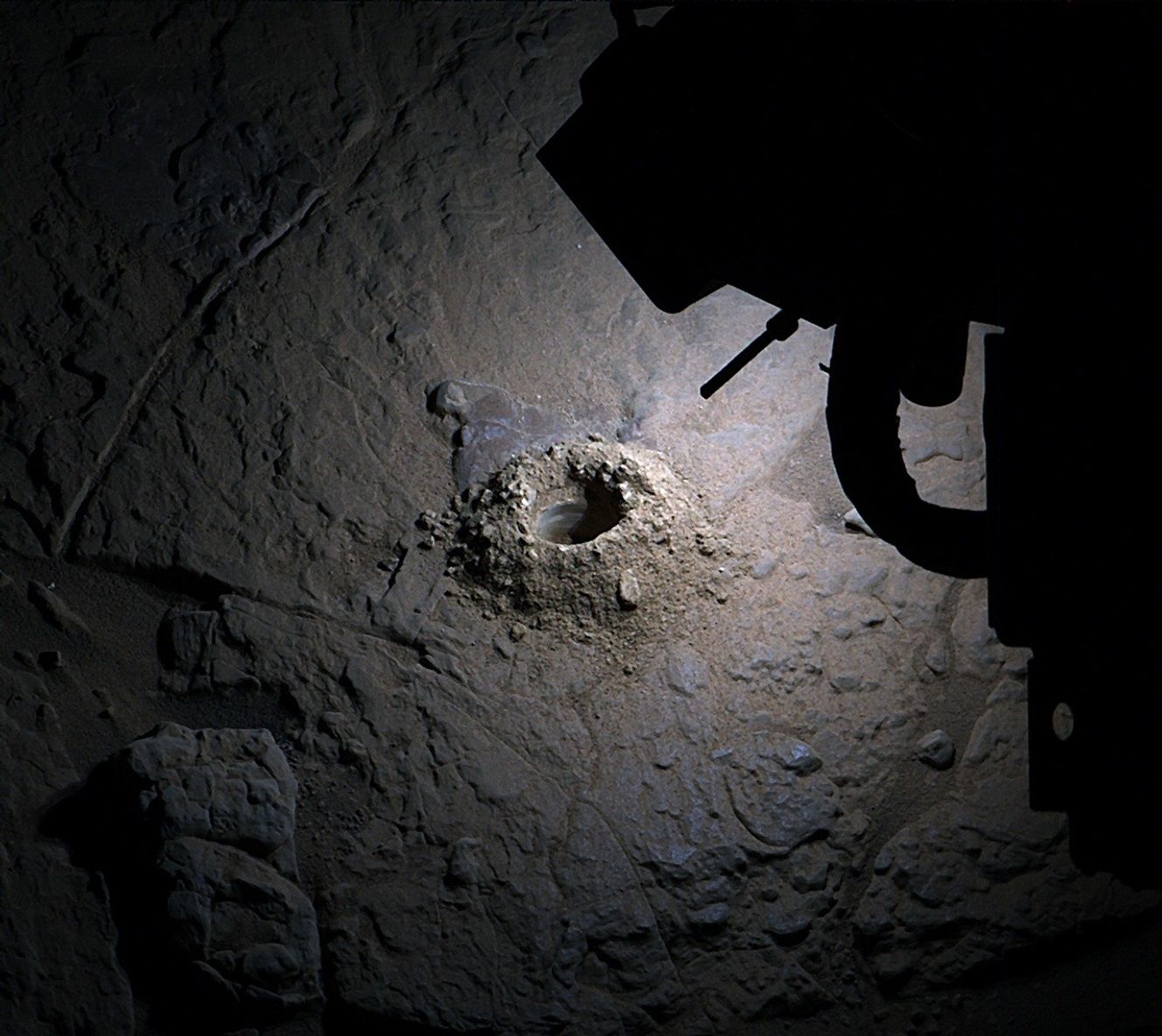
Case in point, a December 6 image recently featured by NASA shows the rover’s lights lighting up a hole it drilled into the surface of the rock, dubbed “Nevado Sajama.” It’s an eerie view of an alien environment, a stark reminder that the lone rover has plenty of almost complete blackness to contend with as it probes Mars for signs of ancient life.
The camera, called the Mars Hand Lens Imager, is one of seventeen cameras attached to the rover, and can take true-color images at a resolution of 1,600 by 1,200 pixels. It features both UV and white LED lights, allowing it to take pictures at night.
The use of the rover’s lights isn’t just for show. Scientists used the LEDs to illuminate areas that are otherwise “deep in shadow during the day,” as NASA explains, “such as the insides of drill holes and the inlet tubes leading to instruments in the rover’s belly.”
The lights have previously been used to examine layering inside rocks to better understand their composition. However, Curiosity changed the way it drilled its holes in 2018 in light of some problems with its drill, making the new holes “too rough and dusty to see any such details” ever since.
However, a hole Curiosity drilled on November 13, its 4,740th Martian day (or sol) on the planet, was deemed “smooth enough to try looking for layers.”
The image, which was taken weeks later, allowed the team to better get a sense of the rock, which was found in a region dotted with “boxwork” geologic formations.
These curious formations also happen to look like massive spiderwebs from space — as if night on Mars didn’t already sound terrifying enough.
More on drilling on Mars: NASA Now Letting Mars Rover Drive Autonomously