

In less than two weeks, NASA is scheduled to launch its Artemis 2 mission, the first crewed journey to the Moon in over half a century. The Space Launch Rocket has already been rolled out to the launch pad, setting the stage for a historic mission.
While the crew won’t be attempting to land on the lunar surface this time around — that milestone is reserved for Artemis 3 — it’s an extremely ambitious and highly complex mission.
And as CNN reports, some experts aren’t convinced of NASA’s reassurances that the Orion spacecraft that will carry the astronauts is safe to use.
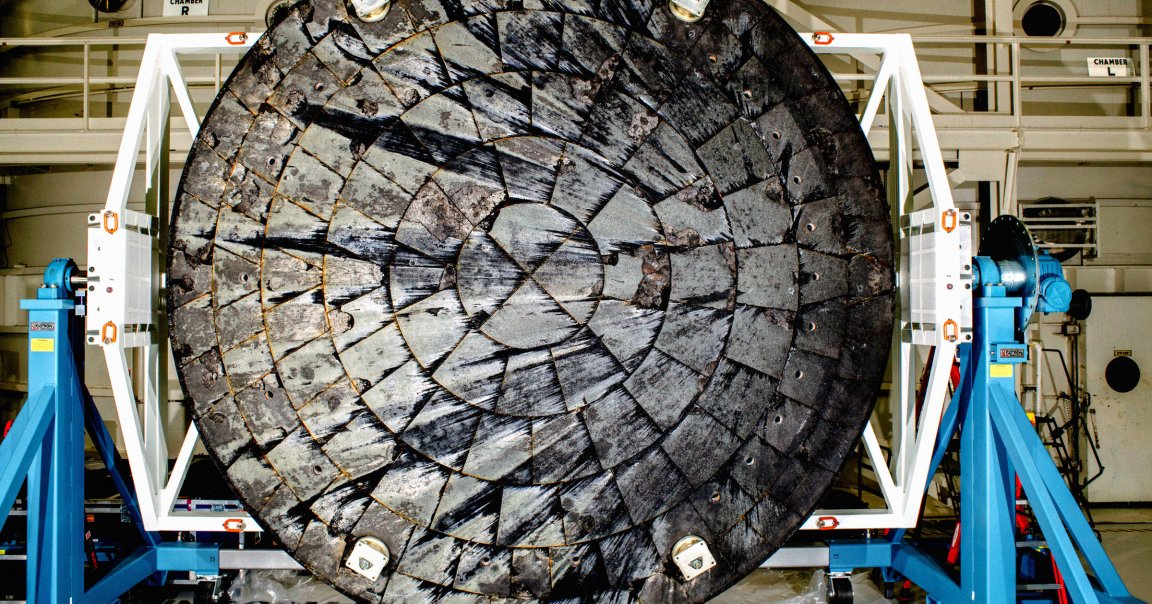
Specifically, NASA has spent years since its successful uncrewed Artemis 1 mission studying how the extreme temperatures during reentry into the Earth’s atmosphere affect Orion’s heat shield.
The Orion capsule sustained major damage after making its return in 2022. It cracked and chipped as a result of the extreme conditions during reentry.
Over two years after the mission concluded, NASA said it had identified the root cause, with engineers determining that the “gases generated inside the heat shield’s ablative outer material called Avcoat were not able to vent and dissipate as expected.”
“This allowed pressure to build up and cracking to occur, causing some charred material to break off in several locations,” the agency wrote in a December 2024 statement.
Yet instead of making major material changes to the heat shield itself after the fact — the Artemis 2 heat shield was assembled and installed even before the Artemis 1 mission — NASA opted to adjust the Artemis 2 mission’s flight path instead, to ensure a gentler reentry.
“Based on the data, we have decided — NASA unanimously and our decision-makers — to move forward with the current Artemis II Orion capsule and heat shield, with a modified entry trajectory,” former NASA administrator Bill Nelson announced at the time.
But not everybody is convinced that the space agency has sufficiently addressed the issue ahead of its first crewed Moon mission.
“What they’re talking about doing is crazy,” former NASA astronaut and heat shield expert Charlie Camarda told CNN.
Camarda has since teamed up with several other NASA research scientists, calling on the agency to heed their warnings.
“We could have solved this problem way back when,” he told the broadcaster. “Instead, they keep kicking the can down the road.”
NASA made changes to the way it applied the special Avcoat material to the Orion capsule from a honeycomb-like structure, as applied during Apollo missions, to larger blocks in order to simplify manufacturing, testing and installing it.
The material is designed to char and erode during “skip reentry,” a maneuver that NASA uses in which the spacecraft skips over the atmosphere like a stone before diving in. However, when it dipped back in during Artemis 1, gases built up below the heat shield, causing it to crack and break off.
The space agency is adamant that its new reentry path for Artemis 2 won’t result in gases building up in a similar manner.
“We won’t go as high on that skip, it’ll just be a loft,” Artemis flight director Rick Henfling told CNN.
Still, Camarda and other former NASA astronauts and engineersare warning that there could still be danger.
“The reason this is such a big deal is that when the heat shield is spalling — or you have big chunks coming off — even if the vehicle isn’t destroyed, you’re right at the point of incipient failure now,” thermal protection materials expert and NASA veteran Dan Rasky told CNN. “It’s like you’re at the edge of the cliff on a foggy day.”
How much of a danger a cracked heat shield poses remains a subject of debate.
“Will the heat shield crack? Yes, it’s going to crack,” former NASA astronaut Danny Olivas, who worked on the heat shield investigation, told CNN.
Nonetheless, Olivas is convinced that NASA did enough. Even if it were to crack, he says, the space agency built in redundancies in the form of several layers of defense below the Avcoat layer that will keep astronauts safe.
“I think in my mind, there’s no flight that ever takes off where you don’t have a lingering doubt,” he added. “But NASA really does understand what they have. They know the importance of the heat shield to crew safety, and I do believe that they’ve done the job.”
NASA’s recently sworn-in administrator, Jared Isaacman, is equally convinced.
“We have modified our reentry profile,” he told CNN affiliate WESH last week. “We have regained margin to safety, and I feel very good about that with Artemis 2.”
More on Artemis 2: NASA Says It’s Hitting the Gas, Speedrunning Next Moon Mission