
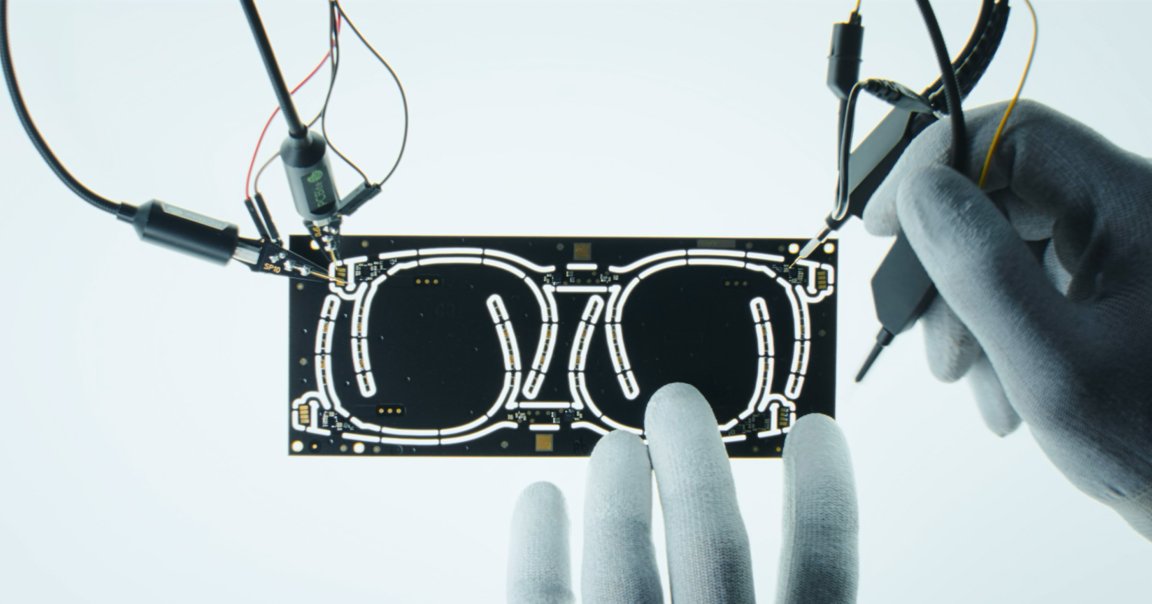
In the future, you may not need to get a new prescription for your eye glasses — because a Finnish company called IXI is claiming to have manufactured the world’s first eyeglasses that can adjust their corrective lenses automatically.
These special glasses have “dynamic lenses” made of liquid crystals, which can transform to accommodate whatever focal length the user’s eyesight requires, IXI CEO Niko Eiden told CNN.
That makes them a far cry from old fashioned bifocals, which are eyeglasses with two different prescriptions in the same lens that are clearly separated by a seam, or progressive glasses (also called varifocal lenses), which are similar to bifocals but use a progression of lenses instead of a hard divider.
Eyeglasses that can autofocus automatically would be a huge leap for the tech, which hasn’t changed much since progressive lens were first developed in 1950s Germany.
“The eyewear industry hasn’t really been innovating for vision correction,” Eiden told CNN. “Maybe 10, 15 years from now people will be wondering, how did we wear those fixed focus glasses in the old days?”
Tiny LEDs inside the IXI frame bounce invisible infrared light into your eyes while photodiodes, also within the slim eyeglass frame, pick up the reflection on your eyeballs while measuring and tracking what you’re looking at. Then it converts that reflection and data into electrical signals that control the liquid crystals; like bifocals or progressives, the IXI has a reading area within the lens for near sighted vision, but that disappears entirely if it detects your eyes looking to the far distance.
The venture has attracted more than $36.5 million from Amazon and other investors. It’s not clear when the eyeglasses will be available for the public to buy, though Eiden told CNN that they’ll launch sometime next year. Meanwhile, there’s a waiting list live on the company’s site.
IXI isn’t the only company pursuing dynamic autofocus lens with liquid crystals; CNN reports that a Japanese company called Elcyo is developing its own version, while another Japanese outfit called ViXion is currently selling autofocus glasses, though they look pretty clunky with two tiny apertures in the lens that a user must look through in order for the glasses to work. The IXI glasses look like ordinary glasses, by comparison.
But there’s a catch with the IXI glasses — they need to be charged along with your other gadgets taking up precious real estate on your nightstand, and will brick to their “base” prescription if they run out of batteries. And these specs, which will no doubt be more expensive than ordinary lo-fi eyeglasses, will be harder to fix or replace — a major negative for people who don’t want another gadget to maintain.
More on eye sight: Scientists Hack Human Eye to See a Whole New Color, Called “Olo”