
Little love has been lost between Elon Musk and Sam Altman.
The two billionaires have been openly feuding for many years now, despite founding OpenAI together over a decade ago. Musk left the organization in 2019 over disagreements with leadership — and the falling out has only grown since then.
Musk has filed several lawsuits against the ChatGPT maker, most recently alleging it had breached its fiduciary duties by turning what was once a non-profit “charity” into a profit-maximizing corporate behemoth. OpenAI denies these allegations, arguing that Musk was “motivated by jealousy” after being pushed out for demanding to merge OpenAI with Tesla and assume majority control.
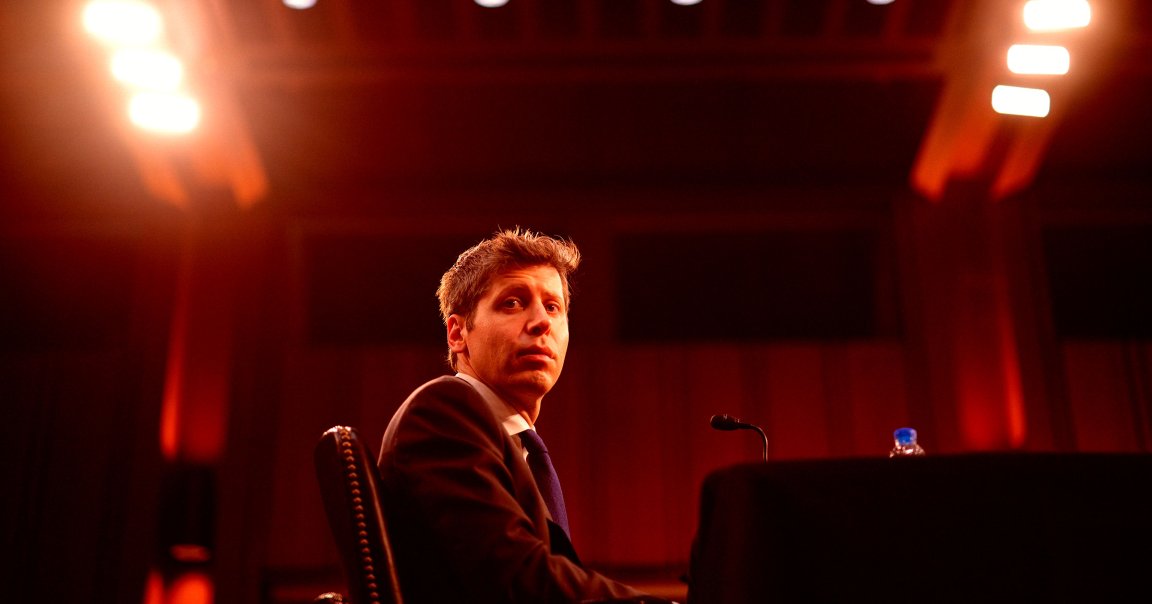
The stakes rose exponentially this week as a trial for Musk’s lawsuit against the company, initially filed in 2024, kicked off in an Oakland courthouse. Musk is demanding that OpenAI to undo its recent conversion into a for-profit entity, sack Altman and his board, and $130 billion in damages, which his lawyers refer to as “ill-gotten gains.”
The anxiously-awaited legal proceedings could have vast implications not just for OpenAI — which is rumored to be plotting an IPO — but for the AI industry as a whole. OpenAI is shackled to most of the industry’s biggest players through multibillion-dollar contracts, meaning that if it were to make concessions, lose its status as a for-profit company, and its CEO, it could send major ripple effects across an already shaky industry.
If Musk were to win — a decision that could materialize at the end of an estimated three weeks of legal proceedings — the effects could tear apart the already-widening cracks in Silicon Valley’s all-in, trillion dollar bet on AI, effectively popping the “AI bubble” which experts have warned about for years now.Analysts have long grown wary that the industry’s unprecedented levels of spending are making any hope of an eventual return on investment a long shot, meaning that a massive legal setback for OpenAI could therefore set off a powder keg of pent-up anxiety.
A loss for OpenAI could also set a dangerous legal precedent.
“The broader question of whether AI labs founded as charities can lawfully pivot into commercial enterprises would be settled, at least in California,” as University of Sydney media and communications researcher Rob Nicholls argues in a piece for The Conversation. “This has potential implications for Anthropic and other mission-driven peers.”
Besides, plenty of damage has already been done. The trial “has already pried open Silicon Valley’s normally sealed boardrooms, surfacing diaries, Slack threads and HR memos that paint an unflattering portrait of OpenAI’s governance,” Nicholls noted.
It’s an especially precarious time for OpenAI, which has desperately consolidated its efforts to focus on its core offerings, including ChatGPT and a coding tool, by killing off distracting “side quests.” The company is still bleeding billions of dollars every quarter, despite earmarking a whopping $600 billion in AI infrastructure expenses over the next four years.
Raking in enough cash to cover its astronomical spending spree could prove extremely difficult as well. As the Wall Street Journal reported this week, CFO Sarah Friar has warned internally that the company could fail to grow revenue fast enough to “pay for future computing contracts.” The company already missed its own internal user growth and revenue targets for 2025.
Where that leaves OpenAI’s plans for an IPO is anything but clear, with Friar reportedly butting heads with Altman on when to go public, a disagreement both denied in a statement to the WSJ.
Now that Musk and Altman’s bitter feud has broken into the public in entirely unprecedented ways, the winner of the ongoing trial could take it all.
“If Musk wins, it could result in the defeat of a key competitor in the race to AGI,” law professor and UCLA exec Rose Chan Loui told the BBC. “Whoever wins that race will have a lot of power.”
Musk has less to lose than Altman. But a victory could certainly bolster his position. He recently folded his (very much for-profit) AI startup xAI into his space company SpaceX, which is also expected to go public in the coming months at a record-shattering valuation of $1.75 trillion. By declaring victory over his archnemesis, Musk could aggregate even more influence over the industry.
At the same time, nobody knows what will be left of that industry if it turns out that OpenAI’s plans to shed its non-profit roots were illegitimate and Altman is forced to resign. If OpenAI were to fall, many other companies closely tied to its continued success could follow, a domino effect that could have a lasting impact “felt for many years to come,” per Nicholls.
A loss for OpenAI could hit an already exposed nerve as investors have long grown wary of an industry hellbent on spending as much money in as little time as possible without ever establishing a feasible, long-term business model. A high-stakes, popcorn-chomping “clash of the titans” lawsuit likely isn’t going to dispel that fear.
More on OpenAI: OpenAI in Shambles as IPO Looms