

Last month, failing tech bro shoe company Allbirds made the baffling announcement that it was pivoting to AI — three magic words that turned the waning business into Silicon Valley’s latest obsession overnight.
Now Japanese toilet maker Toto, which has been at the epicenter of the country’s — and the rest of the world’s — bidet revolution, is looking to cash in as well.
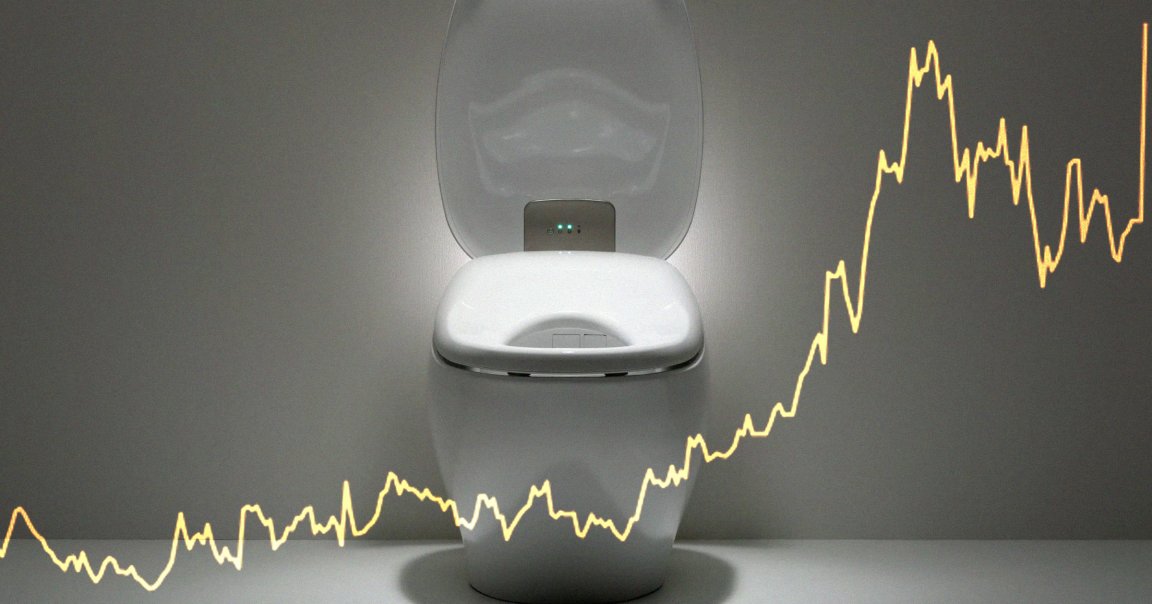
Toto isn’t exactly pivoting to AI — it’s more like a doubling down. The company unveiled plans last week to ramp up existing production of semiconductor components, an attention-catching “AI play” that sent its shares soaring by 18 percent to their highest levels since 2021, as the Financial Times reports.
In all, the company announced it was investing $190 million to strengthen chip production and boost research and development.
While it’s far better known for its high-tech toilets — which not only light up, clean and dry behinds, open and close automatically, spray deodorizer, and flush on their own — Toto is also the world’s second-largest producer of electrostatic chucks, a critical component that holds NAND computer flash storage chips in place during manufacturing.
In large part thanks to the massive surge in interest for chips driven by AI, Toto’s semiconductor component sales now account for more than half of its profits, according to the FT.
Meanwhile its toilet business is starting to plunge, thanks to adhesive and plastic shortages triggered by the ongoing Middle East energy crisis. The company was forced to halt new orders in mid-April as a result.
Fortunately, the ongoing AI hype cycle could keep it afloat, at least for the time being.
More on pivoting to AI: Allbirds Stock Now Crashing as Reality Sets in About Its Delusional AI Pivot