

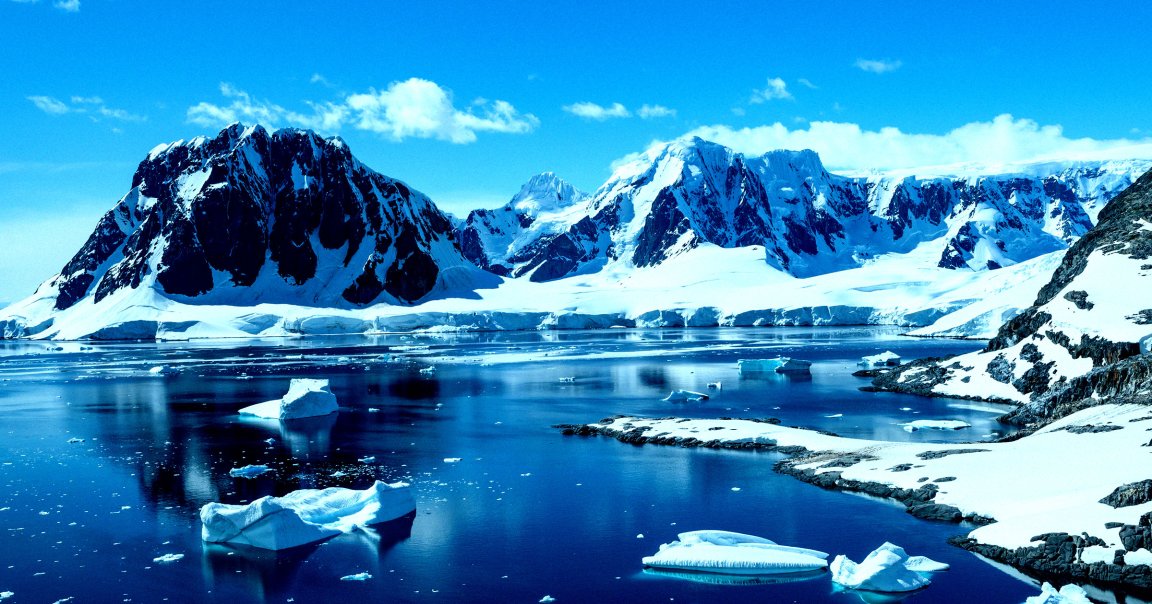
In a 2022 study, scientists suggested that there could be enormous mountain ranges — on the scale of the Himalayas — formed roughly half a billion years ago as the supercontinent Gondwana formed in the Earth’s southern hemisphere. The giant mass once made up modern-day Africa, South America, Antarctica, Australia, the Indian subcontinent, and more.
Researchers proposed that the supercontinent may have helped kickstart life on Earth by affecting global dynamics, including the climate and related biological processes, a case explored in detail in a new paper.
Now, as detailed in a separate study published in the journal Earth and Planetary Science Letters, two geologists from Australian National University say they’ve found evidence of fragments of this supercontinent lurking deep beneath Antarctica’s ice shell — a discovery that could have major implications for how we understand the proliferation of life many millions of years ago.
Finding evidence of an enormous supercontinent isn’t as straightforward as it sounds. Many of Gondwana’s mountain ranges have likely eroded over the last 500 million years or so. But by searching for zircons — natural minerals that contain trace amounts of uranium and thorium, which allow scientists to date them — the team created a map of the rough outlines of Gondwana underneath Antarctica.
Instead of probing the continent’s thick ice shell, the researchers analyzed zircons found in ocean sediments. The data suggests that Antarctica held plenty of material during the formation of Gondwana between 650 and 450 million years ago. That’s around the time of the Cambrian explosion, or the start of the rapid evolution of life on Earth as traced in fossil records.
The implication: Antarctica may be hiding many of the remnants of Himalaya-scale mountains that once allowed life to flourish underneath its deep coat of ice.
It may have played a major role, the latest study suggests.
“Approximately 46 percent of the detrital zircons in the weighted global database, during the critical period from the base of the Cambrian to the end of the Cambrian explosion, and 55 percent of the high-pressure grains, were derived from Antarctica,” the researchers concluded in their paper.
More on Gondwana: Scientists Rediscover Lost Continent That Broke Off From Australia