

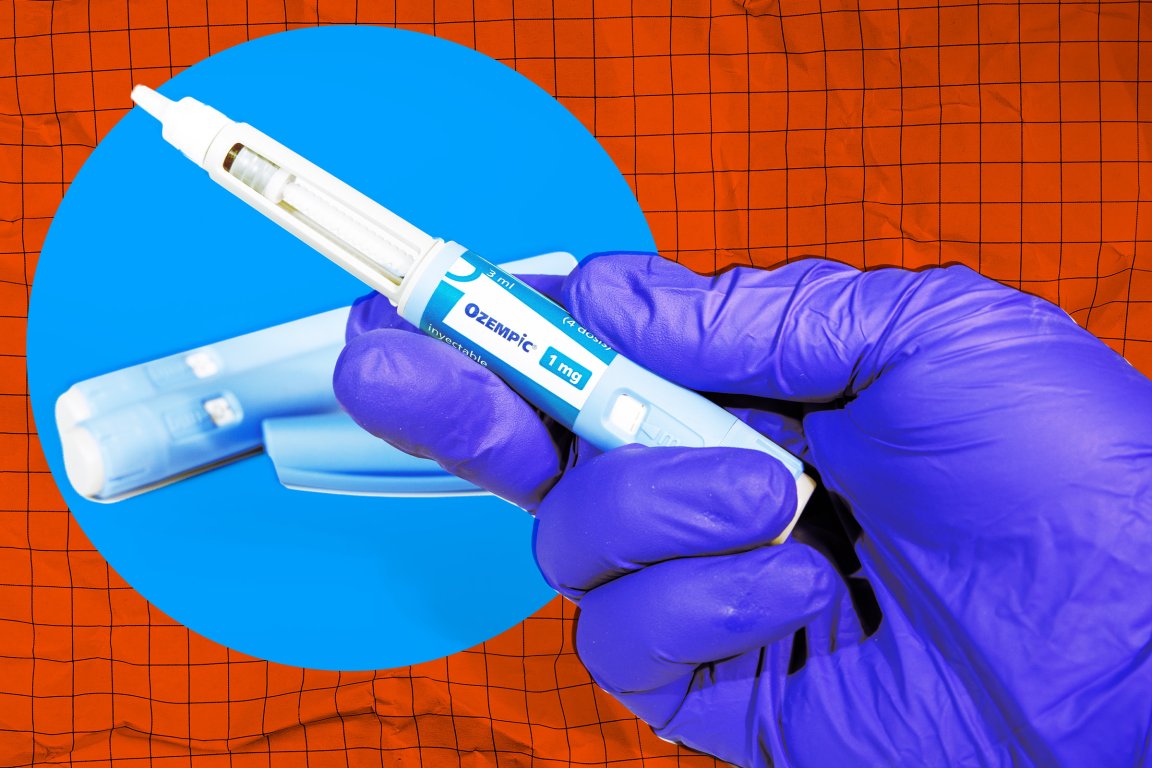
A collection of over forty studies presented at the American Society of Clinical Oncology last month all point to a potential medical miracle: that GLP-1 drugs like Ozempic and Wegovy appear to be protecting patients against cancer.
While most of the cancer-preventing benefits seem to come from the drugs reducing obesity — a risk factor for over a dozen forms of cancer — the findings also suggested that the drugs have anti-inflammatory effects that can stymy cancer development and even suppress tumors. Add it all up, and it could be a big deal for public health.
“The potential benefit is real, and it makes biological sense,” Gilberto de Lima Lopes, chief of medical oncology at the Sylvester Comprehensive Cancer Center at the University of Miami, told The Washington Post.
The results are striking. One of the studies followed 110,000 women between the ages of 45 and 80, finding that those who took GLP-1s were 30 percent less likely to develop breast cancer. Obesity is a breast cancer risk, but the “weight loss alone just didn’t account for the magnitude of the observed effect,” coauthor Elizabeth McDonald, a radiologist at the University of Pennsylvania, told NPR.
Another study showed that breast cancer patients who took GLP-1s had a lower risk of death from any cause and a reduced risk of cancer recurrence.
Perhaps the conference’s buzziest study was one that tracked 10,000 early-stage cancer patients and found that GLP-1 use reduced cancer risk in six out of seven different forms, and especially with colorectal, breast, liver, and lung cancer. Lung cancer, which showed a remarkable 50 percent reduction, is a notable inclusion here, since it doesn’t have a known connection with obesity.
The drugs may even combat tumors. A study that followed 10,00 patients found that GLP-1 users were far less likely to progress to a worse stage of cancer across four types of solid tumors.
All of these studies are observational, meaning that their findings can’t establish cause and effect. But the overwhelming pattern is unmistakable, and it makes intuitive sense to doctors and scientists. Obesity can cause inflammation in the body’s immune system, inducing effects that can cause cancer development.
The finer issue, beyond firmly establishing causation, is separating whether GLP-1s promote some specific cancer-fighting mechanism, or reduce cancer risk as a side effect of helping people lose weight. Enthusiasm is running high, but it’s too early to start prescribing GLP-1s as a cancer-fighting treatment.
“We don’t know for sure if these [initial] results will hold up in a randomized clinical trial,” Bernard Fuemmeler, coauthor of the large breast cancer study, and associate director of population science at the VCU Massey Comprehensive Cancer Center, told Scientific American. “All of these mechanisms are really ripe for future investigation.”
More on GLP-1s: GLP-1 Drugs Linked to Cognitive Impairment, Though the Reason Why Probably Isn’t What You Expect