

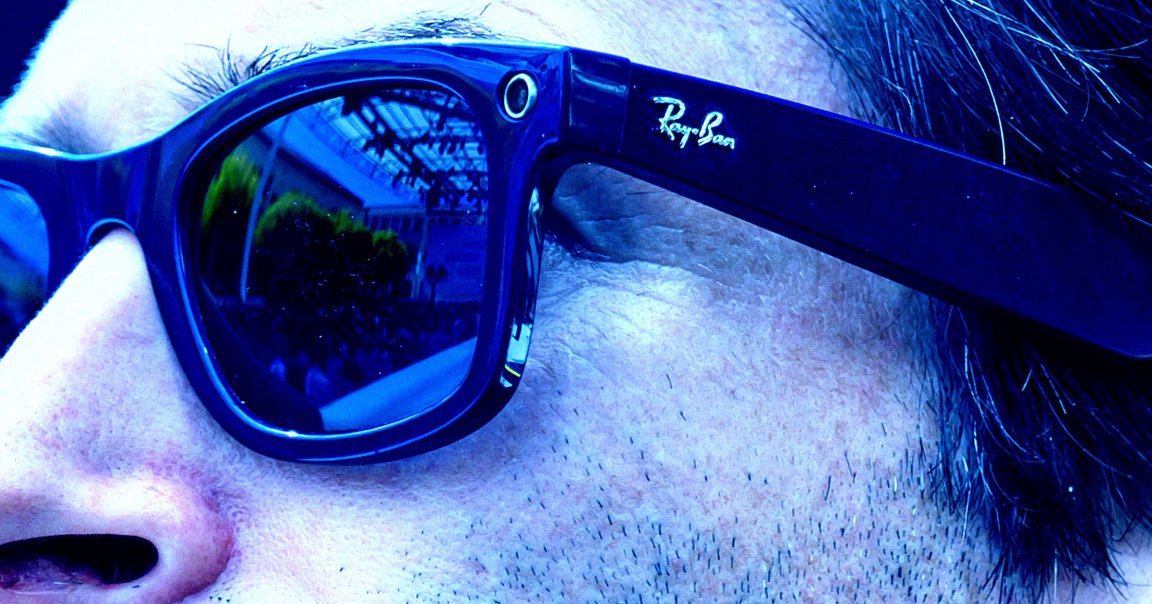
In an alarming investigation, Swedish newspapers Svenska Dagbladet and Göteborgs-Posten revealed that highly sensitive videos recorded by users’ Meta Ray Ban smart glasses are being sent to the company’s subcontractors in Nairobi, Kenya, for data annotation.
Contractors told the newspapers that they were watching people “going to the toilet, or getting undressed,” often not knowing that they were even recording or being recorded. Automated systems designed to blur faces often failed, the contractors claimed, effectively giving them a front row seat of somebody’s most intimate moments.
“I don’t think they know, because if they knew they wouldn’t be recording,” one contractor said
It was a disturbing revelation, highlighting how tech companies are still heavily reliant on human labor to sift through highly personal data and label what they see to train AI models, a hidden cost that the industry seemingly isn’t keen on discussing in public. Meta’s use of human annotators could also result in data falling into the wrong hands, a considerable liability that could put its customers at risk.
The topic of surveillance has been top of mind in the AI industry lately. Anthropic CEO Dario Amodei identified mass surveillance of Americans as one of two “red lines” he’s unwilling to cross in his brewing fight with the Department of Defense. And the militarization of law enforcement in the United States has garnered outrage, with agencies such as Immigration and Customs Enforcement accessing shadowy databases and scouring social media for identifying data.
The latest news about Meta’s subcontractors watching videos from smart glasses triggered a furor among users on social media, many of whom were already wary of the possibility of having somebody secretly recording them using a pair of Meta’s unassuming-looking glasses.
Many have quickly embraced a term for the devices that’s presumably sending Meta CEO Mark Zuckerberg into paroxysms of fury: “pervert glasses.”
“I’m taking a brave stance that may get me canceled: there is no reason for the pervert glasses to exist,” one user wrote.
“Glad people are settling on the term ‘pervert glasses,'” another agreed. “Bonus points if you also say it while posting a picture of Mark Zuckerberg or call them Mark Zuckerberg’s pervert glasses.”
“Not a fan of Mark Zuckerberg’s pervert glasses,” wrote yet another. “I would prefer technology to make it more difficult to skeez, creep or perv on the world. I would like tech to protect me from creeps, not smooth the runway for them.”
Others pointed to how Microsoft recently banned the pejorative term “Microslop” on one of its Discord channels — only to end up shutting down the whole server after the backlash grew exponentially.
“Btw, this is why we have to keep saying ‘pervert glasses’ until our Facebook aunties start calling them that too,” one user argued.
The threat of simple smart glasses being used for surveillance isn’t some dystopian vision of a far future. Researchers have already shown that Meta’s smart glasses can be used to instantly reveal the identities of strangers in public — tech that Meta has reportedly been working on itself.
All told, smart glasses are a product category rife with uncomfortable connotations, especially when worn in the presence of others who may not know they may be recorded.
“Fashion aside, these devices are in a fraught place,” Wired’s Boone Ashworth wrote in his November review of Meta’s second-generation smart glasses. “Privacy rights and the absolute explosion of surveillance tech are much harder to ignore these days.”
“I’m not saying these are glasses for creeps, but I can’t help but feel like one while wearing them,” he admitted.
After the initial publication of this piece, Meta reached out with a statement.
“Ray-Ban Meta glasses help you use AI, hands free, to answer questions about the world around you,” it read. “Unless users choose to share media they’ve captured with Meta or others, that media stays on the user’s device. When people share content with Meta AI, we sometimes use contractors to review this data for the purpose of improving people’s experience, as many other companies do. We take steps to filter this data to protect people’s privacy and to help prevent identifying information from being reviewed.”
More on Meta: Meta Workers Say They’re Seeing Disturbing Things Through Users’ Smart Glasses