
Streaming services already cut up their content with annoying and often poorly-timed ads.
Now, thanks to new tech, your favorite movies and TV shows could soon be stuffed with AI-generated product placement, too.
In an announcement, Elon Musk’s AI company xAI unveiled a new tool called “Halftime” which “dynamically weaves AI-generated ads into the scenes you’re watching.” Instead of cutting to an ad break, Halftime manipulates the characters onscreen into deviating from the script and prominently brandishing a product of a marketer’s choice.
The tool is meant to make ad “breaks feel like part of the story instead of interruptions,” the company said.
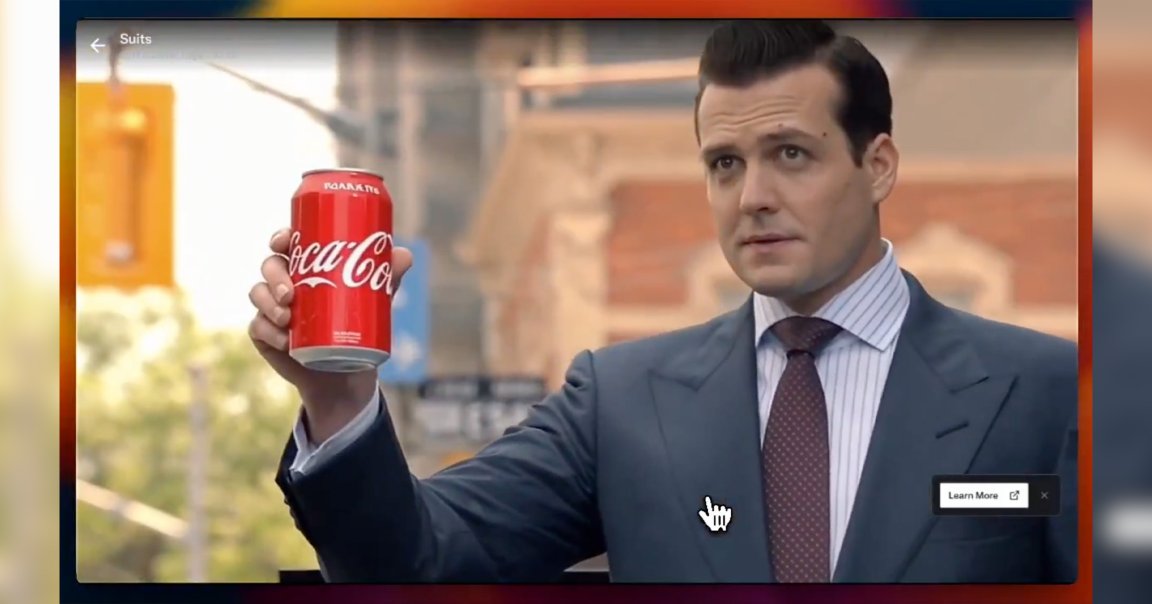
A video demo shows off what this would look like in real TV series. During an episode of the legal drama “Suits,” Harvey Specter raises an AI-generated can of Coke in his hand and presents it to the camera, stopping his dialogue mid-sentence. Or in an episode of “Friends,” Joey reaches for a new pair of Beats headphones and puts them on with a smile on his face, a blatant anachronism for a series that started its run in the mid-90s.
In each case, the viewer can click a “learn more” button on screen, taking them to the product page. When they back out, the AI-generated ad disappears from memory like a bad dream, and the show returns to normal like nothing happened.
Halftime wasn’t made by xAI, but by a trio of University of Waterloo students who participated in the company’s recent hackathon in San Francisco.
Krish Garg, the software’s cocreator, boasted in a LinkedIn post that he had won the event “by making ads invisible.”
“Halftime generates cutscenes and product placements in real time, perfectly matched to your interests,” he added.
The implications the tech could have for the movie and TV industry that continues to be swallowed by tech companies are nightmarish. It wasn’t enough that the tech threatens to bastardize the artform by churning out ugly AI approximations of all the great hits that came before it. In theory, with Halftime, an actor and the character they portray could be repurposed to endorse a product they had never heard of. A microcosm of that is already being seen in some actors who sold their likenesses to AI companies, later discovering that their faces were used for unscrupulous means like backing a foreign coup.
Unsurprisingly, the outrage the tool stoked was visceral.
“Hey man, burn everything down please,” one viral tweet read. Comparisons were drawn between sci-fi stories like John Carpenter’s film “They Live” and David Foster Wallace doorstopper of a novel “Infinite Jest.”
Others poked fun at the fact that the ads did the opposite of feeling like “part of the story,” let alone “invisible.” If anything, they take you out of the experience more than any conventional ad ever could. The famous film critic Rogert Ebert famously describes movies as an “empathy machine,” and it’s perhaps a small mercy he passed away before he could see it transformed into an “AI product placement machine,” too.
That said, it’s unclear if this will ever get used or will remain an obscure student project. The copyright issues alone would be a nightmare to navigate. Then again, that hasn’t really stopped the AI industry so far.