
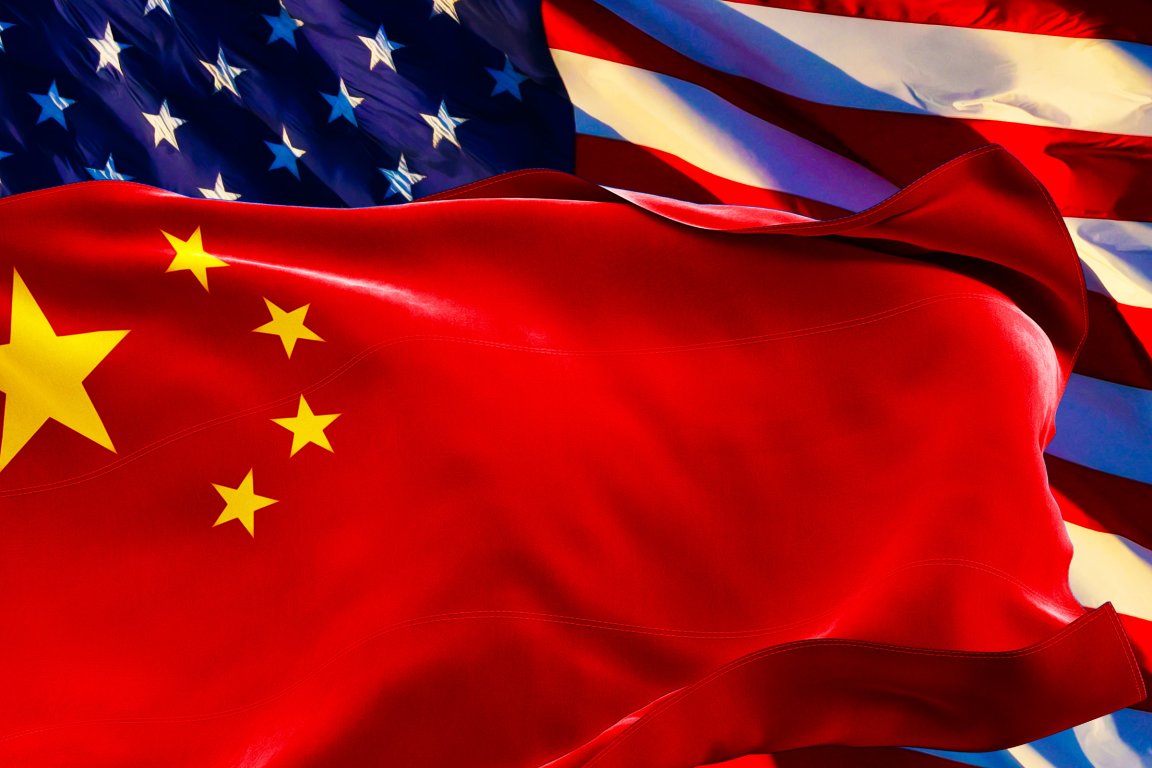
As corporate AI bills spiral out of control, many companies are beginning to ask themselves a simple question: why pay a pretty penny for the US’s leading AI models when Chinese ones are far cheaper?
Major companies like DoorDash, Airbnb, and Siemens are adopting Chinese AI tools, the Financial Times reports, attracted not only by their lower costs but their “open-weight” approach that allows them to be molded to each company’s particular needs.
According to data from OpenRouter, a platform that provides all-in-one access to major AI models and tracks their usage, leading Chinese models from DeepSeek and Z.ai have overtaken US equivalents like Anthropic’s Claude and OpenAI’s ChatGPT. Cost-cutting, it seems, trumps all geopolitical rivalries.
Chinese models are “the elephant in the room,” Eugene Cheah, CEO of the AI platform Featherless AI, told the FT. “Enterprises are starting to realize, ‘Hey, we don’t need the best model, we can use the faster, cheaper models.'”
US-based AI models have frequently been seen as the most advanced, but that perception is shifting. The release of GLM-5.2 from the Chinese startup Z.ai last month caused a stir in Western tech circles, as major Silicon Valley figures hailed it as capable or nearly as capable as US systems despite being significantly cheaper to use.
Cheap Chinese AI couldn’t be coming at a more opportune moment. The corporate world, wooed by AI companies’ promises of supercharging their productivity, has spent the past year deploying AI across its workforces, and many are being put off by the costs. One organization reportedly blew through $500 million in a month on Claude usage fees. That’s an extreme outlier, but recent research from the Ramp AI Index found that the businesses most dedicated to AI are spending around $7,500 per employee every month on AI.
Considering the culture around AI, it’s no surprise why: some companies like Meta mandate their employees use AI systems as much as possible, factoring it into their performance reviews. Software engineers, now expected to produce more work than ever, often run multiple AI agents at the same time to complete tasks in the background.
If companies are unwilling to crank back the AI knob, then the next best choice is to look for cheaper models. DoorDash cofounder Andy Fang said on X last week that it was saving a lot of money by having “lower-level work” performed by a model from the Chinese startup Moonshot AI. San Francisco startup Lindy has completely ditched Anthropic’s AI tools in favor of DeepSeek’s latest V4 models.
“Enterprises have an incentive to shift some of their workload to cheaper models. Why would you pay a premium for Anthropic, OpenAI models when for a lot of the workloads you need, the Chinese models are generally workable?” Sam Bresnick, a research fellow at Georgetown University’s Center for Security and Emerging Technology, told the FT.
But cost isn’t the only consideration: many Chinese models are “open-weight,” meaning their parameters or values are entirely visible to the user. That allows an organization to mold a model to its specific needs — and from a cybersecurity perspective, have more control and insight into how it might process sensitive company data.
For foreign companies disillusioned by US leadership, the choice is even easier to make. There’s less faith in the US as stewards of AI, especially after the Trump administration suspended access to Anthropic’s Mythos model overseas.
“The Mythos ban was certainly the most tangible event, and people having their access revoked,” Aidan Gomez, CEO of the Canadian AI group Cohere, told the FT. “It exposes the risk of relying on any one single entity for any of your workloads.”
More on AI: OpenAI Is Shutting Down Its Browser That Was Supposed to Change Everything