

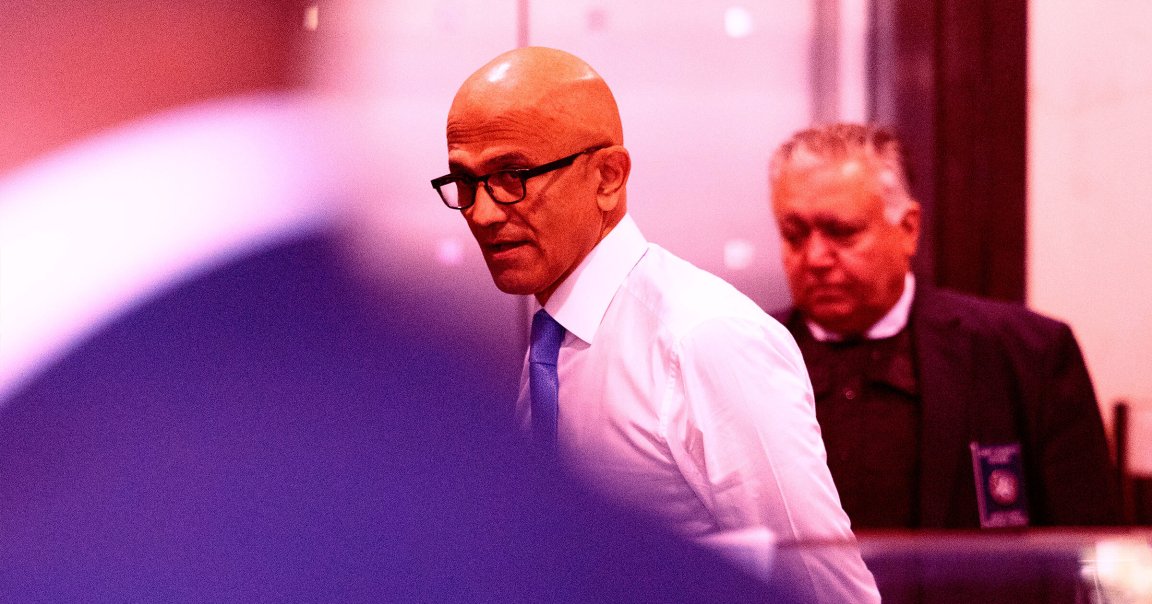
As tempers flared around AI data centers back in January, Microsoft’s president Brad Smith issued a warm and fuzzy blog post about “building community-first AI infrastructure.”
Smiths’ essay outlined a five-point plan to “partner with local communities across the United States,” with action-items like paying “our way to ensure our data centers don’t increase your electricity prices” and creating “jobs for your residents.” One bullet point spoke to Microsoft’s plan to “strengthen your community by investing in local AI training and non-profits.”
“We will invest in your local nonprofit community,” Smith wrote, underlining the promise for extra emphasis. He even outlined a plan to send “Microsoft liaisons” to towns where the company’s AI data centers have been built. “Our broader contribution must start with listening. You know best what your town needs, what nonprofits are making a difference, and which organizations are best positioned to do more.”
That all sounds lovely, at least on paper. But as a group of community organizers in Indiana learned, those liaisons are much more interested in laundering Microsoft’s image in data center towns than in actually supporting local programs.
As Ars Technica reported, the group We Make Indiana — a coalition of 25 various interfaith groups, law enforcement associations, mental health organizations, and other non-profits — quickly ran up against the limits of Microsoft’s altruism after approaching a company liason to raise revenue for community services.
We Make Indiana is based out of South Bend, where over 20 percent of residents live below the federal poverty line, which is just $15,960 in annual income for individuals and $33,000 for families. Given that chronically underfunded government programs providing community health care, public child and elder care, affordable housing, and efficient public transportation are all crucial lifelines for this population, We Make Indiana assumed Microsoft could help chip in, given the 900-acre hyperscale data center the company was erecting nearby.
“It’s kind of like asking Microsoft to help us solve our challenges when the state has abandoned us,” assistant professor at the University of Notre Dame’s Ryan Juskus told Ars.
Instead, Ars reports company liaisons have all but ghosted local activists. After We Make Indiana approached the company’s local representatives to ask for tiny share of the revenue — just a one percent cut could provide $30 to $40 million a year to local programs — the liaisons ignored the proposal, sidelining the group they were theoretically there to support.
But as Ars notes, the real issue runs far higher than a few sheepish company men. As We Make Indiana would learn, Microsoft’s liaisons are only authorized to make one-time donations from a total allotment of $1 million, and then only to non-profits, not to government programs or public-private agencies.
That lack of follow-through has been a slap in the face to local activists, who argue that the taxes for Microsoft’s $1 billion data center could have served the people of South Bend and beyond, had government officials not agreed to a massive tax abatement. As Mirror Indy noted in a 2025 analysis, the total tax revenue lost to such generous handouts was projected to reach $900 million statewide — a figure that’s now likely even higher as further data center developments have moved forward across the Hoosier state.
As Juskus explained, the donations Microsoft has authorized are “minuscule, given the project’s scale.”
“In a fast-changing local and national environment, we will continue to organize our community and elected leaders to use every piece of leverage we have to bring Microsoft to the table for real conversation and negotiation,” he told Ars. “Microsoft claims to want to be a good neighbor, but the jury is still out.”
More on Microsoft: Data Center Operator Slapped With $1 Million Fine for Belching Noxious Gas Into Surrounding Community