
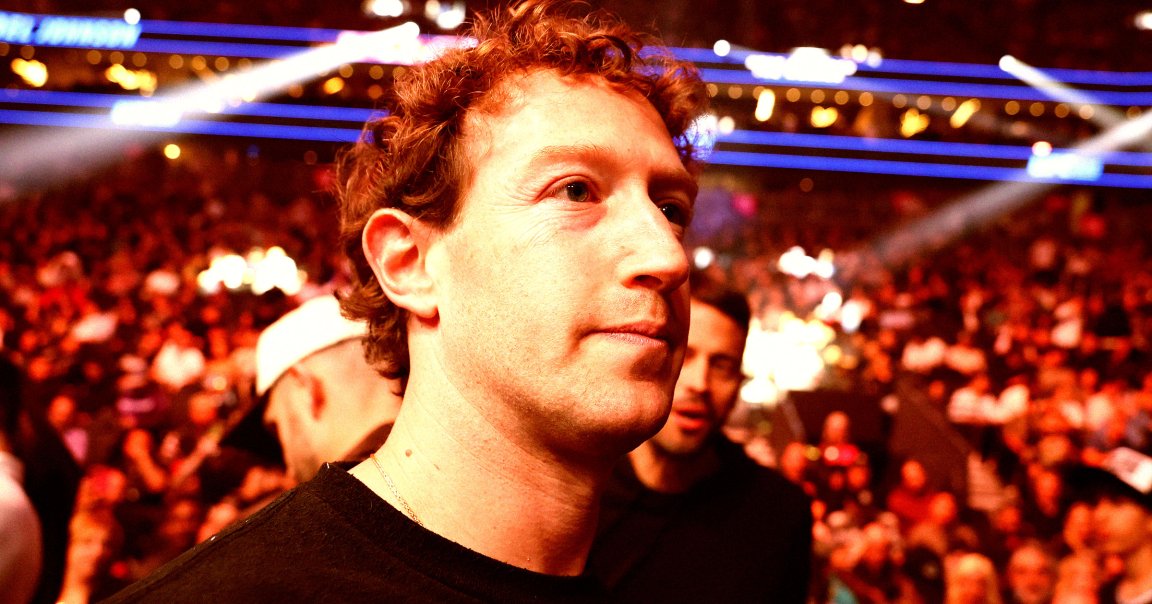
Late last year, news emerged that Mark Zuckerberg’s Meta would be shedding its open source roots to instead work on a closed model like the vast majority of its competitors.
Now we’ve finally gotten a first glimpse of the fruit of its labor: Muse Spark, codenamed Avocado and developed by the company’s unbelievably expensive Superintelligence Labs.
But there’s a big problem that could undermine its flashy new announcement. Despite investors buying into the enthusiasm, sending Meta’s shares soaring six percent following the announcement, the company admitted it likely won’t be able to keep up with competing models.
An executive told Bloomberg that the new model won’t be able to keep up with OpenAI’s ChatGPT, Anthropic’s Claude or Google’s Gemini. In a blog post announcing the new model, the company admitted Muse Spark “is an early data point on our trajectory, and we have larger models in development.
As such, the announcement is a bit of an enigma: if it can’t keep up with the competition, why release it at all?
There’s a good change Meta is just trying to get its foot in the door — or a “seat at the big kid’s table,” as Wired put it. The company has struggled to stay relevant in a rapidly changing landscape, making headlines for being found liable in court for getting underage users dangerously addicted to social media last month instead of its AI efforts.
The company’s decision to train the closed-source model on third-party open-source models, including a Chinese one developed by Alibaba, will also likely raise eyebrows. The practice of “distillation,” or training a “student” model on a more capable “parent” one, has proven controversial in the past.
Meta’s preceding Llama open source models largely failed to catch on, with a major controversy last year finding that Meta may have faked benchmark results to make its Llama 4 model seem more capable than it actually was.
The results of the model, which flopped after being released almost exactly a year ago, “were fudged a little bit,” as former Meta AI head Yann LeCun, who left the company amid the drama, told the Financial Times in January.
“Mark was really upset and basically lost confidence in everyone who was involved in this,” he added at the time. “And so basically sidelined the entire GenAI organization. A lot of people have left, a lot of people who haven’t yet left will leave.”
Since its disastrous AI model launch, the company went on a hiring spree, spending untold hundreds of millions of dollars on top AI talent in an effort to scrounge together a Superintelligence Labs team capable of putting Meta back in the game.
But plenty of questions remain whether Muse Spark will be able to jumpstart Zuckerberg’s clean goal of playing in the big leagues. OpenAI, Anthropic, and Google have since taken off, competing for lucrative enterprise customers and building out powerful coding assistants.
Other early benchmarks paint a more flattering picture of Muse Sparks, with AI benchmarking company Artificial Analysis finding its score places it “within the top 5 models we have benchmarked.”
Yet that doesn’t hide the reality that Meta still has plenty of catching up to do. Besides, an AI model purportedly capable of telling how many calories there are in a cup of white rice or “planning a family trip to Florida” doesn’t exactly feel like the cutting edge in 2026.
For now, Meta’s Muse Spark will be free for all users. However, the company executive told Bloomberg that it’s considering paywalling it behind a subscription in the future.
More on Meta: We Can’t Even Imagine the Eating Disorders This New Meta Smart Glasses Feature Will Cause