

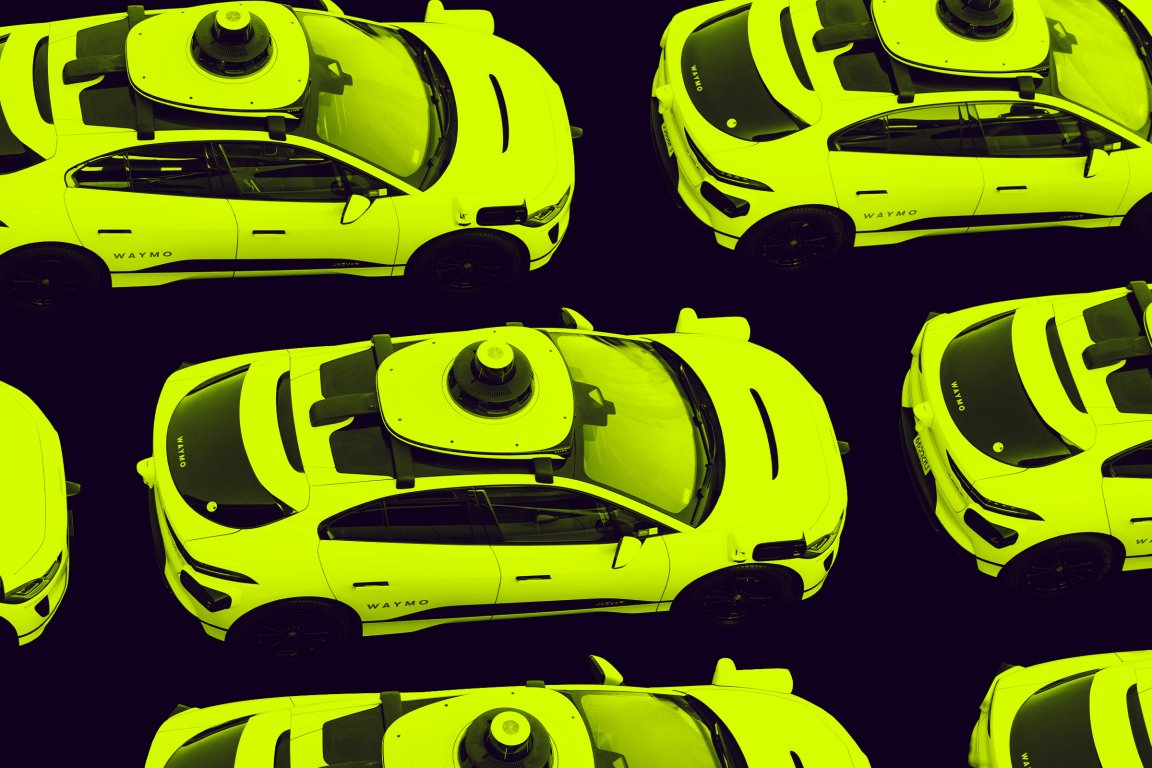
Self-driving cars might seem like the future, but they still share the same asphalt as your grandma’s ’98 Corolla.
That means that their rise may not be a good thing for road congestion. First reported by Bloomberg, new research suggests that as autonomous vehicle companies are on the verge of flooding urban streets with their vehicles, the shift could results in an uptick in car trips overall. In other words, instead of ushering in a peaceful new era of transportation, it’s possible that self-driving cars will instead clog up our communities worse than ever.
The new research paper, published in the journal Travel Behaviour and Society, found that automated vehicles in US cities result in a 6 percent increase in vehicle miles traveled (VMT) — the amount of travel for for all vehicles in a certain place over a period of time, a kind of “mileage odometer” for an entire city or region.
Autonomous vehicles increase the total VMT regardless of if they’re carpooled or transporting a solo traveler, the researchers found. This is due to a few factors, like “deadheading,” meaning when a self-driving taxi doesn’t have anyone inside. Per The Driverless Digest, deadhead miles made up nearly half of Waymo’s total travel in San Francisco across 2025.
“Non-shared AVs may contribute to increased VMT as they often travel empty between trips, search for parking, or return home after dropping off passengers,” the research paper’s abstract explains. “This increase in VMT can lead to higher traffic congestion and environmental impacts, countering some of the benefits provided by AV technology.”
There’s also the shift in how people choose to get around, researchers note. When driverless cars make frictionless travel easier, people who can afford it tend to ditch buses and trains for a private and more convenient ride. While that might be a preferable on an individual level, it increases the amount of traffic on the road for the collective.
Each of these behaviors feeds into a situation resulting in more miles traveled overall. In real life, that means longer traffic jams, less predictable commutes, and increased wear-and-tear on city roadways. Long-term, the effects on commuters may even impact local job markets, resulting in lower productivity overall.
That future may still be on the horizon, but without some thoughtful municipal planning, we could soon find ourselves trapped in an endless labyrinth of gridlock.
More on self-driving cars: Waymos Are a Huge Drain on Public Resources, Government Data Shows