

Late last month, the four daring NASA astronauts who are scheduled to venture around the Moon and back as part of the agency’s historic Artemis 2 mission entered quarantine.
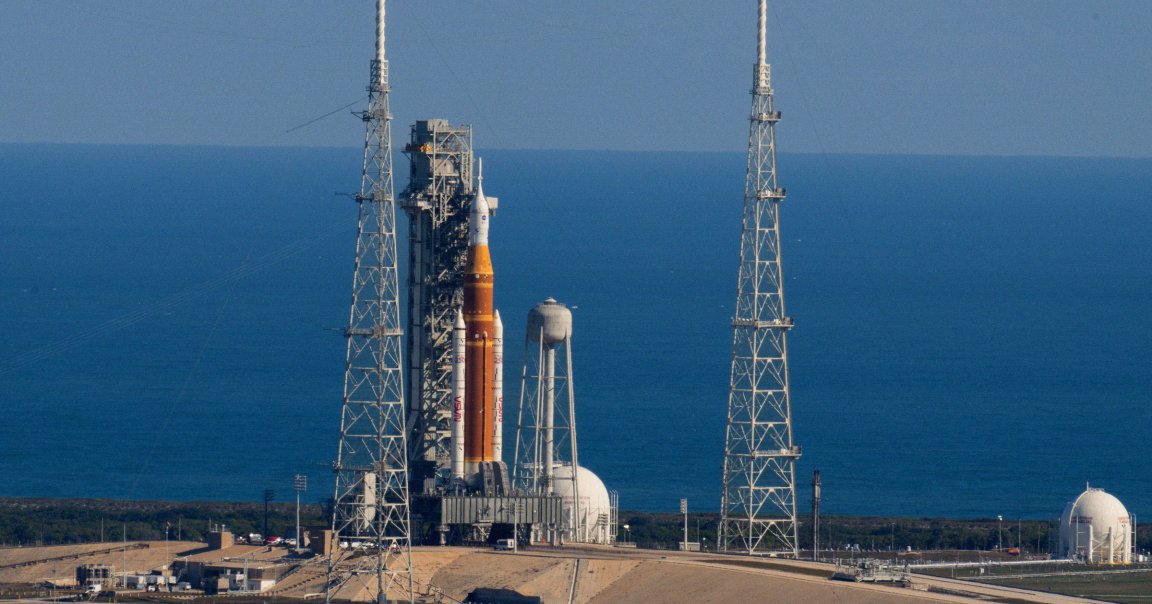
Their ride, a small Orion capsule mounted atop the agency’s enormous Space Launch System rocket, has already been rolled onto Launch Pad 39B at NASA’s Kennedy Space Center in Florida.
But the agency’s remaining checks ahead of the launch — a gauntlet of tests called the “wet dress rehearsal” that involves running through the full launch sequence without a crew on board — didn’t quite go as planned, forcing the agency to officially push back the launch date from its already ambitious early February timeline.
In an official statement this morning, NASA revealed that we may have to wait another four weeks for humanity’s return to the Moon, with the agency now eyeing a second wet dress rehearsal for “March as the earliest possible launch opportunity.”
The crew is officially released from quarantine, the agency said, as it awaits the next launch window.
It may not be the news we wanted to hear — but at least now, NASA’s Artemis 2 mission won’t have to compete with the Super Bowl and the Winter Olympics for media attention.
According to a February 2 statement, NASA found that the rocket’s core stage had sprung a leak and that efforts to correct it “proved unsuccessful.”
“The leak rate at the interface of the tail service mast umbilical continued to exceed the allowable limits,” the update reads. “Liquid hydrogen filling operations on both the core stage and upper stage are paused as the team meets to determines next steps.”
As a result, the tentative February 8 launch date is no longer on the table.
Fortunately, the leak appeared to be the only major hiccup during this week’s test. NASA engineers “pushed through several challenges during the two-day test and met many of the planned objectives,” according to the agency.
However, teams had to battle the elements, as cold winter temperatures “caused a late start to tanking operations.”
Engineers got to roughly five minutes left in the countdown when the ground launch sequencer noticed a “spike in the liquid hydrogen leak rate,” automatically stopping the countdown as a result.
Besides the hydrogen leak, teams also had to troubleshoot “dropouts of audio communication channels across ground teams in the past few weeks leading up to the test.”
The agency will be holding a press release later today to address the latest developments.
It’s an unfortunate development, forcing us to once again be patient to see humanity’s historic return to the Moon. The next launch dates fall in early March. If NASA misses those dates, it could be pushed back to early or late April, according to Space.com — the month NASA was originally targeting before September 2025, when the launch date was pushed up to February.
More on Artemis 2: Moon Astronauts Enter Quarantine for Launch