

Flock Safety is seriously struggling to beat the allegations of enabling a dystopian surveillance state.
The company has been reeling from a growing PR crisis, with a growing number of Americans vandalizing its flawed license plate-reading cameras. It’s been losing dozens of contracts with cities across the country as the controversy grows, undermining its value to police.
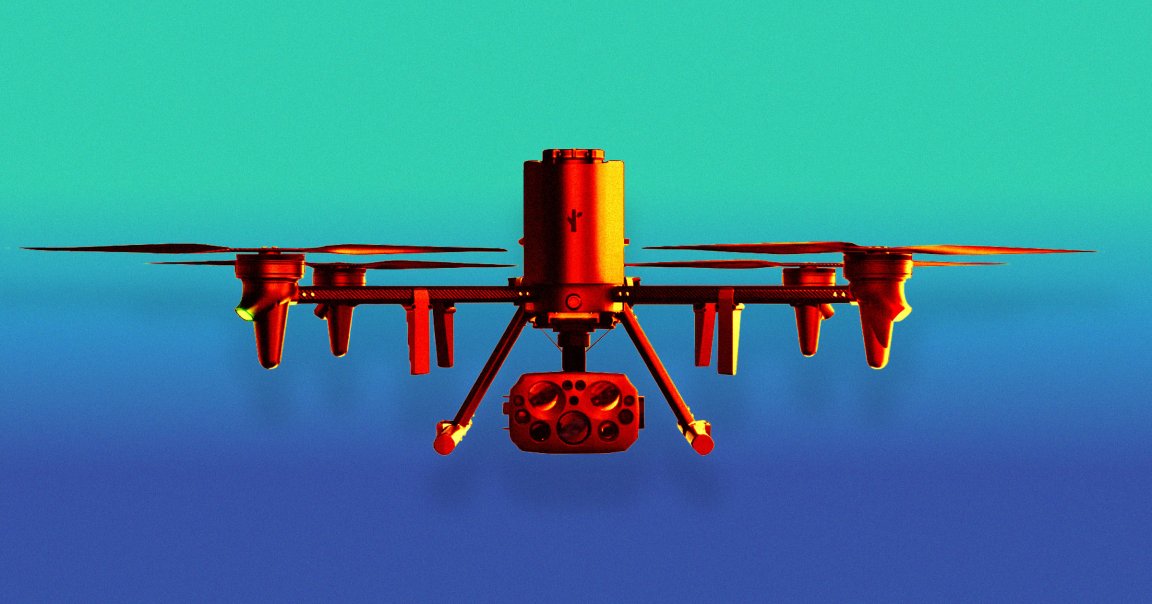
And now, while simultaneously promising to address glaring privacy concerns with milquetoast software updates, Flock is doubling down by selling “Drone as First Responder” (DFR) tech, in the form of drones that are equipped with powerful cameras that can inspect license plate numbers from up to 2,000 feet away, as Techspot reports.
During a Monday podcast appearance, Flock CEO Garrett Langley fleshed out the company’s latest foray into airborne camera-equipped drones, purportedly the company’s “fastest growing business unit right now.” Drones stationed on the roofs of police stations or fire departments launch to respond to 911 calls much quicker, he said, by traveling as the crow flies.
“Normally what would happen… is like one cop would have heard that, flip on the blue lights, race down there… and someone’s about to die,” Langley explained, describing a case in which a woman called 911 on a man, who later turned out to be holding a lighter, not a gun, as initially suspected. “Instead, they launch the drone.”
Langley claimed that “we have thousands and thousands of stories like that where communities are safer now with our drones. They’re safer with our cameras.”
The specs of the surveillance drones are terrifying. According to Langley, they can fly at 400 feet and reach 60 mph.
A spokesperson told Techspot that Flock has already amassed 200 customers for its DFR program, including police departments and private companies.
The program is part of a much bigger trend, with digital rights group Electronic Frontier Foundation warning in a July statement that “police departments across the country are lining up to launch DFR programs” and that “hundreds have cleared a necessary hurdle toward making deployment a reality.”
According to the group, over 1,000 public safety agencies have received Federal Aviation Administration waivers to automate drone operations as of February of this year.
The EFF also warned that the drones can easily “capture footage from areas typically inaccessible to a casual patrol officer — backyards, roofs, through windows — at distances that leave subjects of surveillance completely unaware of the spy in the sky.”
More on Flock: Flock’s Network Is Losing Value to Cops as More and More of Its Cameras Go Offline