
Rumors surrounding OpenAI preparing to stuff ads into ChatGPT are hitting a fever pitch.
Last week, engineer Tibor Blaho made headlines after discovering references to an “‘ads feature’ with ‘bazaar content,’ ‘search ad’ and ‘search ads carousel'” hidden inside the code of ChatGPT’s Android app.
Now, users are starting to notice strange inclusions at the end of the chatbot’s output as well, encouraging users to download the apps of sometimes-prominent brands. The sightings have sparked a heated debate over whether OpenAI has already begun adding advertising to its number one money maker.
The stakes are considerable for OpenAI, which is burning through billions of dollars every quarter — and is planning to spend well over $1 trillion before the end of this decade. Finding new sources of revenue, particularly in light of lackluster ChatGPT subscription numbers, is certain to be a major topic of conversation behind the scenes.
As such, CEO Sam Altman recently declared a “code red” as the company’s competition, most notably Google, continues to catch up, turning up the pressure even further.
Whether OpenAI has already started including ads in ChatGPT remains a major point of contention on social media, with multiple OpenAI staffers firmly maintaining that the strange inclusions are “not an ad.”
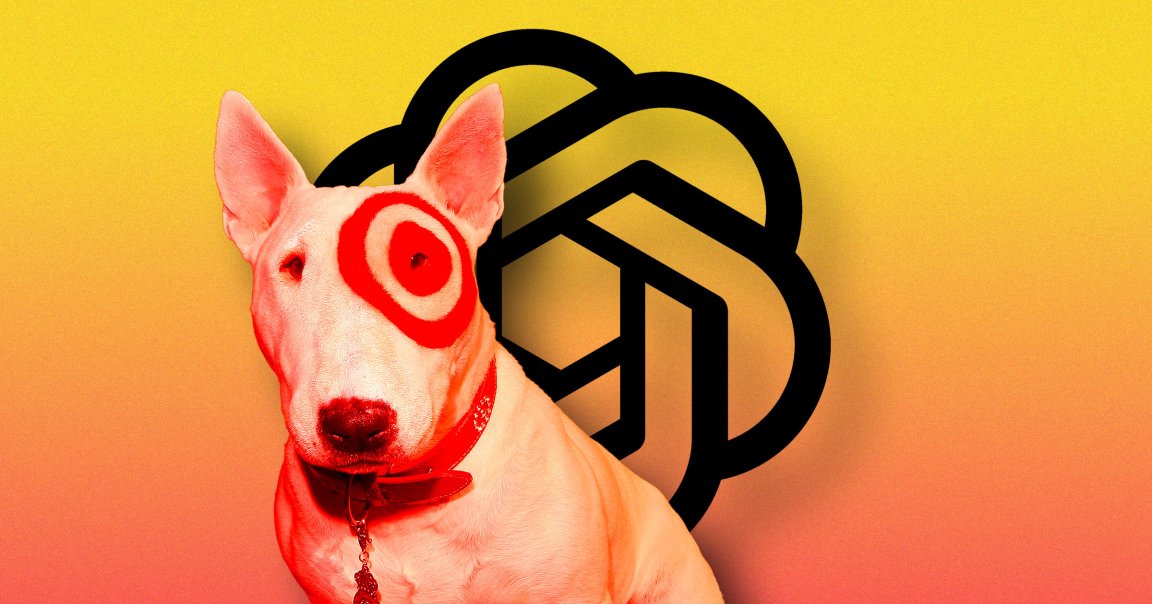
There are certainly things appearing on ChatGPT that appear very ad-like. AI developer Benjamin de Kraker, for instance, raged online that the chatbot was “showing me ADS TO SHOP AT TARGET.”
Indeed, a small notice at the bottom of an entirely unrelated prompt reads: “Shop for home and groceries,” encouraging de Kraker to “connect Target.”
“I honestly thought some of the ads claims were fake / for the memes, but this is really bad and dumb,” he added.
While OpenAI has yet to officially weigh in on the debate — the company hasn’t responded to Futurism’s request for comment — staffers have taken to social media to argue that the inclusions aren’t ads.
“It’s the ‘Apps SDK’ that allows anyone to build apps natively in ChatGPT,” OpenAI go-to-market executive Adam Goldberg tweeted in response to de Kraker. “It is not an ad.”
OpenAI’s Apps SDK, which is currently available in preview, allows developers to “begin building and testing” apps for ChatGPT.
How or why these inclusions are ending up in users’ ChatGPT conversations remains unclear. (If the Wall Street Journal’s sources are to be believed, the company is backburnering advertising for now and is doubling down on improving the ChatGPT experience instead.)
But Goldberg’s comments served to fan the flames even further, and de Kraker was far from convinced.
“And heeeeere we go,” he wrote in a reply.
“‘Isn’t an ad,'” he added. “Bruhhh… Don’t insult your paying users.”
Adding to the suspicious optics, De Kraker pointed out that OpenAI recently partnered with Target, a joint venture that was announced on November 19. Target is testing a new feature that allows customers to add items sold at the retailer to their cart based on ChatGPT recommendations. It’s unclear if the partnership is in any way related to the suggestion de Kraker saw.
Target isn’t the only brand that ChatGPT is promoting. In a separate tweet, AI startup Hyperbolic cofounder Yuchen Juin noticed ChatGPT prompting him to “find a fitness class” and connect to Peloton.
“Wow, ChatGPT is already showing ads?” Juin wrote.
Both Juin and de Kraker are paying ChatGPT Pro customers. Neither of the “ads” appears to have any connection to what either of the users originally asked the chatbot.
“Wild,” Juin wrote. “At least match the ad to the topic next time!”
This time, OpenAI data engineer Daniel McAuley came to the firm’s defense, arguing that “this is not an ad (there’s no financial component).”
However, McAuley admitted that the jarring experience leaves plenty to be desired.
“It’s only a suggestion to install Peloton’s app,” he wrote. “But the lack of relevancy makes it a bad/confusing experience. We’re iterating on the suggestions and UX, trying to make sure they’re awesome.”
More on OpenAI: Sam Altman Is Suddenly Terrified