
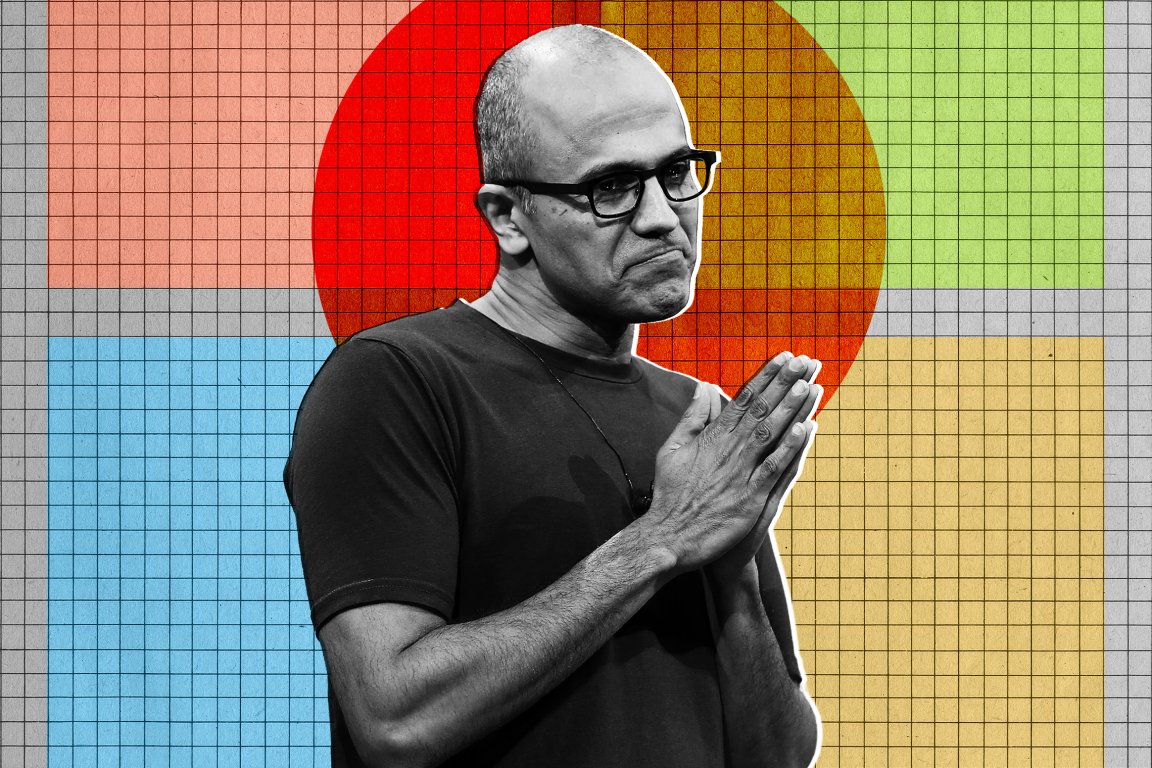
It sounds like Microsoft CEO Satya Nadella is already coming up with excuses in case the whole AI boom turns out to be a massive bust— which, by the way, he’s warning might come to pass.
Speaking at the World Economic Forum at Davos, Switzerland on Tuesday, Nadella pontificated about what would constitute such a speculative bubble, and said that the long-term success of AI tech hinges on it being used across a broad range of industries — as well as seeing an uptick in adoption in the developing world where it’s not as popular, the Financial Times reports. If AI fails, in other words, it’s everyone else’s fault for not using it.
Nadella explained the pitfalls the AI industry would need to avoid, perhaps betraying his own anxieties about its future.
“For this not to be a bubble by definition, it requires that the benefits of this are much more evenly spread,” Nadella said, as quoted by the FT. The “tell-tale sign of if it’s a bubble,” he added, would be if only tech companies were benefitting from the rise of AI. He gave the example of a pharmaceutical company using AI to accelerate drug trials; it doesn’t need to be used to discover the “magical molecule,” but provide some other tangible, less extraordinary benefit to developing the product.
Nadella is adamant that these kinds of boosts that AI provides will justify AI and carry the industry, stressing less spectacular and more practical applications of the tech.
“I’m much more confident that this is a technology that will, in fact, build on the rails of cloud and mobile, diffuse faster, and bend the productivity curve, and bring local surplus and economic growth all around the world,” he proclaimed.
Nadella’s anxiety-tinged and more mundane-sounding forecasts for AI’s future comes as he’s been notably defensive about AI lately, as Microsoft reaffirms its commitment to spend tens of billions more on data centers and other AI-related costs. Earlier this month, he begged the public to stop using the term “slop,” the rapidly accepted new lingo for describing the shoddy text, images, and videos churned out by AI models, which Merriam-Webster crowned word of the year. Nadella’s thesis seemed to be that we should stop being mean about AI as it refines its “jagged edges” — which could take a while, by his own admission.
He isn’t alone in tamping down his promises for AI as a cloud of uncertainty looms over the industry, with experts continuing to raise the specter of AI progress hitting a wall, and noting that years into the AI boom, the tech still hasn’t yielded meaningful gains in productivity. Many tech CEOs not named Elon Musk have tried to pretend that they haven’t been using the pursuit of building a fabled artificial general intelligence, or AGI, as the rallying cry for the industry this whole time, as the idea of creating such a system that surpasses human intelligence seems more and more far fetched in the immediate term.
Striking a similar tone, OpenAI CFO Sarah Friar declared that the company will focus on “practical adoption” of AI in 2026, and “how people, companies, and countries are using it day to day.” ChatGPT users will soon get a first hand look of what this pivot to practical economics looks like: last week, the company announced that free users will start being targeted with sponsored ads and content based on their conversations.
More on AI: As Microsoft Stuffs Windows With AI, New Update Prevents Users From Turning Off Their PCs