

It may sound like yet another rollout of a dystopian surveillance state network of facial recognition cameras — but the New York Department of Transportation’s latest initiative has a far more tame goal in mind: tracking modes of transport to improve street design.
According to the Gothamist, the New York Department of Transportation has added 100 roadside sensors across the city in order to pick up data on vehicle, bike, and pedestrian traffic.
The effort is an expansion of a 2023 sensor pilot meant to gather data on city traffic, which saw 20 such devices installed on signposts in various locations. The machine-learning sensors — explained as a tool to help improve pedestrian crossings and bicycle infrastructure — are trained to anonymize faces and license plates, DOT deputy commissioner Eric Beaton told the Gothamist.
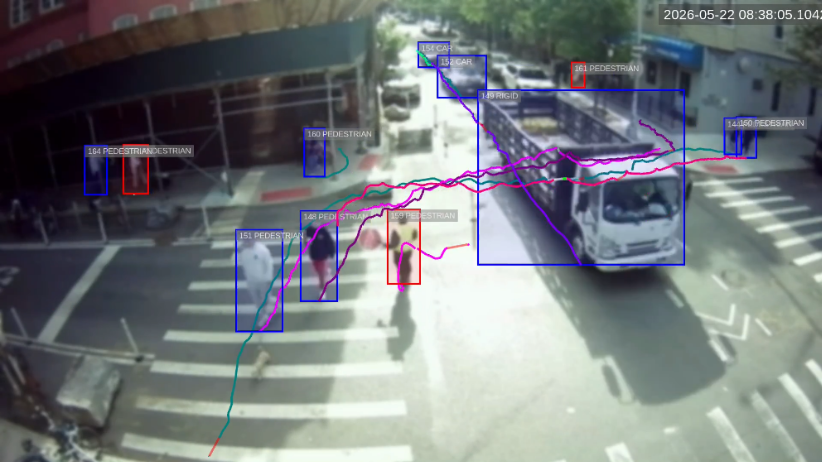
An image shared by the DOT shows the sensor in action: a hazy blur obscures some details, but a machine learning algorithm ensures each pedestrian and vehicle is visually tracked in color-coded boxes, each with their own label.
“There’s nothing that we ever touch or that anyone could ever touch that has anything identifying to any person or any vehicle,” the DOT’s Beaton claimed. “These sensors provide a much richer set of data for us to work with.”
As part of the surveillance move, the DOT said it will share a portion of the data collected with the community. Accountability watchdogs, however, are demanding all of it.
“If they’re collecting this data on behalf of the public, as a taxpayer-funded agency, we deserve to know what it says and so there should be regular reporting,” transit advocate and former policy director for the DOT Jon Orcutt told the Gothamist.
Still, the situation highlights the tricky position city officials find themselves in, where collecting enough data to make informed decisions about better transit options necessitates an expansion of municipal surveillance.
As Orcutt explains: “there are [currently] 20 or 25 sites where bikes are counted. You get a very small data set from that. You know we have 6,000 miles of streets.”
More on New York City: Authorities Alarmed as Mysterious Figures Emerge From Sewers