

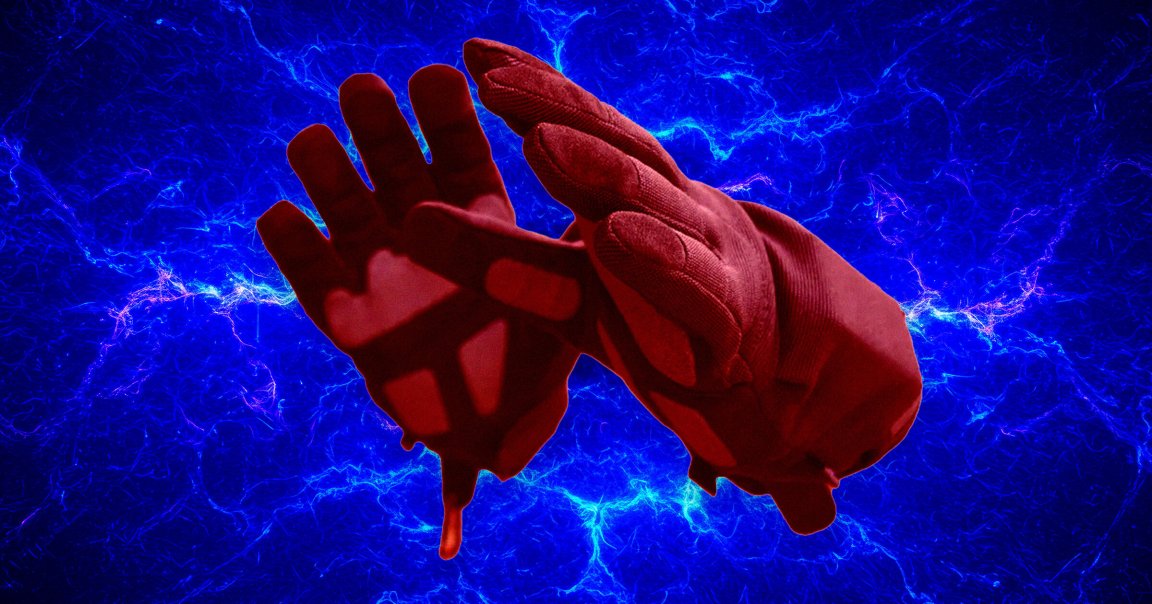
Earlier in August, the Associated Press broke the news that US Immigration and Customs Enforcement planned to spend upwards of $20 million dollars to acquire thousands of electric-shock gloves. Dubbed the “Generated Low Output Voltage Emitter,” or G.L.O.V.E, the ominously-named devices deliver a painful electric shock meant to immobilize anybody at the mere flick of a wrist.
And though the gloves might be new to most of the American public, they’re certainly not new to local cops, who it turns out are just as likely to use them on vulnerable high school students as they are on violent adult suspects.
In Omaha, Nebraska, at least two high school students had been subdued by school resource officers using the gloves across the 2025-2026 school year, NPR reports.
The first student was identified as trespassing at a different school, Omaha police said in a statement viewed by NPR. When he tried to flee, police applied a shock to his wrist for “approximately two seconds” to detain him.
The second high schooler was enrolled in Omaha Public Schools’ Integrated Learning Program, described as a “specialized program for students with social, emotional, behavioral, and learning deficits.”
After this student made “verbal threats” and “threw a chair at the school security guard,” officers delivered two consecutive shocks — a one-second shock followed by a longer two-to-three-second shock, apparently — immobilizing the kid long enough to detain them.
In the statement, Omaha police seemed more concerned about their own safety than that of the students they were zapping, saying “we are constantly seeking ways to keep the public and police officers safe through innovations like GLOVE.”
It’s just the latest escalation in the increasingly dystopian reality of American schooling. With a massive rise in school shootings over the past few decades, many students have grown accustomed to walking through remote operated blast doors into security checkpoints chock full of metal detectors manned by armed police officers.
Whether this kind of high-tech security theater actually keeps students safe is debatable. As one recent report by the ACLU of Iowa found, school police are increasingly being used to maintain classroom discipline for minor infractions like vaping and disrespectful conduct, a marked departure from the task of deterring criminal activity.
Predictably, this kind of policing has had an outsized effect on Black and disabled students, who are disproportionately cited and arrested by school cops, the ACLU found. Rather than acting as a check on police harassment, high-tech tools have only made the situation worse.
Case in point, a Black high school student in Baltimore was cuffed and detained by a platoon of heavily-armed police officers last year — after the school’s AI-integrated gun detection cameras flagged his bag of Doritos as a deadly weapon.
Luckily, that student made it out alive, though no doubt saddled with trauma that will last a lifetime. Unfortunately, these scenarios are becoming increasingly common as police and school districts shell out for the latest and greatest in police tech — ironically justifying their moves under the guise of student safety.
More on police tech: Americans Are Raging About Autonomous Police Drones Swarming the Skies