

They’re agile, they’re creepy, and they may be coming for human jobs.
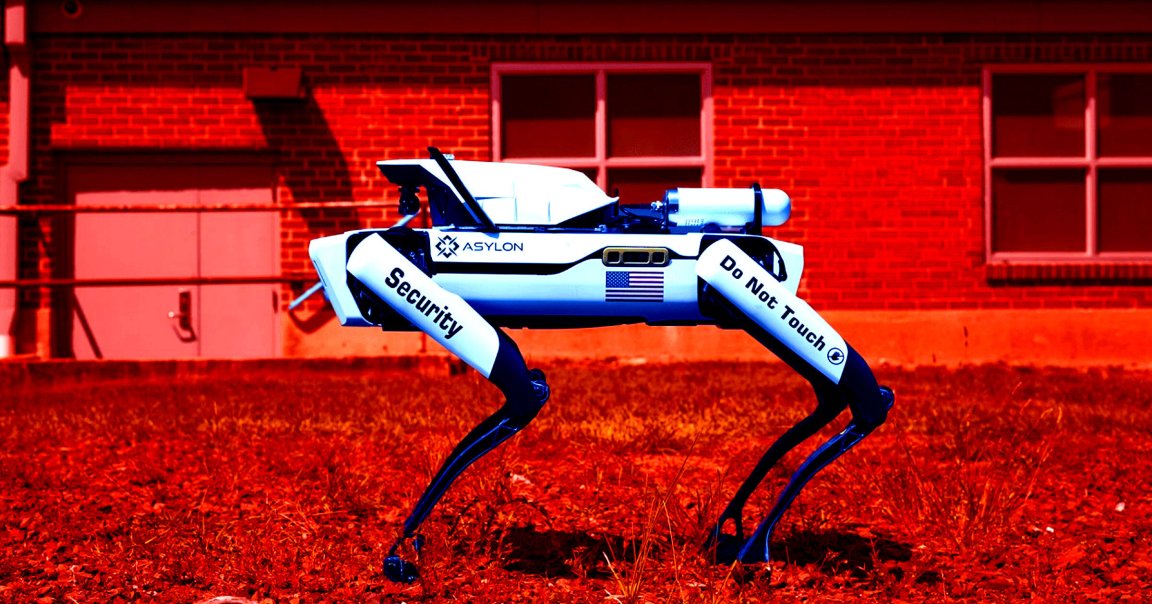
Robot dogs affixed with AI-integrated cameras are becoming the latest dystopian fixation of the security industry, especially in the US, where they’re being deployed to patrol data centers, safeguard cash crops, and police sports stadiums.
Though expensive, they’re gradually becoming a more attractive option over human security guards. At least, that’s according to new reporting by Business Insider, which notes that the cost to cover one 24/7 guard shift is anywhere from $80,000 to $130,000 cheaper per year when contracting robot dogs over human security officers.
That’s bad news for the nation’s security guards, an essential role providing low-barrier employment for uneducated workers. Often deployed to help property owners reduce insurance premiums, the role of security guard is an important source of income for some 1.3 million people. According to a report by the UC Berkeley Labor Center, about 60.8 percent of those roles are filled by people of color, while 27.8 percent of guards are 55 or older.
It is, however, a difficult job to make a living on, with the median annual wage of just $38,390 as of 2024. That being the case, the industry faces a high degree of turnover, which tech companies are all too happy to exploit.
“Training them and staffing them is super inconsistent, and it’s a big burden on the business,” Damon Henry, CEO of robot dog company Asylon, told BI.
So far, Henry says he has about 50 robots deployed across 25 customers nationwide. Compared to a workforce of 1.3 million humans, that might not sound like much. But if robotic production lines get more efficient and the bots themselves become cheaper to roll out, it’s hard to imagine the nation’s businesses keeping low-paid security guards on the payroll out of charity (just look at what happened with Walmart greeters.)
Still, you probably haven’t bumped into your last mall cop quite yet. As director of the UC Berkeley Labor Center’s Low-Wage Work program and co-author of the report referenced above Enrique Lopezlira told BI, the role is likely to experience pressures similar to that of other workers facing automation: security jobs won’t disappear entirely, but they will get much more demanding.
“The realistic near-term effect is not that guards are replaced,” Lopezlira said. “The human role is going to be pushed toward those hardest, higher-stakes parts of the work.”
More on robots: Startup Sued After Delivery Bot Clobbers 73-Year Old Woman