
New York City just instituted a sweeping ban on schools using AI in the classroom through the start of high school, along with other restrictions on the technology.
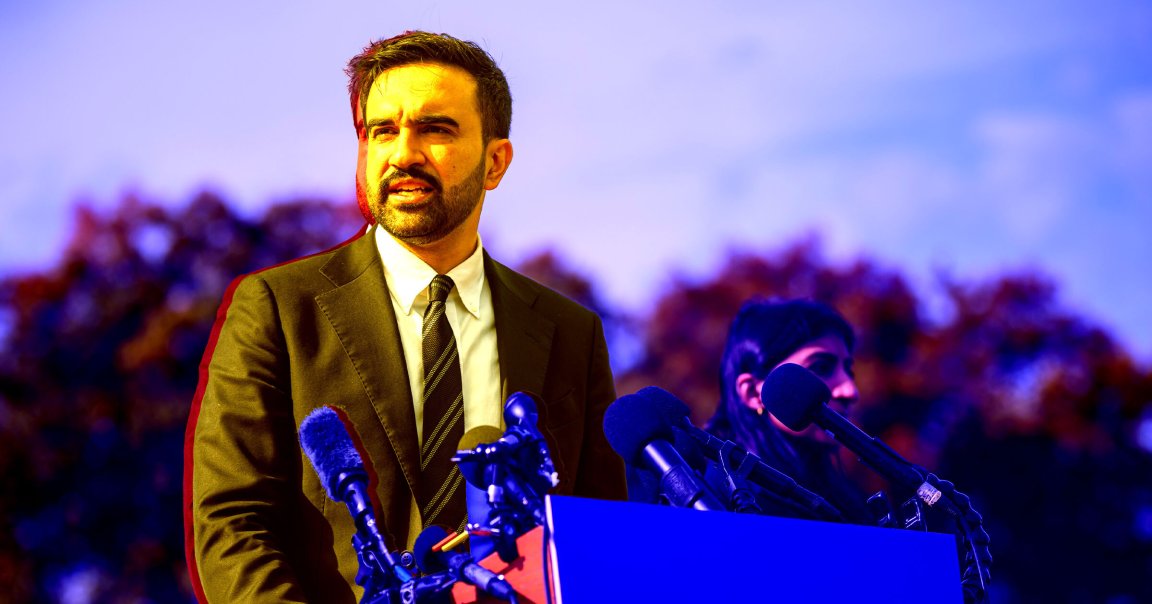
Mayor Zohran Mamdani announced the one-year moratorium on Wednesday, calling it the “most comprehensive of its kind anywhere in the country.”
“The tech industry wants us to believe that AI in early education is not only inevitable, but that it is necessary,” Mamdani said during a press conference. “We do not see it that way. I have yet to see a study showing that AI is beneficial for students in elementary and middle school, with the exception, of course, of research sponsored by the very corporations that stand to profit.”
Under the new AI policy, the school system will “fully discontinue or disable more” than 38 AI features that were part of previously allowed programs that don’t meet the new standards, Mamdani said. Ailish Brady, the deputy mayor’s senior education adviser, said that includes an AI reading assistant called Amira, Politico noted.
Young students, starting with kids in 2-K (the city’s free education and daycare program for two-year-olds), won’t use AI as part of class until they enter high school. Even then, its use will be closely controlled. High schools will take limited “AI literacy” classes to prepare students for what Mamdani called an “AI-saturated world.” Exceptions will be made for helping students with learning disabilities or are still learning English. The restrictions also don’t apply to certain approved instructional programs like e-books and coding software.
AI isn’t the only tech the policy grapples with. It also imposes strict limits on screen time, recommending no more than 30 minutes of using devices per day for students in third through fifth grade, and 45 minutes for middle schoolers.
Beyond the broader debate raging on AI’s role in education — with colleges across the country embroiled in AI cheating scandals, as well as a bevy of research suggesting AI impairs critical thinking and other cognitive abilities — the ban comes after months of New York City facing heated political debate on using the tech in the classroom. In April, controversy erupted over plans to open an AI-focused high school in Manhattan, with a crowd of parents, teachers, and high schoolers protesting outside City Hall. While the plans were withdrawn soon afterwards, it amplified calls on Mamdani to institute an AI moratorium.
While deeming the moratorium a meaningful step in the right direction, some hoped Mamdani would’ve gone further. Kelly Clancy, the founder of Parents for AI Caution and a member of the Coalition for an AI Moratorium, wanted a temporary moratorium on AI in all grades. Some of the original calls for a moratorium demanded that it last at least two years.
“The fact that this policy exists at all is due to the enormous work of parents across the city who spoke out against the overreach of AI into their kids’ classroom,” Clancy told the New York Times.
The aggressive action will be closely watched by other states and school systems. New York City boasts the largest school system in the nation, with the ban affecting more than 600,000 students. It will be a large, and indeed, “comprehensive” experiment in how detoxing young minds on AI will affect their learning — though it pales in size to the experiment that tech companies are conducting by unleashing the tech on students in the first place.
“Children need their teachers and human connection in order to learn and in order to grow,” Mamdani said. “And they need to develop skills alongside their peers, build relationships with their teachers, and wrestle with tough problems on their own.”
More on education: Scientists Gave 12-Year-Olds Access to an AI Tutor and You Probably Already Know What They Did With It