

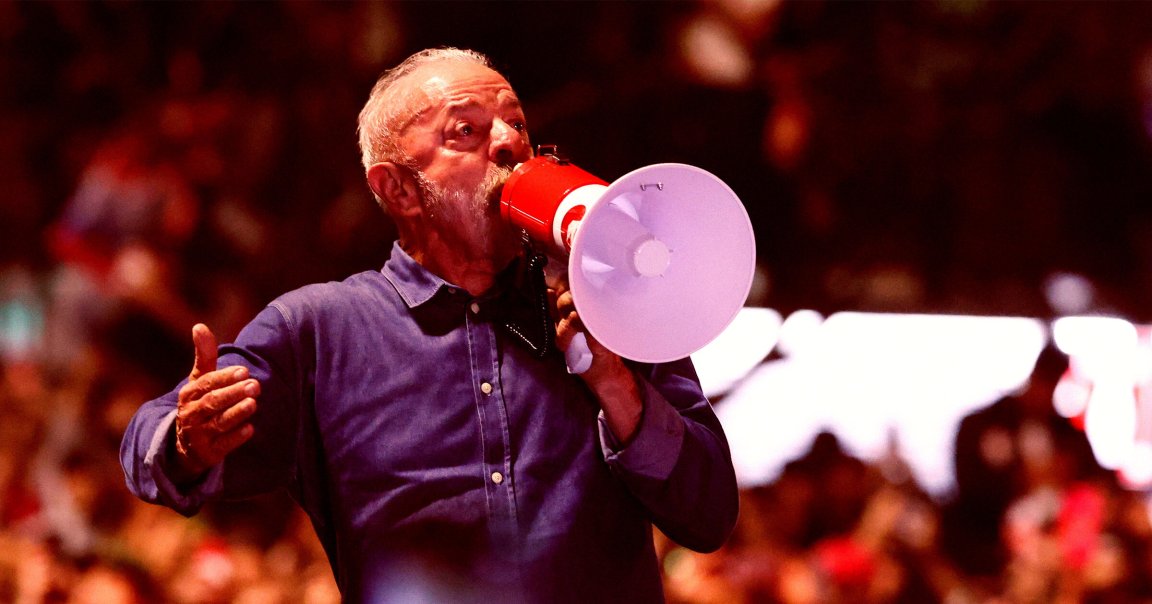
Down in Brazil, Luiz Inácio Lula da Silva defeated Flávio Bolsonaro in a runoff election on Sunday to be re-elected as president, in a comeback that literally defied the odds — at least as they’d been set by buzzy prediction markets.
Though platforms like Polymarket frame themselves as prognosticators of the future by drawing on the “wisdom of the crowd,” they were horrendously off the mark when it came to Brazil’s extremely consequential election.
After the first round of voting on October 4, the Polymarket odds that Flávio Bolsonaro — the son of former president Jair Bolsonaro, who is currently serving a 27 year sentence for leading a coup attempt — would win the election surged to over 80 percent, while Luna’s chances of winning bottomed out at a dismal 12 percent.
The extremely favorable odds for Bolsonaro held for over a week — up until the very day that the second round of voting was held. That Sunday morning, Polymarket odds showed Bolsonaro having an 81 percent chance of winning.
What actually happened was a staggering upset, if you based your expectations for the future on a glorified gambling platform. Lula defeated Bolsonaro by 51.8 percent to 48.2 percent, according to official election results, in a huge rebuff to a mounting right-wing wave in Latin America.
Over $62 million in bets were placed on Bolsonaro winning the election. But his odds quickly collapsed to as low 15 percent as the day went on and early polls trickled out, causing more bets to pour in in favor of Lula.
Of course, a one-off upset doesn’t in itself meaning that prediction markets don’t provide some insight, just as a clear day when the forecast showed an 80 percent rain doesn’t mean meteorologists don’t know what they’re doing.
But actual on-the-ground polling showed that the election would be a tight race, while Polymarket’s vaunted “prediction data” had Bolsonaro as an overwhelming favorite. Recall that when Polymarket successfully predicted a decisive Donald Trump victory over Kamala Harris in the 2024 presidential election, it was touted as a major coup over traditional polling that had the race as a toss-up. It’s only fair then that when Polymarket gets a major election so drastically wrong, it should also reflect on its credibility — negatively.
The usefulness of prediction markets as a barometer of public sentiment, if not an actual means of feeling out the future, is still unclear, despite what companies running them might claim. They remain hotbeds of insider trading, while massive wagers placed by a handful of wealthy bettors can distort odds and overpower the proverbial wisdom of the majority of the crowd.
Stateside, their credibility will face another major test during the upcoming midterm elections in November.
More on prediction markets: Senator Who Tried to Ban Prediction Markets Gets Hired by Kalshi as a Lobbyist