

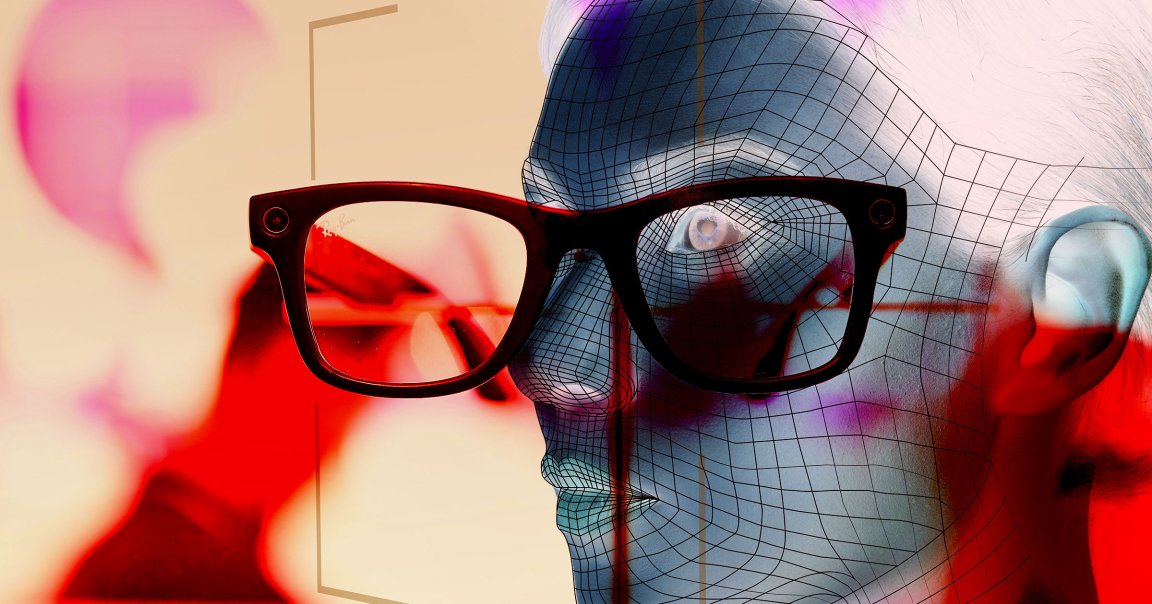
The public messaging surrounding Meta’s flashy smart glasses hasn’t exactly gone in the company’s favor.
The camera-equipped devices have garnered a reputation for allowing shady individuals to record strangers without their consent, garnering them the memorable pejorative of “pervert glasses.”
So when Wired revealed in June that Meta had silently added facial recognition code to the smart glasses — stoking fears that the creepy glasses could be used to identify people on the street based on biometric data — that simmering distaste grew into a major PR disaster for the company.
Meta has ever since vehemently denied that it was planning on ever releasing the tech, a feature dubbed “NameTag.” That’s despite its CTO Andrew Bosworth happily describing those plans in excruciating detail in public and arguing it would be a “great feature” — mere days after calling Wired’s bombshell reporting “absolutely dishonest.”
Now, the company is facing a proposed class action lawsuit over the ordeal, as Wired reports, with a set of families in Illinois and California accusing the company of illegally scraping their Facebook and Instagram photos to build a massive facial recognition system for “NameTag.”
The news comes just days after a mother in Utah accused Meta of using its AI to scour Instagram and Facebook posts to reveal invasive information about her young daughters.
Meta told Wired in a statement that the latest “lawsuit is without merit and misrepresents our work.”
“We’ve been transparent about how we use people’s information to build and improve our AI products,” the a spokesperson told Wired. “As for NameTags, nothing has shipped to consumers and no final decision has been made on what to do here, if anything.”
The proposed class action accuses Meta of extracting biometric signatures from publicly available social media profiles. As Wired first noted in June, these “faceprints” appeared in the code for the AI companion app of its smart glasses.
A patent described the software as matching these signatures to profile photos. An AI image generator Meta released called Emu was also trained on a vast swath of user-uploaded images and text. The complainants accuse Meta of using this AI system to harvest biometric data.
Meta has already been caught with its pants down after allowing users to generate images inspired by public Instagram accounts, admitting that it had “missed the mark” with the feature.
The company has a long history of mishandling sensitive user data, settling a class action lawsuit in 2020 over an entirely separate facial recognition system for $650 million. In 2024, it agreed to pay $1.4 billion to settle yet another facial recognition data lawsuit in Texas.
More on Meta’s glasses: Mother Horrified When Meta’s AI Scours Instagram and Facebook for Invasive Information About Her Young Daughters