

Last week, SpaceX’s enormous Starship rocket failed to ignite several of its engines, forcing the company to abort its first test launch since its IPO earlier this summer.
The scrub served as the perfect metaphor for the space company’s ongoing struggles to convince investors of CEO Elon Musk’s lofty ambitions — ambitions which have little to no chance of turning into a reality without Starship.
While the almost-trillionaire has promised that SpaceX will one day be worth “more than the rest of the Earth,” its prolonged decline on the stock market suggests otherwise. Instead of joining the AI race, SpaceX has resorted to selling compute to its competitors.
His EV maker Tesla, an early pioneer in the adoption of electric vehicles, has also been flailing. Vehicle sales have been plunging as customers are driven away by the richest man in the world’s tasteless behavior and erratic commentary. Even recent jumps in revenue were thwarted by major AI-related spending, causing Tesla’s share price to tank this week.
As a result of it all, Musk’s empire feels more like it’s coming down around him — making it a perfectly convenient moment for him to sit down with The Economist for an attempt at a clean slate. (Whether it landed we’ll leave to you to decide.)
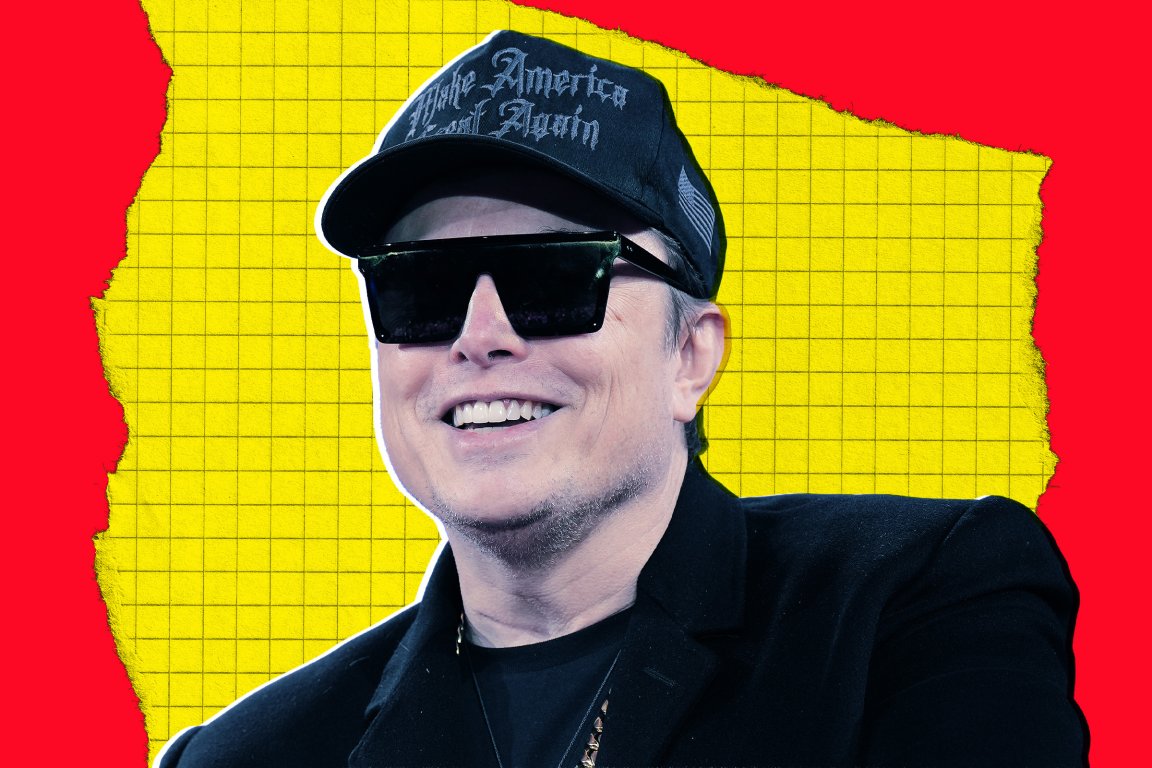
In the interview, published Thursday, Musk lamented that he “got a little too involved in politics” and “got carried away, frankly,” by his efforts to systematically gut the government with the help of his so-called Department of Government Efficiency during the early days of the second Trump administration.
The scars DOGE leaves behind are as evident now as they’ve ever been. Instead of cutting spending, the group forced tens of thousands of government workers out of their jobs, laid waste to foreign aid — with catastrophic consequences — and leaked highly sensitive data. It has sparked waves of protests, hollowed out the Social Security Administration, and fundamentally undermined the role of science in the United States.
Perhaps worst of all to Musk, his disastrous stint as a “special employee” in Washington, DC, last year has made him staggeringly unpopular — possibly even one of the most hated men in America.
“And I got a lot of flack from this, for this obviously,” he conceded in the Economist interview.
Now that his empire is looking worse for wear, it’s no wonder Musk is looking for an opportunity to tell the public that he’s moved on from helping the Trump administration dismantle the government.
But whether he actually regrets his actions is unclear at best. During the interview, Musk showed “no sign of relinquishing the geopolitical bully pulpit,” per The Economist. He doubled down on accusing the media of wrongfully characterizing him as a racist, despite repeatedly making racist comments. He even argued that Europe’s far-right extremist leaders were simply misunderstood.
In an piece accompanying its interview, The Economist acknowledged it sees the centibillionaire’s political views as “plainly bigoted.”
Musk also promised that AI will make money irrelevant — an “age of amazing abundance,” he enthused — and that governments should simply “issue people checks.” Considering his actions at the helm of DOGE last year, it’s clear he sees little role for the government beyond that.
More on Musk and DOGE: Elon Musk Says He Is So Sorry for His Horrible Behavior