

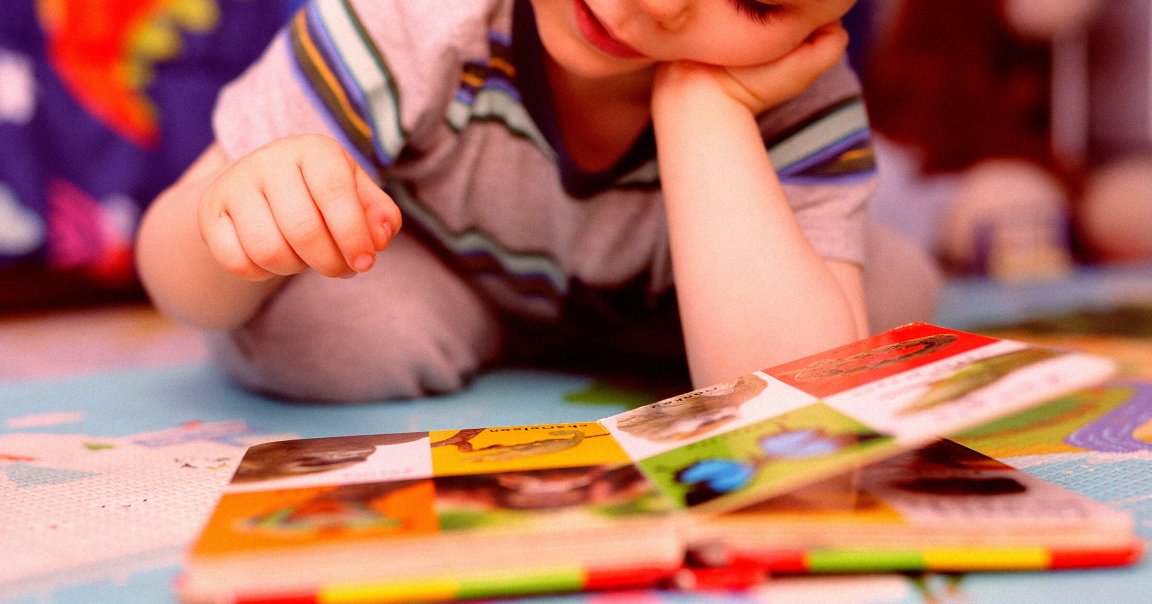
Nothing escapes the sloppifying tentacles of AI. Not even precious parent-child reading time.
As Wired reports, moms and dads across the country are having AI-generated children’s books inflicted on them by the tots’ well-meaning grandparents, sometimes creating tensions within the family.
Grandma and grampa think it’s cute to use AI to churn out a picture book with their grandchildren in it. But the parents often aren’t impressed, on top of being horrified by the implications of their kids being fed into an AI model in the first place.
One parent fumed about this scenario in a Reddit post spotted by Wired, distraught that their mother wouldn’t take the hint.
“I have reiterated countless times that I do not support AI-generated art, and drew a hard line that she is absolutely not to feed any of our photos into AI or use our identifying information in any way,” they wrote. “However, she is creating these storylines based on experiences with my kid and modeling her characters to have similar attributes as my kid, and us[ing] our family’s first names so that they represent us and my kid will ‘see her family reflected.'”
An entire industry has popped up to support — or AI-generate — this niche, Wired noted. Multiple services like Imagitime, StoryWonderBook, and Childbook.ai, all offer an easy way to insert kids straight into an imagined AI story.
Like their parents, the kids don’t seem impressed by the AI creations, either. One dad with a seven and three year old kid told Wired that the tykes were “bored” by the “personalized” AI-generated books they received from friends and family members.
“They are so long and wordy that, after one time through, each of my kids was like, ‘Yeah, OK, let’s read Little Blue Truck,'” he says, naming a best-selling children’s series by author Alice Schertle.
For Daozhi Xu, a researcher at Macquarie University who published an analysis of the “AI children’s book boom,” this isn’t surprising.
“Children do not love a storybook simply because their name or image appears in the story; they love the book because the story itself is interesting,” Xu told Wired.
“Compared with human-authored books,” Xu adds, the AI-generated versions “often lack humor, memorable characters, and dramatic tension.”
Brandon Kirman, a comedian and artist, told Wired his parents gifted an AI-generated book about the stuff they enjoyed doing with his four and two year old daughter.
It was “well-meaning on their end, but f**king yikes,” he said, adding that the kids seemed underwhelmed compared to their enthusiasm for other books.
The most nefarious aspect of this trend, though, is the lack of transparency on how “children’s photos are used and stored on AI platforms,” Xu told Wired, “potentially shared with third parties or used to train AI models.”
Try explaining that to mawmaw.
More on AI: AI-Powered Toys Caught Telling 5-Year-Olds How to Find Knives and Start Fires With Matches