

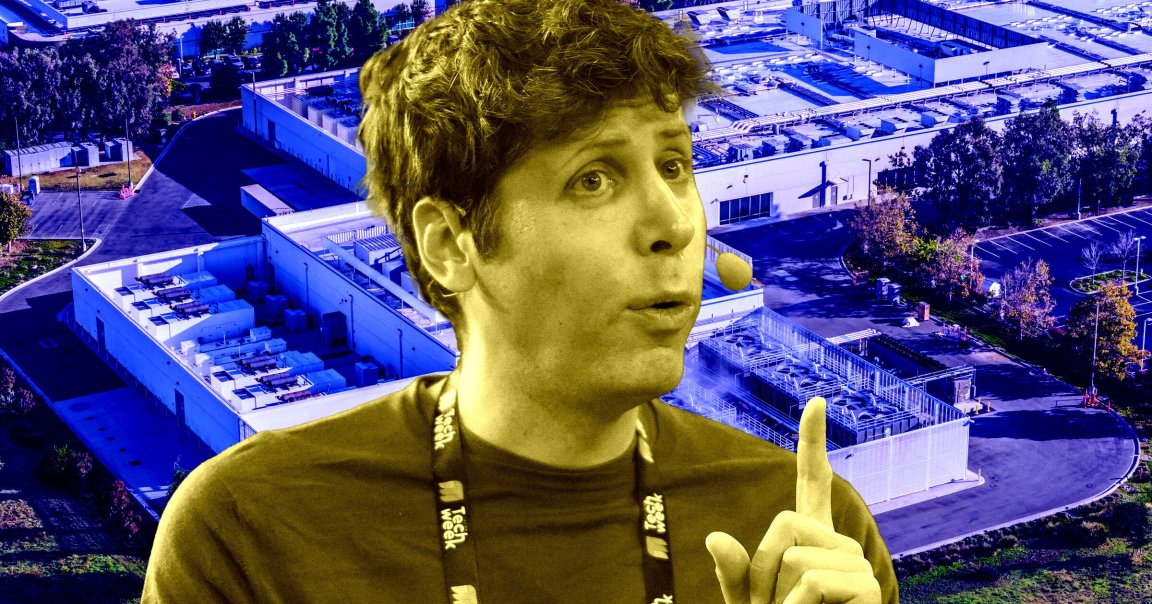
Data centers are wildly unpopular amongst the US population — so much so that grassroots opposition threatened some $130 billion in developments over the first three months of 2026 alone.
Tech executives, as a result, are having to make a calculated decision to change their tune, from AI doomsaying to something more palatable to the everyman. But just like their proselytizing over the coming AI apocalypse — messaging meant to win over investors and scare everybody else into ceding regulatory power — they don’t seem to realize that the entire world is watching as they execute their cynical pivot out loud.
Case-in-point, Reddit cofounder Alexis Ohanian recently observed in a social media post flagged by Axios that “we gotta figure out a new narrative on this data center thing.”
The decidedly meek reflection is part and parcel of the tech industry’s increasingly obvious dilemma. Caught between dual political and financial pressures to win the public’s approval on data centers, tech billionaires are increasingly trying to address the public directly with new messages of hope, a positive vision for the shared future of humanity. As one can imagine, it doesn’t come easy to them.
Meta’s Mark Zuckerberg, for example, penned a teeth-grittingly optimistic 6,500-word essay earlier in August, claiming that AI will “free up time for the things you enjoy, and help you accomplish more than you could otherwise.” But talk is incredibly cheap, and as the Meta CEO’s own corporate practice shows, worker wellbeing isn’t exactly a top priority for the tech industry elite in the age of AI.
In other cases, tech entrepreneurs are cooking up utopian fantasies for AI capabilities that don’t even exist yet.
“Someone needs to rebrand data centers,” Matt Higgins, co-founder and CEO of venture capital firm RSE Ventures said in a social media post. Though RSE has a diverse portfolio spanning sectors like entertainment and media, it also has a vested interested in military AI — and therefore hyperscale data centers.
“Fraud prevention centers. Clean-energy optimization centers. Precision agriculture centers,” Higgins mused. “Because ‘data center’ describes the infrastructure, not the breakthroughs its computing power makes possible.”
Back in the real world, AI is supercharging fraud and environmental degradation at an unprecedented scale, while supplying some farmers with hallucinated advice resulting in easily-preventable crop failure. In other words, whether the industry delivers on Higgins’ laundry list of breakthroughs remains a question of if, not when.
All in all, the messaging from tech industry elites and their financiers might be taking on a more optimistic tone — but it’s still the same old smoke-and-mirrors as it ever was.
More on data centers: Amazon’s New AI Data Center Is So Enormous That It Appears It Will Become the Largest Single Source of Pollution in the United States