

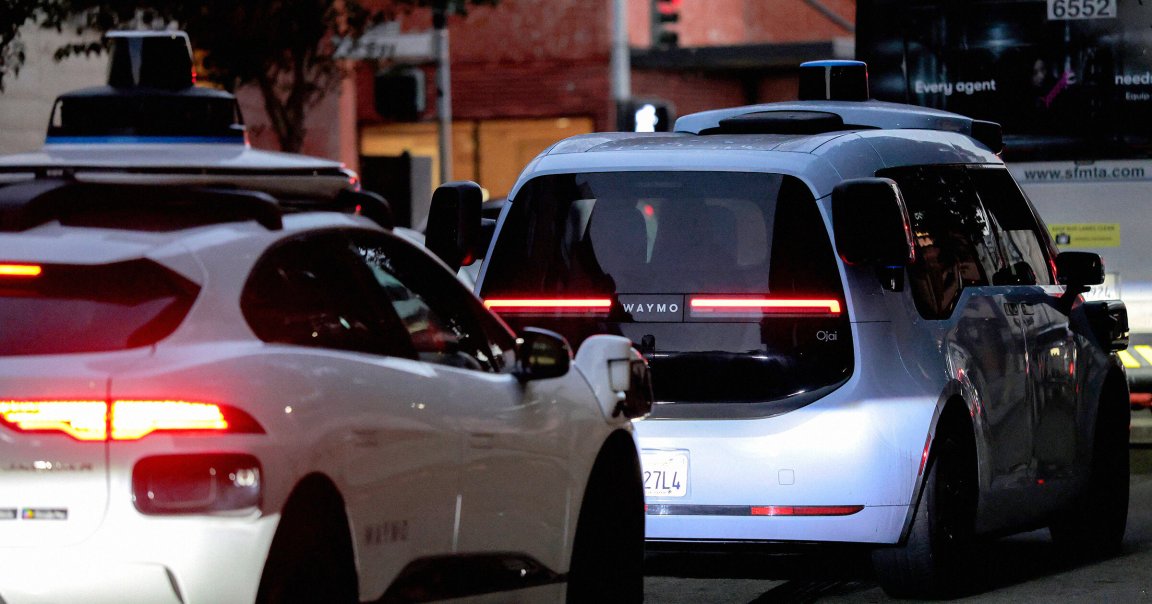
In its first decade of existence, Uber managed to completely upend the decades-old taxi industry, shredding through million-dollar yellow cab dynasties and owner-operators alike. Now that those erstwhile cabbies have come to reluctant terms with the new algorithmic paradigm, self-driving cars are exploding onto the scene — pushing the workers who move America to their breaking point.
In Cambridge, Massachusetts, a coalition of worker advocacy groups and unions have come together to warn local lawmakers about the threat to their livelihoods, and to demand that the city take action to preserve drivers’ jobs.
According to Cambridge Daily, the group was made up of a newly organized App Drivers Union, which was joined by transit workers from Boston Carmen’s Union Local 589, and transportation and logistics workers from Teamster’s Local 25. They gathered in response to the rising presence of Waymo vehicles on Cambridge streets, which have begun mapping the roadways in obvious preparation for an eventual rollout of autonomous vehicles.
“I used to drive a cab, but lost my business to Uber,” said Abdazi Samantar, a local rideshare driver whose livelihood is now threatened by robotaxi companies like Waymo. “It feels like every time I adjust to a new reality, another technology comes along and threatens my livelihood.”
Whether Waymos literally takeover the role of rideshare drivers is maybe beside the point. Like the impact of apps like Uber and Lyft on cab drivers, robotaxis have a depressive effect on driver pay, leading to a gradual lessening of wages as competition for riders increases.
A case in point is Atlanta, where the local Rideshare Drivers Union has noted that workers have received lower pay, longer down-time between rides, and fewer overall fares since Waymo came to town in summer of 2025.
Though state officials across the US have mostly declined to allow municipal governments to enact labor protections for workers from rapidly-expanding robotaxi companies — let alone from exploitation by app giants like Uber — organizers in Atlanta have built a strong movement around practical economic demands.
For example, the ARDU has proposed a “robotaxi impact fee” of between $0.50 and $1.00 per ride, to be paid into a “driver transition fund” that would then offer alternative job training and financial assistance to struggling drivers. Reacting to driver demands, rideshare giants like Uber have come out in favor of limiting autonomous vehicles, putting additional pressure on local lawmakers to protect worker’s rights.
Whether rideshare workers in Cambridge can secure similar concessions remains to be seen, but the threat grows more acute with every street Waymo maps — meaning time is of the essence.
More on labor automation: Amazon Has Now Deployed Over 1 Million Robots, Which Is Bad News for Its 1.5 Million Workers